 by
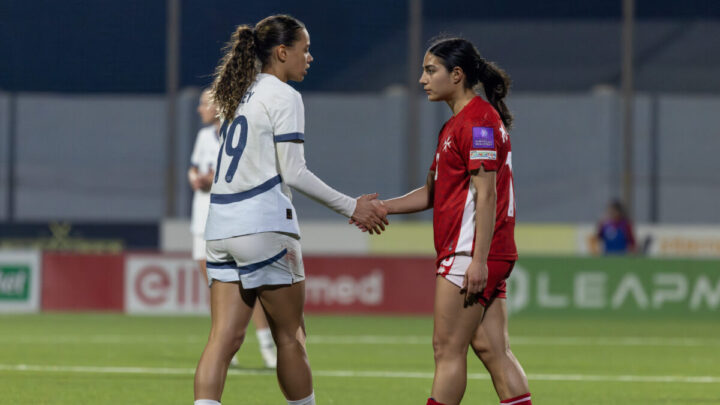
by Switzerland’s 4–1 victory over Malta left coach Rafel Navarro and his players dissatisfied, with defender Noelle Maritz noting that the team’s standards demand more goals and a clean sheet despite the win. For Malta, the match represented the reaction sought after the defeat to Turkey, with captain Emma Lipman highlighting the team’s unity and mentality in competing against a higher-ranked opponent. Manuela Tesse pointed to growing depth within the squad, stressing Malta’s newfound ability to rotate while maintaining balance and competitiveness on the pitch.
Sometimes It’s Not Just About The Points
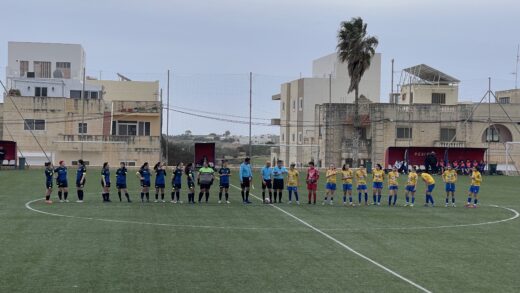
The lights were already dimming at the Centenary Stadium when Switzerland attempted to conduct an improvised press conference on the pitch.
Despite a 4–1 victory over Malta, the mood among the visitors was far from celebratory.
For a nation ranked 25th in the FIFA Women’s World Rankings, expectations go beyond simply collecting points.
“Fifty percent,” Switzerland head coach Rafel Navarro replied when asked how satisfied he was with the performance.
The answer was revealing. Just days earlier he had rated his side seventy percent after a 2–0 win against Northern Ireland.
The difference underlined a simple truth: results alone are not enough for a team chasing World Cup ambitions.
Swiss defender Noelle Maritz echoed that sentiment, “Our aim is always to score as many goals as possible and keep a clean sheet. Their goal came from our mistake, so it’s frustrating for us. At the end of the day we can be happy with three points, but we must understand what we need to improve.”
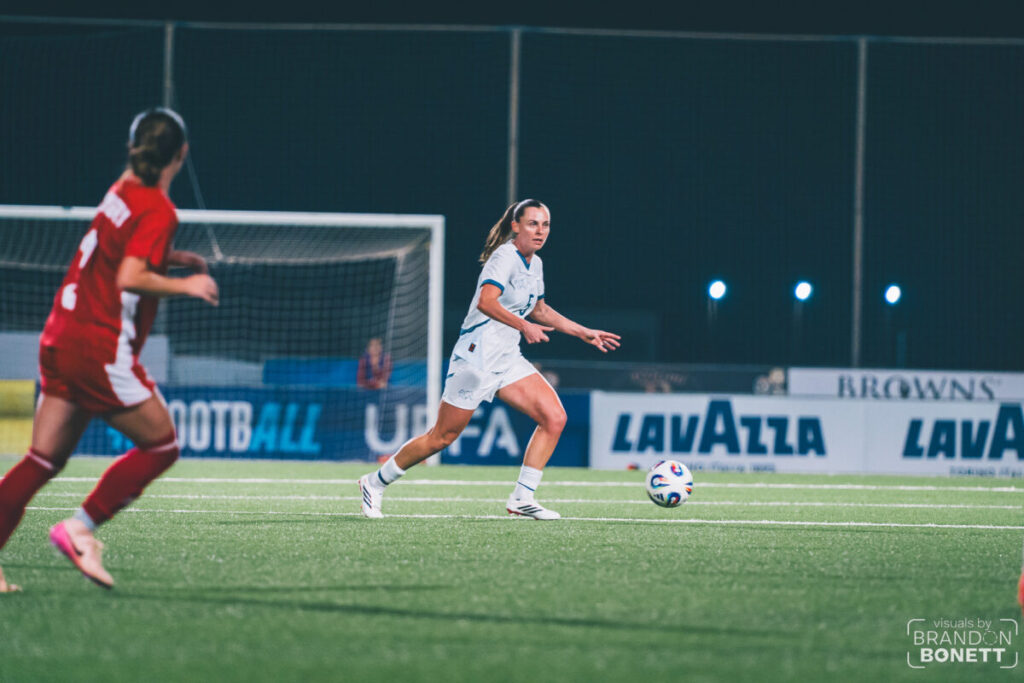
Rafel Navarro welcomed the shared frustration, “I am happy to see the players disappointed as much as I am. That means we know we can do things much better. The result is not the only thing that matters.”
Still the Spaniard acknowledged the positives. Four goals away from home remain an encouraging return – even if the performance fell short of Switzerland’s own standards.
While Switzerland analysed the performance through the lens of expectation, Malta viewed the night through the prism of reaction.
After the difficult defeat against Turkey, Manuela Tesse challenged her side to show a different mentality and the Sardinian appeared happy with the response.
She said, “We played like we prepared today, so I’m happy for the girls. Our plan was to stay compact because we know that they are strong. We acknowledge that we made mistakes and they let us off the hook with some chances, but I still think the team played well to limit them according to our plan, and to attack as a team.”
That plan was rewarded in the 16th minute, when Maria Farrugia latched onto Stephania Farrugia’s diagonal as Malta pushed numbers forward, finding the goal to put Malta back into the contest.
The goal also arrested Switzerland’s momentum — something Tesse felt her players used well, “We attacked as a team today and threw more numbers forward into the box. That is something we improved compared to the previous match.”
Malta captain Emma Lipman highlighted the psychological importance of the response.
“The most important thing today was our reaction to the Turkey match. We got that. Keeping a team like Switzerland close and creating moments for ourselves is important.”
For Lipman, the biggest takeaway was the collective mentality, “In these games you cannot switch off mentally or physically. Giulia had a brilliant match, but the biggest positive is how we kept pushing each other until the final minute. This capped off a really positive week in training.”
Tactical Adjustments And The Battle For Control
Switzerland dominated the numbers. The visitors registered 28 attempts, with 12 on target, compared to Malta’s seven total efforts. Yet the match was more competitive than those statistics might suggest.
Questions were raised on the Malta’s ability to create more than Northern Ireland against the giant. Rafel Navarro replied, “They maybe had more shots than Northern Ireland, but we still limited them to little opportunities. Maybe we relaxed too much after scoring too goals and you cannot do that. It’s not easy to play against these kinds of teams here.”
Malta’s defensive organisation forced Switzerland into patient build-up play, something Noelle Maritz admitted proved challenging at times, “We knew that Malta would defend deeply, but at the same time we knew what spaces we need to exploit. I think we did this well sometimes and sometimes not well at all. We need to be more consistent.”
Rafel Navarro lamented the tempo of play as ‘too slow’ from his team.
However, Navarro admitted surprise at Malta’s attempt to utilise possession, “I was surprised at the beginning because they really tried to play more football, maybe they tried to play more today than they did against Turkey. We expected more long balls.”
That forced a tactical tweak.
Navarro elaborated, “Expecting long balls, we had only Svenja (Folmli) pressing the first line. So then pushed Geri (Geraldine Reuteler) pressing the first line and put more players on the first line, switch to 4-4-2 and disrupt their build-up. We did better in the second half to recover the ball quicker. So, maybe we didn’t play the best match in the world, but we improved on some things.”
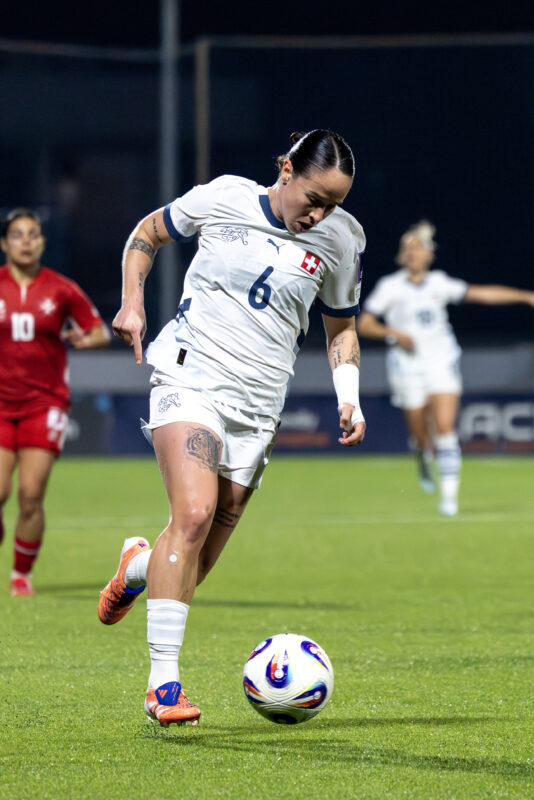
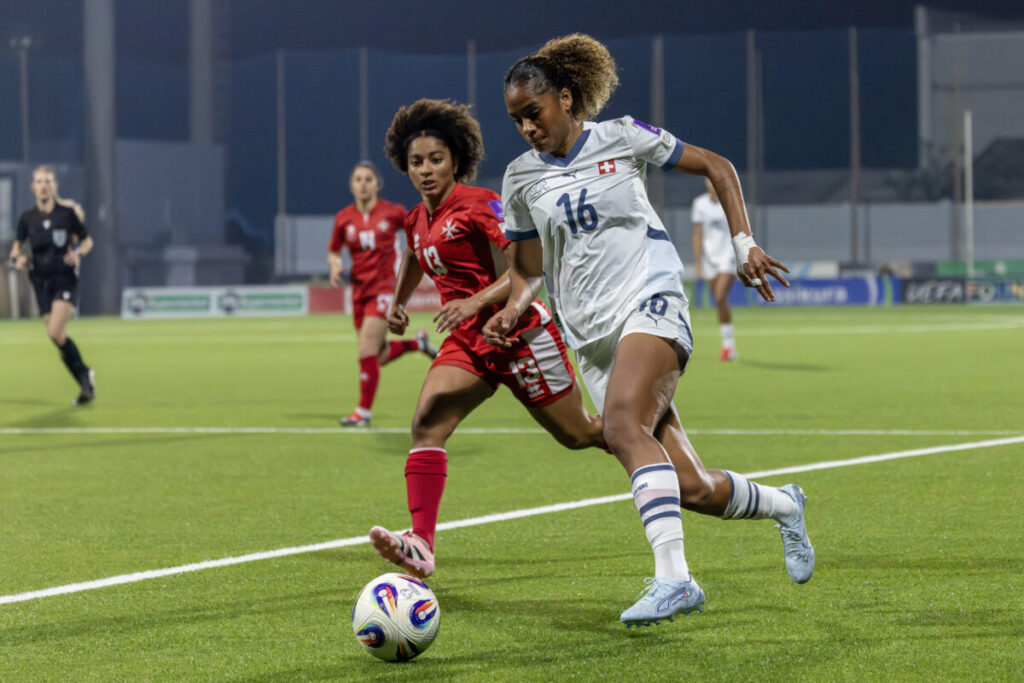
From Malta’s perspective, the tactical focus was clear: limit Switzerland’s midfield overloads and wide attacking runs. “They push their wide defenders very high — almost like wing-backs,” Tesse explained. “We tried to limit that and improve our transitions.”
Manuela Tesse suggested that doing better in moments may have changed the balance further, “We could have drawn 2 – 2 with Maria (Farrugia)’s chance and then took the goal at the other end which changed things before the break. It is something we know we have to improve. However, I was happy with how many numbers we threw forward into their box when attacking, so this is an improvement.”
Squad Rotations
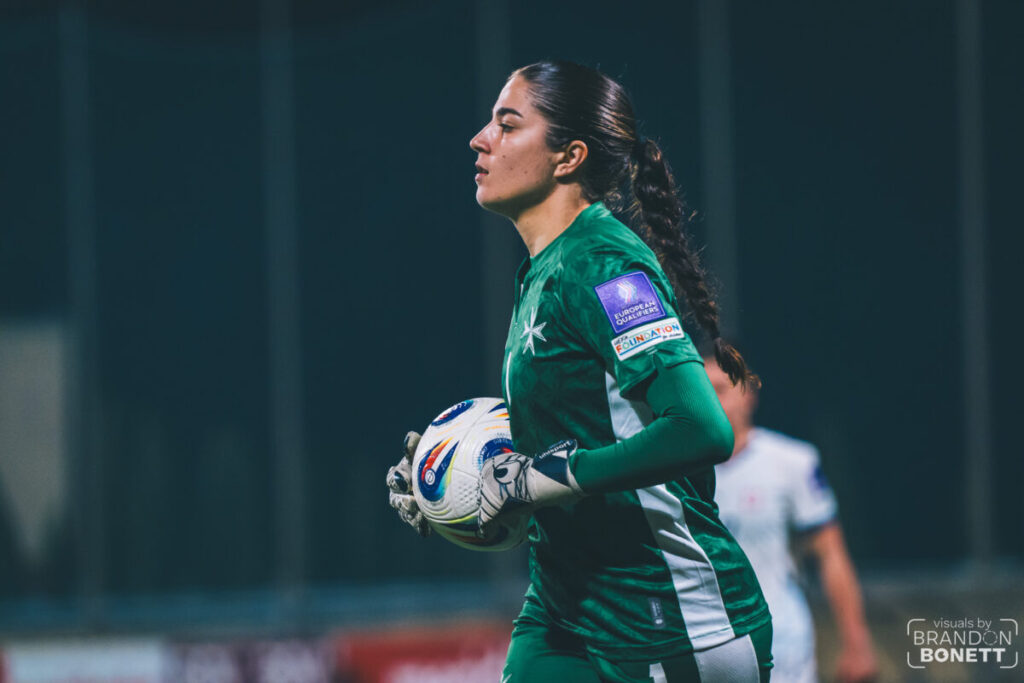
Both teams showed changes from previous fixtures. Malta’s Maya Lucia came in at right-back, while Emma Flannery made her first start in the Malta shirt with the senior team. Leah Ayres was trusted out wide from the start. There were also more minutes for young players like Lexine Farrugia and Yulya Carella, with Giulia D’Antuono also continuing to come into her own with a stellar display in goal.
Tesse was encouraged by the progress. “Today we had a very young squad and developing the national team is one of our objectives. We still have some gaps, but especially up front, we have a lot of promise.”
Malta’s coach also felt that for the first time in recent campaigns, she had genuine depth on the bench, “This is the first time I and my coaching staff really had a headache about the starting eleven and substitutions. In previous tournaments I sometimes made only one change, if any. Today I made five and the level stayed consistent.”
Injuries still played a role.
Forward Sara Saliba was originally expected to start, but Manuela Tesse explained she was ruled out shortly before the team-talk and watched the match from the stands on crutches.
Meanwhile Rachel Cuschieri’s absence continued to be felt. “Rachel (Cuschieri) is an important pillar of experience in midfield. I’m proud of the players who came in, but of course Rachel is still important for our team,” Tesse concluded.
Tesse remarked changes were also enforced by the yellow cards picked up in the opening match, including the decision not to introduce Nicole Sciberras. This particularly in view of a long-term picture in the tournament.
Switzerland also rotated heavily.
Navarro made four changes, introducing Alisha Lehmann, Noelle Maritz, Leila Wandeler and Svenja Folmli into the starting lineup.
“Alisha did well in the offensive runs behind the line, but at the same time needs to work a bit more in the defensive part. I think it was not easy for Leila to play today but she did okay. Noelle (Maritz) had a good match – maybe the centre-backs were two of the best players today so I’m happy with their performance.”
The final change in the starting line-up was Svenja Folmli, with Navarro acknowledging the tactical transformation of the match might have favoured her coming off from the bench more, “She did well, we know what she can do. Maybe with their attributes it would have been better for Svenja to play in the second half with more balls going into the box, while the first half would have been better for Aurelie with more space to run into.”
Navarro admitted Folmli’s substitution was enforced, “Svenja was not feeling good and of course health is the most important thing so we made the change. Aurelie did well in her appearance too.”
The Twelfth Player At The Centenary
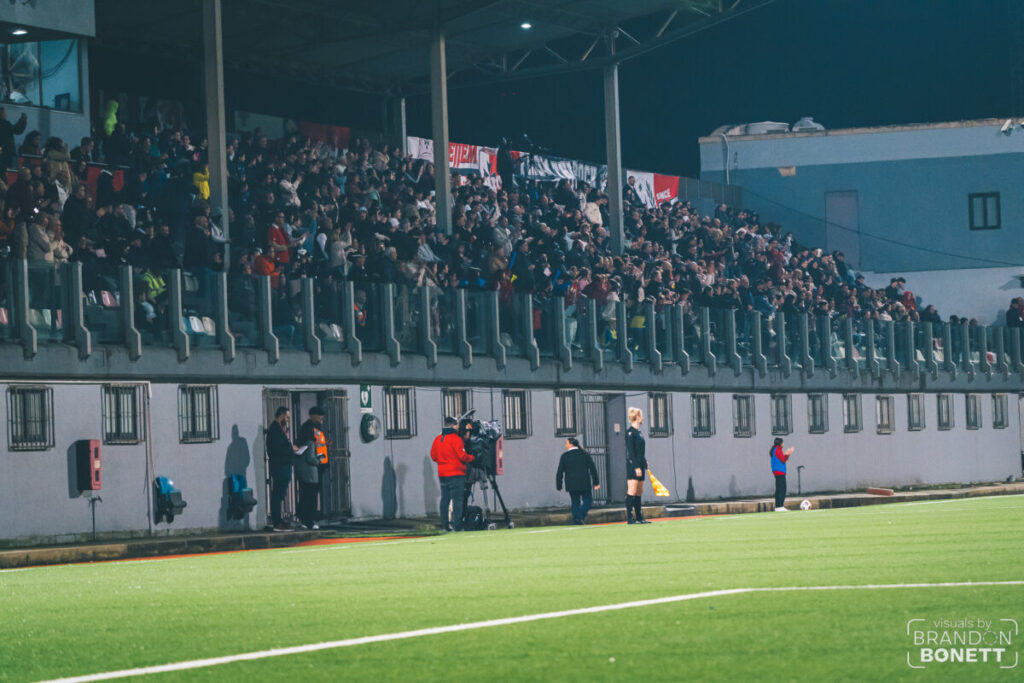
Switzerland brought travelling support, but the night ultimately belonged to the home crowd.
The home side in the Centenary Stadium stand gradually filled, creating a lively atmosphere that lifted the Maltese players.
Manuela Tesse rallied the support for more, “They are really our twelfth player. You can see how our team played completely differently to the match against Turkey. We need the crowd to continue being behind us as we take on the next matches.”
Emma Lipman agreed, “Matches like this are important for Maltese football. Young players can watch a team like Switzerland, but they can also see their own national team. For us, sharing these moments with them is important.”
The Picture In The Group
After two matches, Group B2 has begun to split into two tiers. Switzerland and Turkey sit on six points, while Malta and Northern Ireland remain without points.
The competition resumes in April (14th & 18th) with decisive fixtures:
- Switzerland vs Turkey in a home-and-away double-header
- Malta vs Northern Ireland battling for momentum in the group
However, until then players will return to club duties as teams ramp up toward the business end of their domestic seasons. National team coaches will continue to assess trajectories, while pondering the impacts of the opening two matches and the tests ahead on their objectives.
Lead Image: Michael Azzopardi
Stay up to date by following The Sporting Fan on social media: Instagram ~ Facebook ~ X