 by
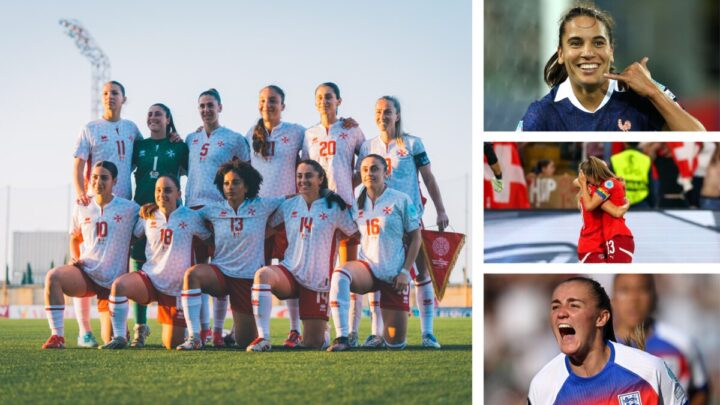
by The UEFA Women’s EURO fever is in full swing, with tougher competition, increased viewership and a bigger injection in prize money. However, the work to get to that stage and to continue competing at the highest level requires plenty of dominoes to be set up in the right way. While Malta continues to look from the sidelines, it’s worth looking at what things could be like if it qualified and the course Malta is taking or failing to, to get there.
Women’s EURO – Better Football, More Viewership and More Prize Money
Switzerland is living through a fair share of celebrations and heartbreaks as the final matches of the group stages separate those going into the knockout stage and those going home in the UEFA Women’s EURO. However, even among those going home, there’s plenty of winning for their countries.
There’s no doubt that the football on display continues to dazzle, reflecting the advances being made domestically across various nations. There’s plenty already written about the finesse of Spain, the resurgence of England after an initial slip against France, but the real growth can be seen across the teams partaking in the competition. One only needs to compare footage from one or two editions ago to see the leaps being made by the women’s game.
Playing on the big stage will give players and their coaches increased visibility and an opportunity to make advances into better conditions in their current situations and elsewhere. The attendances in stadiums and viewership outside it continue to raise the profile of the women’s game with more attracted to it as the years roll by.
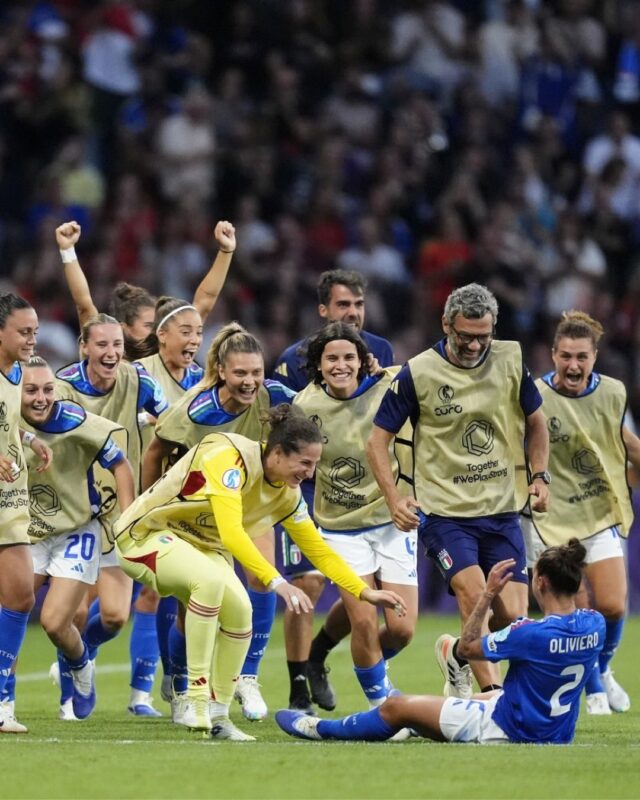
All of this is backed by a hike in prize money. It has increased from 16 million Euro to 41 million Euro from the last edition. Any team making it to the tournament will receive a 1.8 million Euro participation prize. That means that no matter how disappointing it is not to make the knockout stages, countries like Iceland, Wales and Portugal will take home at least that, on top of 50K to 100K for every draw or win in the group stage.
Those proceeding further in the tournament will continue to rack up their earnings depending on how far they go, with up to 5.1 million available for the winner. That means, that as things stand there is a huge benefit in a country merely qualifying to the EURO.
Thirty to forty percent of that money must go to players, meaning that from a minimum of 1.8 million Euro, there would be around 1 million available to be invested into the game for the nation in question. However, that does not start the positive domino effect, that starts from the nation that invested beforehand to get qualification into the tournament.
Accepting Mistakes & Determination To Do Better
As noted above, there’s plenty of discussion around Spain and England. Spain go into the competition as the World Champions, hungry to add a first European triumph to their mantle. However, there is a dark past that the Spanish federation will carry and that it will continue to have to work to address following the Rubiales-Hermoso case, but furthermore the unhappiness that had been echoed much before by its national squad.
A few changes in personnel does not necessarily change the whole situation. No matter how good things look on the outside, there are still huge players missing from that national team, most notably Barcelona’s Mapi Leon.
There’s been changes at the top, the question will be how much change will trickle into the nuances of the game. Spain’s league is still very much dominated by Barcelona. Their strength is one that also proved its worth in the top European’s football, but the chips fell as Arsenal thwarted Barcelona’s grab at another UEFA Women’s Champions League. As reshuffles take hold at Barcelona, the question will be whether the Federation will also finally address the imbalance in its league which is an element that will ultimately challenge Spain’s growth of the game. That is a domino piece that is yet to be propped up.
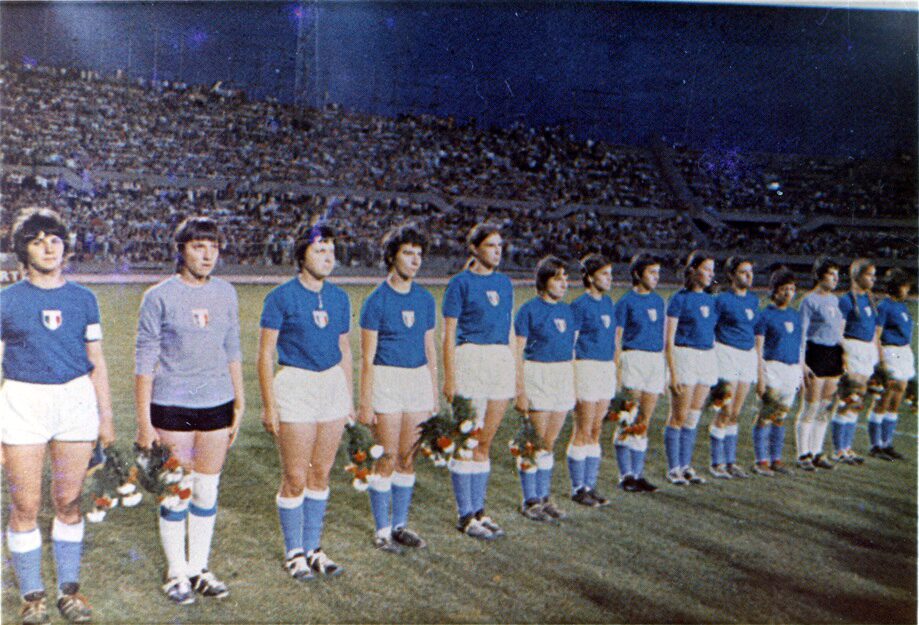
England have headed into the EURO as defending champions and World Cup finalists with a target on their back and their stumble in the opening match shows that no matter how good you get, other countries are also making the steps with you. However, most notably, England is viewed as a footballing nation to many, but also the same nation that banned women’s football for fifty years. It is no wonder that they were yet to take a title up until recently. It is a negative domino effect that it was punished by based on what it set up in those years, with the English national teams mostly only relevant thanks to the courage of those jumping across the pond to the US and forcing things on their return.
However, those errors were recognised by the English FA and efforts made to grow the game since. At the risk of overrunning the analogy, that effort meant not only kicking down the negative domino pieces, but setting the right dominoes up in the first place.
The Lionesses’ win on home soil triggered further growth, but there was a lot of structure set and plenty of hard work done by clubs to get the game to that point. Emma Hayes’ Chelsea dominated plenty, but toppling Arsenal was a hard step to make. Today the English FA has less control over the league itself, but oversees the overall landscape and has enough share to push the grassroots projects and lower leagues. The Barclays Women’s Super League has more consistency and the recent television rights deal will continue to inject funds into the game, much like the men’s benefitted from earlier to get the men’s Premier League to where it is today.
However, the buck doesn’t stop there, and pitfalls will continue to rear their heads. With every step comes a bigger step to ensure that the right dominoes are continuously propped up in the best sequence to keep the effect going. A healthy footballing landscape is one that has competition. While the top clubs seek safety and comfort at the top level, the duty of those administering the game is to ensure that there’s stability but not stagnation.
In view of this, fresh suggestions of blocking relegation from the top tier in England have been floated but successfully squashed. The second tier of the game continues to get more attention, also sponsored by Barclays. A few wealthy investors are pushing into second tier clubs, meaning that the competition is expected to get tougher with those in the top tier chasing titles just as much as they would be avoiding relegation.
Once again, the domino effect can be seen in every direction. Good leadership, good decisions give ground for the dominoes to topple toward better things, poor decisions can easily squash that momentum.
Does Any Of This Matter For Malta?
Looking at the prize money for any participant in the final stages of the UEFA Women’s EURO on its own is perhaps tough to visualise. So, for context, Malta’s men’s structure gets 2.1 million in UEFA Solidarity funds to develop. This is currently being grappled for by twelve clubs in the Malta Premier League (MPL) and the fourty clubs trickling down from the Challenge League bargaining for some percentage of it at the mercy of the MPL clubs.
Considering the 1.8 million Euro participation prize means that if Malta were to properly invest in the women’s game, it could have doubled the amount of money flowing into football this year by the women qualifying for the EURO. The defeatist culture will deem that sentence too ambitious, but those truly following the women’s game know that there is the real talent available to make that leap. One must first dare to dream and then crucially back it with the right approach.
Several players donning the Maltese shirt already play with or against a few of those currently competing in the EURO. However, a nation needs a squad, meaning not a few individuals, not even eleven, but a whole team ready to play at that level.
While the excuse of a population too small is suitable to shirk the responsibility, the problem remains that talent identification (the very basis of building up the numbers) by itself is only just the start. If we consider the final achievement of winning the EURO to be the equivalent of the final domino falling from an entire deck rippled by the domino effect, proper talent identification is the equivalent of setting up one single domino upright. It is not the equivalent of setting up the whole deck. Malta’s inability to grasp that difference continues to be its downfall. How?
The Numbers Game
Statistics cannot be dismissed, but if one gives the excuse of numbers, then perhaps the rebuttal is to ask why the game is continuously allowed to dwindle in the already small numbers with apparent nonchalance. Even worse, the majority of headlines are always claiming increased numbers. The key question to ask is the associated age. There’s good progress in getting young girls registered. However, a more effective analysis is to analyse the real number of active players at every age group.
Players who are ten years old can become the future, but there will be no future for them to walk into if there’s no older players holding up the mantle and football for them to latch onto. So players need a place to train in and games to play. The key question is how many.
While the men’s game continues to be saturated with clubs, even the biggest nations have their top women’s leagues which are mostly capped at 12 teams in their top tiers, some with 10 and a few with 8. That means that the women’s game is inherently not at a place of excessive numbers, but it is still making huge leaps in quality by actually controlling the increase.
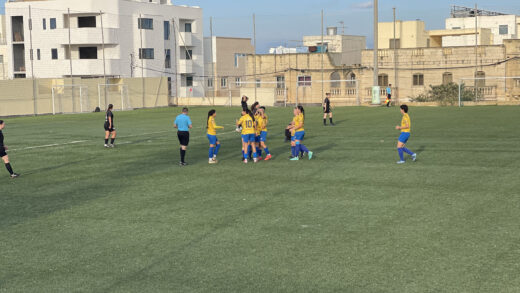
In Malta, the decision to reduce overladen numbers of clubs to smaller numbers was made years ago in the women’s game. In many ways one could say it served a purpose to focus resources, aligning with what other nations have done. However, the mistake made was in thinking players would all filter nicely into the existing clubs without any effort. The second mistake is that there continue to be no solid requirements for a club to participate in the women’s game. One domino was set up, but it was stood up on its own, making the positive domino reaction a futile attempt.
The past two years featured eight clubs and a league Split which challenged things to grow by instilling deeper competition and a chance for the weaker clubs to test out things and close the gap. However, the lack of requirements have continued to set up unhappy situations. While the ‘historic season’ was one phrase latched onto across the board, the reports in this website of the 2024/25 season was also littered with worry over a few situations. Warnings were repeatedly made of the imminent need to set up a Strategy, minimum requirements and a close look into things in the past years to inform the future. Warnings were made of instability in clubs and unhappy figures disappearing, with the potential impact on this year and the future. None were heeded.
Fast forward to today and the result? There’s no surprise that a few clubs disappeared between May and June, while some still flounder between participation and not participation in July. This is a time when these things should have been set months ago and pre-season should be in full swing. By extension, the lack of club participants will nullify the ability to set up a league structure that is deemed to be appropriate at this stage of the women’s game and instead have to set up a league structure in reaction to the circumstances. Those who have invested with a plan are certainly steadfast on their next step, but there is a lurking worry about whether the competition they face this year will allow them to raise their level further or if they will be handicapped by the circumstances irrespective of their investment. One can only hope that the steps made by the participating clubs, of their own volition and reasoning, renders an equal level across the board.
An Association serious about its game will have put in a minimum set of requirements and a deadline for clubs to apply and prove that they are ready for 2025/26 long ago. A phased structure to set up things, as is done in other nations, but at the very minimum an early criteria that would immediately disqualify clubs that have nothing, literally nothing, set for themselves in terms of a plan for an upcoming season. A serious club would be working on that plan in January or February, meaning that that criteria would be met by March.
Instead, the Maltese game is subjected to clubs falling out at the last minute, meaning that no other club has the time to replace them. So instead of setting the structure to ensure that eight teams participate, the lack of structure ensures that the game is subject to the whims of the lowest common denominator, the clubs that flounder in attempt of participation and in doing so destroy the efforts of those around them to raise their level to be actual competitors. The clubs will be blamed, but the leader is not leading. It is the authority, the Association in this case, which sets the rules that govern the sport and shape its long-term future. The lack of proper regulation and enforcement, by default, ensures the majority of the dominoes stay flat in their pack.
The next failure will be the sheer number of players that the game will lose again next season. As discussed in the 2024/25 recap, there were more than a whole team’s worth of players who vanished throughout the course of the year. The reduction in teams will lead to further disappearances. The argument is that a player who wants to play football will make every effort possible to do so and that is a fair one. However, there is another argument, that there will not be enough games to rotate players who are now packed into a smaller numbers of clubs.
All things point toward less players, less clubs. That is the numbers game, an already small number squandered by the lack of planning and structure.
Numbers Matter, But Quality In Numbers Is What Is Relevant At Top Level
Of course there is another caveat. For an Association whose target is to set a strong national team, it must have a group of senior players playing at the highest level, and by default also have its youngest following that step. However, it does not care much for players who have no interest in taking the sport seriously and pushing themselves to be better. Even for players pushing themselves to be better, there is a minimum level which if unattained renders them ineligible for international football.
While sounding harsh, it is a relevant one, for sport is competitive. Contrary to what the certain cultures try to push forward, sport is not something that hands out medals for participation. So, while the numbers may be mentioned, in truth what is actually sought is quality in numbers.
The problem though lies once again in a lack of direction and structure. The Youth League (U19) continued to flounder this year. The same problems that the senior league will face are the ones that the Youth League is facing already. There aren’t enough players, and of the players that remain there aren’t enough with the right quality.
The age group was reduced from U21 to U19 to match UEFA competitions. It will go back up to U21 to hide or patch the problem this year. The other floated solution was the introduction of a Reserves League, which would push the age to a much higher number, thus also hiding or patching the problem. The focus remains on numbers of players, but that is only because that is the only measurable thing, the number of players needed to form a squad, the absolute bare minimum in a game of football.
The quality of football is certainly not being considered. The aim in football is to win competitions, at club level and at international level, not to participate. To do that you need quality. So if the aim is to raise top quality players, and one assumes that the only players dropping from the game are not quality players (which isn’t the case), then it is very apparent that changing the leagues is not the right question to begin with.
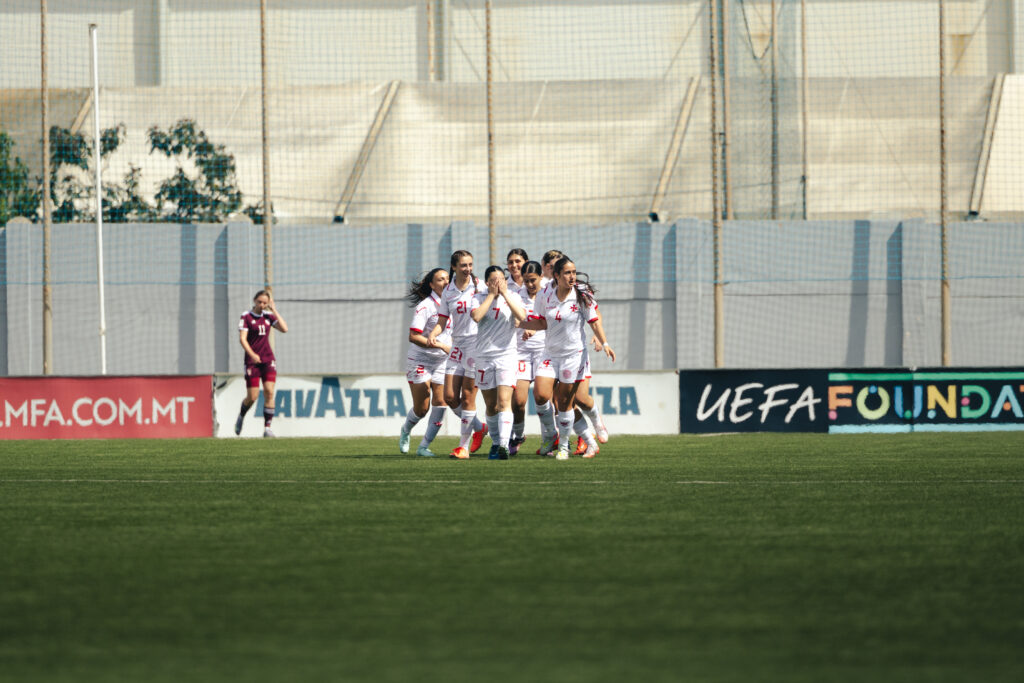
The real solution to quality begins by the education players are receiving and the environment that they receive it in. That is determined not only by an adequate coaching license requirement, but by a complete setup requirement and the soft elements that are not measured by licenses but set by changing the culture. That sets up, not one, but several dominoes upright.
With that in place, you can set up a proper league structure that will be stuck to and with enforced participation regulations. A decision which would be informed by the real numbers, quality assessment and a proper development plan to go from mere talent identification to a football pyramid that develops players for the highest levels. That sets up a further few dominoes.
Until then, the game will continue to flounder backward, because no matter how much the few dedicated individuals in the sport (clubs, administrators, coaches and players) push forward, their efforts will always be limited by the lowest common denominator. As long as that lowest common denominator is not controlled, the game will suffer and Malta’s women’s game will suffer the same faith that the men’s teams face today in a fully developed footballing landscape.
It is no wonder the Maltese game is struggling to transition its young players into the senior national team effectively unless the player is a prodigy. Even then, the risks of burning out are huge for a young player who is forced to figure it out mostly on her own. There are absolutely no proven structures that are put in place for a player to develop and transition into the highest level.
The current approach bets on the talent identification finding a prodigal player who finds a few of the dedicated individuals pushing against the current out of their own sweat and volition in her path. However, the efforts of those individuals will continue to be undermined if the hard yards to put in adequate structures are not put into action.
The current bet that these prodigal players make it into a top tier club abroad to fulfil their potential will be short-lived unless the structures are set in Malta to give them a stronger basis. More importantly, that approach will still be tough to make up enough quality in numbers unless the whole process is addressed.
Had this effort been put in place before, perhaps today the Maltese game would have doubled its funding, one side by Solidarity and the other side by Merit through participation in one of the game’s highest footballing competitions. However, the leader must start leading for the dominoes to fall the right way.
Lead Image: Brandon Bonett / UEFA Women’s EURO
Stay up to date by following The Sporting Fan on social media: Instagram ~ Facebook ~ X

1 Response
[…] four, playing another three rounds between the participants between each group. This confirms thoughts of a league restructuring that is likely forced by the reduction of teams and a reduction also in the number of matches played in the league. Once again, the exact reasoning […]