 by
by Plenty has been made of a historic 2024/25 season at senior level in the women’s domestic game in Malta. A fierce competition with ultimately two new names etched in the history books. However, looking beyond excitement of trophy lifts, there are five things to carry and five things to address before opening the curtain on the 2025/26 season.
A Historic Season At Senior Level
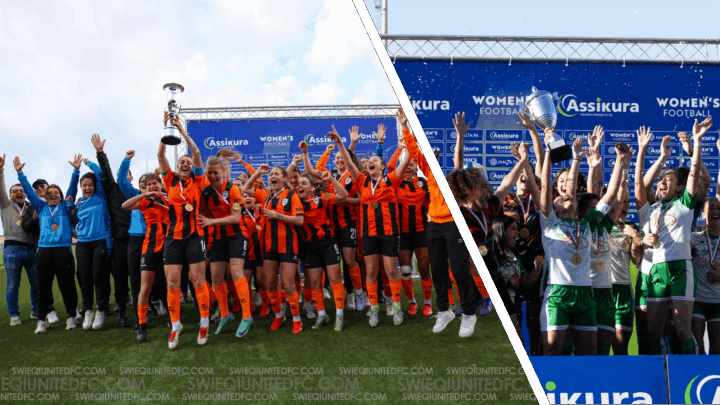
There were high expectations for the 2024/25 season and teams delivered in aplomb at senior level. Domestically, the Super Cup confirmed that the season’s trajectory was to break new ground as Swieqi United finally managed to overthrow Birkirkara. It mirrored the ongoings of the first phase of the Assikura Women’s League which gave plenty of food for thought as the Top Four grappled with control, while a few from the Bottom Four tested the water against them.
The second phase following the Split in the League was a fascinating one to observe at both ends of the tables, with a four-horse race in the Top Four that exchanged places until the final matchday, while the Bottom Four also gave those following plenty to dig into until the end.
The Assikura Women’s Knockout continued to prove that it was a season not to be taken lightly, delivering another maiden winner in Mgarr United who grovelled beyond excuses to lift a title despite key injuries.
In Europe, Birkirkara continued their positive run in the UEFA Women’s Champions League with another victory on home soil. It ended with a bitter bow out from the competition against Anderlecht, overshadowed by late goals and a cruciate injury to their captain, Stephania Farrugia, who has since returned.
However, that story was told week by week in interviews and reports. This review is intended to focus on the elements which offer the backbone to those events. The elements that are crucial to carry to the future and those that must be addressed in effort to make sure the game can continue to rise. As usual, it is by no means exhaustive, but perhaps they are things which have a core impact.
Without further ado, here are five things to carry and five things to address before the 2025/26 season.
1. Carry – League Format At Senior Level
The first season featuring the recent changes, and thus the introduction of the Split, was the 2023/24 season. However, its relevance was impossible to assess due to the turmoil that struck across the league in having six out of eight teams change coaches mid-way through the first season.
Having had much better coaching stability across the senior league throughout the 2024/25 campaign, it is evident that the Split has challenged teams in the right manner. Whether in the Top Four or in the Bottom Four, the Split forced coaches and players to either hone their craft against opposition really well or else push them to adapt to win against them from a tactical perspective.
The relevance of a league campaign is in testing teams on their ability to be consistent despite the long-term nature and all the challenges it brings. Though repetitive due to the limited number of teams, the imbalance between teams in the league was counteracted by the Split, so that physically and mentally teams were exposed in having to push until the end with whomever was still fit in their squads and who had the motivation to retain their eyes on their objectives.
Under pressure, those who set strong, broad foundations rose against challenges and achieved objectives, those who didn’t faltered. This as the Top Four grappled with the title race, but also as the Bottom Four sought for their own finishes and objectives, while also looking to break each other’s targets.
2. Address – Structures Surrounding The Competitions
While the majority of teams fought to improve their own performances, several things surrounding the league’s organisation continued to wrinkle foreheads. Simply put, the promised larger pitches such as those of the Victor Tedesco and the Centenary Stadium continued to give way to Dingli Ground, Charles Abela Stadium and Mgarr Ground as the season progressed. Some first aiders took the match kick-off time as a suggestion, while a few of the dressing rooms were more likely to debilitate players, than prepare them for their match.
The vast majority of officials sent to matches struggled to keep up with the level on display. The promise of a pre-defined fixture calendar at the beginning of the season continued to be a pipeline dream, even though it is 2025 and there is software capable of doing the entire job in minutes.
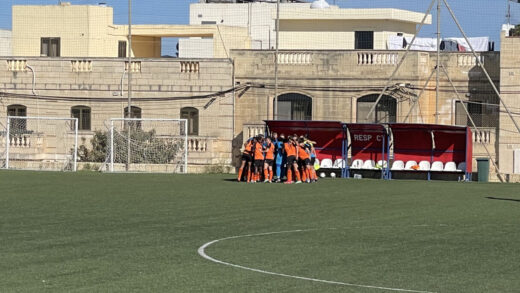
Each had their own impacts. Playing in smaller pitches showed clear regression in players’ ability to handle the ninety minutes once the larger pitches returned, hindering the level of football. Playing in smaller pitches restricted the ability to throw different tactical approaches and exploit different strengths of players, hindering the level of football. Doubling on this, these things also shed questions into the spaces afforded to teams during their training by clubs. While the Malta Football Association may be blamed on matchdays, clubs must do their own examination of what facilities they are offering their women’s teams.
Having first-aiders arriving late at matches threatened the safety of those involved, delaying matches or worse seeing them started without concern. Once again, when it comes to first-aiders, clubs’ reliance on the first-aiders provided by the Association is something that can be addressed with more holistic views of their approach to the game and additionally it was also disappointing to see clubs agreeing to initiate kick-offs when no first-aiders were present.
However, when it comes to dressing rooms, surely a host who treats its guests in the manner observed throughout the season should no longer be promoted as a host. The Malta Football Association has the responsibility to set standards and enforce them to be met. It is no use changing the pitch, if there is no effort to maintain things around it. Dressing rooms that were not properly kept, cleaned and prepared for teams to come into diminished the wellbeing of all those involved.
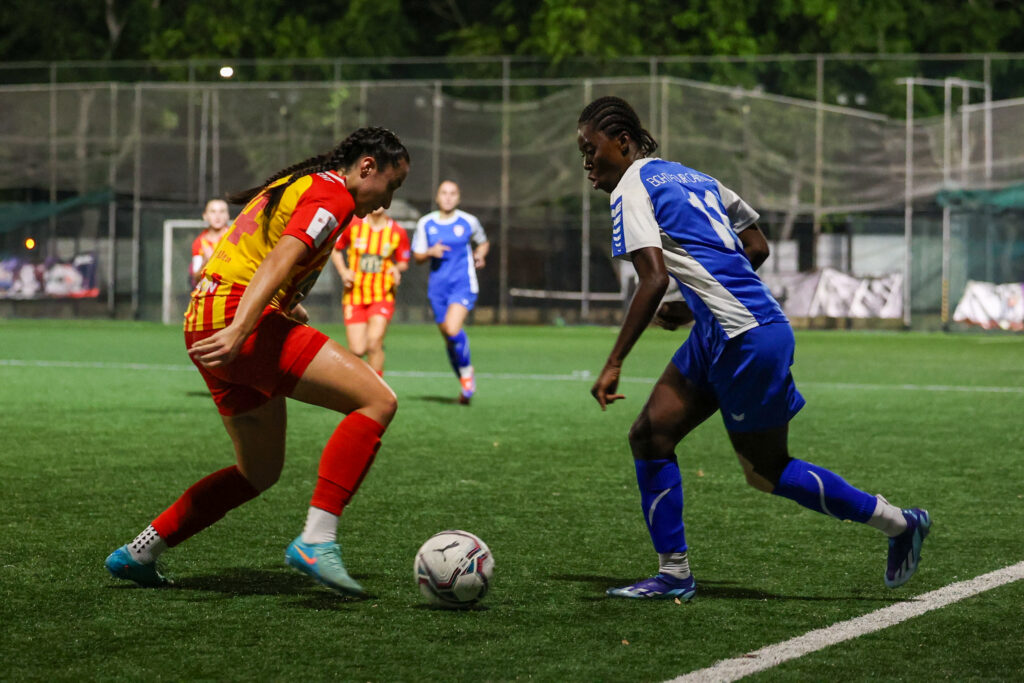
However, the Malta Football Association has much vaster responsibilities here. Having fixtures released in a hap-hazard basis throughout the year massacred coaches’ ability to periodise effectively, while exposing youth players playing in multiple leagues to injuries as a result, hindering the level of football and worse the future of the Maltese game.
Having officials who could not accurately read situations or display game intelligence, hindered the level of football. The abuse thrown at them is unacceptable, but the Malta Football Association has the responsibility to take care that its officials are sent to matches with adequate training, while also if need be finding ways to educate its attendees in the stands.
All of these elements have been criticised throughout the weeks that passed and the answers have always revolved around excuses of the vast numbers of matches played on the weekend. These simply show that the women’s game is still considered a second fiddle, with little understanding of the long-term impacts.
To simplify, all of the above limit the national team the Association is represented by, requiring its own national team setup to then push players in extreme manners within short international periods, risking injury. While the desire continues to be to ship the problem of the development of players to clubs abroad and dismissing local club efforts to improve or setting the necessary governance structures for them to reach those levels, the Association is by default subjecting Maltese football to its end.
Clubs in this country are in excess numbers, but it is not a problem that the women’s game is contributing to. However, it is one that it continues to pay the price for as resources continue to be thrown haphazardly. What’s even sadder is that, on the most part, the women’s game has done Malta proud on a European club level and national team level, despite all this.
One hopes that the 2025/26 season proves that the organiser of the domestic game in Malta has understood that the backbone of those successes is set in Malta. That pushing the game to grow in Malta, gives even those players who eventually push themselves to play abroad a better starting point for them to thrive in. The current approach will not sustain the positives being observed right now, because the rest of the world is investing and it’s up to the Maltese Association to show the ambition backed by the right action.
It is all well and good to adjust league formats for the good of the game, but this should only be the starting point and hence why items listed above are immediate requirements for the game to continue developing if it has a hope of maintaining the successes. The Association earns its reputation and its applause in having the guts to push a vision and appropriate structures – a Strategy with clear path. One that shows an ambition, that is unafraid to shake stagnant cultures for the greater good of the game and that protects the integrity of the sport (technical, financial and otherwise), before it is driven into a point of no return.
3. Carry – Transfers Between Clubs
Transfer season is among us and ramping up with a few already putting pen to paper. While the focus has increasingly become on the players coming into the women’s game in Malta for the first time, a lesser discussed facet has been the fact that the 2024/25 season threw up a few moves between clubs which on the most part worked to good effect.
Players such as Sarah Urpani, Ileana Farrugia, Jessica Dimech, Ann-Marie Said, Veronique Mifsud, Sarah Vella Barberi, Gabriella Grima, Sarah Fenech and Milena Stagno were all among those donning new club crests. On the most part each brought different attributes to the clubs they formed in, pushing the competitiveness of the domestic game in Malta in a positive direction.
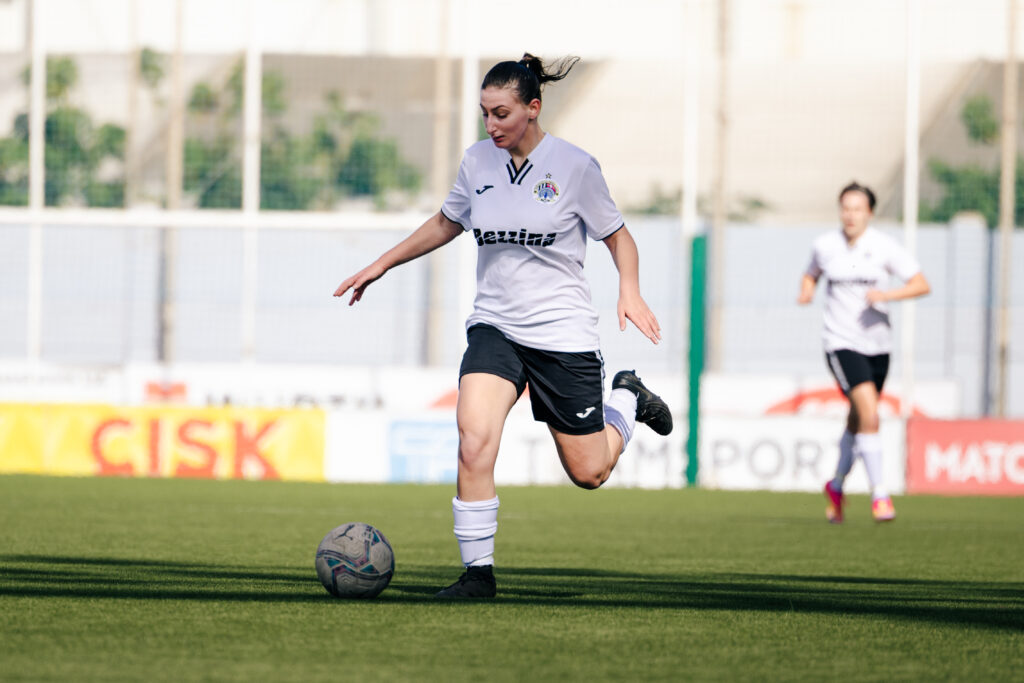
All played crucial roles in the clubs they moved to, which one expects to encourage those players unhappy within their own clubs to make leaps to other clubs. Competing for a place in a first eleven should be something to be embraced and certainly something that Maltese players must become more willing to face as a challenge.
All too often, transfers have been shrouded by monetary discussions and make no mistake, there are dangers that must be addressed as part of the Strategy listed above. However, while those involved should start taking an objective view of the realities of the financial aspects of the game, a players’ focus should certainly not only be focused on the monetary aspects.
On the contrary, should the ability to play matches become unattainable due to the attributes of a player not fitting coaches’ philosophy, the level of the player in current state not deemed of the necessary quality or perhaps other elements such as inferior structures deemed to be hindering a players’ growth, then certainly moving to other clubs is something that can lead to positive returns in the sport.
4. Address – Gap Between Top & Bottom Four Teams
The impact of the Split in pushing teams has been positive. The first phase also showed exciting glimpses of what the league could be like if the gap between all teams in the league became so small that every game would be unpredictable. Some examples are the draw between Mgarr United & Valletta, as well as Birkirkara’s narrow 1 – 0 victory over Lija Athletic.
The ultimate goal should be to reach a balance between sides that does not require the split. A league that through the 23 matchday campaign tosses up a race across the table that has those following the game guessing at every outcome. Much as what happened across the Top Four and across the Bottom Four as the teams in the separate groups balanced on level fighting tooth and nail, one hopes that ultimately that excitement takes hold on one entire table.
However, taking things step by step, the split is effective for now, should teams continue to exploit it for their own growth targets. The first objective is that the first phase matches between the current Top Four and the Bottom Four cannot be predictable to the manner that they are today and in doing so it would create a race to determine the Top Four in the first phase.
Thus, the Bottom Four sides must double down on their improvements, not just in short term transfers, but in improving their structures and to support the improvement on the matchday. While clubs make their adjustments, players must also raise their level in commitment to the sport. As with any art, practice makes perfect, but deliberate practice is also the hard work that must be embraced for the results to follow.
5. Carry – Coaches’ Rotations & Substitutions
This season featured much more rotations from coaches on the most part. While there were still several matches that still did not feature any substitutions (for probably various reasons), there was a stark improvement overall in coaches choosing to rotate players in matches compared to prior seasons. There is still room for improvement, but it is certainly a positive step to be carried forward.
Certainly the more experience players gain in matches of varying pressures, the more the competitivity in a squad improves and the more ultimately the coaches gain in having options from the bench to change matches.
A major advantage is the ability to allow players to gradually increase their ability to handle the load rather than burn out players physically after a season or two playing non-stop football. While arguments will be made of the intensity of the league, there is also the reality that must be balanced when considering the jump a body is expected to make when not having been exposed to such high intensities for prolonged periods before.
Squad depth is retained by ensuring players are healthy and given game time. It is difficult to keep a player interested in the sport when they feel themselves locked to a bench despite attending training sessions with commitment. So certainly, rotation plays a big role in the longevity and growth of the game.
6. Address – Player Disappearances
There are those who transfer clubs when things go south, but there are those who altogether lose their joy in playing the game and quit the sport at a time when they certainly had a few fantastic years in their boots. At best they move into a different sport, at worst they give up on it all. There are also those whose injuries become a singular burden and walk away from the sport due to the lack of support.
The 2024/25 season has thrown up a few new names who have been a joy to watch, but it has been equally disappointing in the sheer amount of players who disappeared from the game without a whisper. At the very least, together they could form a first eleven. Reasons may be varied, but it is all too worrying when the initial answer received of “I’m focusing on other aspects of my life” is probed further and ultimately reveals a person who still deeply loves the sport but simply cannot enjoy it in the environments created.
Simply put, more effort must be made to acknowledge player disappearances and to understand what is prompting them. While the Association will also carry responsibility in setting up the governance structures for clubs to have the environments and support for players, there are clubs who have taken the initiative themselves to improve things. More must follow that path to ensure that numbers do not keep dwindling for the game to retain its players, from the youngest to the more seasoned ones.
7. Carry – Former Players Transitioning Into Further Roles In The Game
In parallel, every player’s career finds a natural end, but it is a great loss for the sport if it loses individuals altogether. In the 2024/25 season, the game gained by having a retired player become a senior team coach in Dorianne Theuma who battled against other coaches for the titles this year with Swieqi United. As the 2024/25 season closed, Martina Borg hung up her boots, but she will be another who the game will gain in putting on a different hat in the upcoming season, taking to the dugout for Hibernians next season.
However, there are several others who have announced their retirement, including Alishia Sultana and Leanne Micallef. There are several others who have hung up their boots one final time without a whisper. All of them will not set foot into the pitch as a player next season, all of them are a loss to the sport if that is their final contribution to the game.
Dorianne Theuma and Martina Borg picked coaching and are just two examples of recent retirees, who join a few previous players who continued their involvement the game after hanging up their boots. Dr Maria Azzopardi was a former player who today is the General Secretary of the Malta Football Association. There are a multitude of other roles that the game desperately needs to be filled, from the medical side of things, to the administrative, media and everything in between.
The experiences carried as a player are crucial starting points for a long-term impact in the game. It may be a foreign world for a former player to dive into, but it can be an extremely fulfilling one. Rest assured, the competitive spirit will come in clutch in a multitude of ways as well.
Certainly, if all retired players continued to contribute in whichever form they best feel they fit their skillset and backgrounds, then the voices pushing for the growth and improvement would be much more significant.
8. Address – Lack of Data
The game is still primitive in the statistics accessible to the public about the game and the simple truth is that on the most part there has been no investment into it. There are no public sites listing data such as even the basic minimum of minutes played by a player across the entire season. The only statistic you’ll find is the top scorers list and the league table.
However, a scout, journalist or interested supporter of the women’s game would certainly be more interested in further statistics, which in today’s world are considered basics. Assists, tackles, goals expected, goals prevented, clean sheets, even a basic tally of yellow cards and red cards – all of these are still yet to transpire. The lack of such data, especially in a league which is not live-streamed, is blocking pathways and blocking objective analysis of growth or problematic areas to be addressed. The efforts required here are vast, but 2025/26 could start to address this.
9. Carry – Club Marketing Efforts & Minor Improvement In Independent Media Coverage
There has been some improvement in the wider media capturing the highlights of the women’s game. While the vast attention is still firmly focused on a snapshot of the game mostly toward the trophy lifts, there has been improvement in more media houses picking up the stories from the domestic game and attention toward some of the exploits of Maltese players playing in foreign leagues. The majority of the focus is still on Malta’s women’s national team following it’s exploits in the UEFA Women’s Nations League and even so it is still confined to the three days surrounding matchday.
There are still huge strides to be made in this regard, but considering where things stood in recent times, there have been positives in a cameo of the women’s game in weekly programs on television, sporadic articles, and broadcasting of all the national team matches in the UEFA Women’s Nations League.
However, the biggest ambassadors for the women’s game in Malta have certainly been clubs involved domestically. Though still varying in their quality and methods, it is fair to say that the majority of clubs in Malta have made the biggest effort to keep their supporters focused on their next matches and attract newcomers to the game. Hibernians stood out in their originality of content, including a few more original takes with crossbar challenges and cheeky team interviews stirring the mix to keep their followers engaged. A few regressed in their content, which is of course concerning. However, on the whole, the majority of clubs continued to be on the forefront of keeping things current for their audiences.
10. Address – Lack Of Livestreaming
The Malta Women’s National Team has gained some exceptional reviews from coaches who have set up teams against it. The great thing is that such comments, together with the results gained attract more curiosity toward the talent and the domestic game in Malta. However, until now the windows have continued to be shut to the outside world.
The 2024/25 season regressed catastrophically from its predecessor in the number of domestic matches broadcast even in Malta, limited to just two cup finals. Once again, the lack of visibility will continue to hinder the ability of the sport to grow its audience and participation.
Considering the vast number of foreign players playing in Malta whose supporters cannot see them play, combined by the increasingly positive name made abroad by talents such as Rachel Cuschieri, Haley Bugeja, Maria Farrugia and more, live-streaming the domestic game to international audiences should be a no-brainer. Exposing the game to foreign eyes can attract bigger opportunities for players in the league, attract new players and investors to it, while also garnering a wider audience, much larger than the Maltese isles could ever add up to. One hopes 2025/26 makes a splash in this regard.
These are ten things to consider, which certainly do not encompass everything, but are key elements that make up a season. Some are easier than others to implement, some require more hands on deck, but certainly the first match of the 2025/26 season will start to point toward whether the positives are carried and the issues addressed. Until then, all eyes will be set on the transfer announcements as clubs set up their decks for their fight to the top.
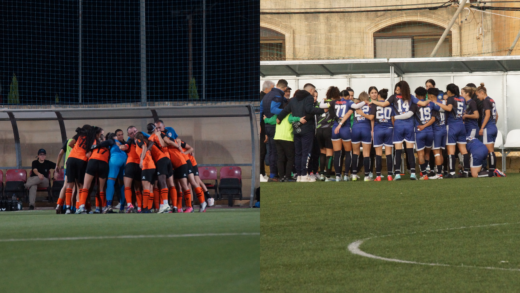
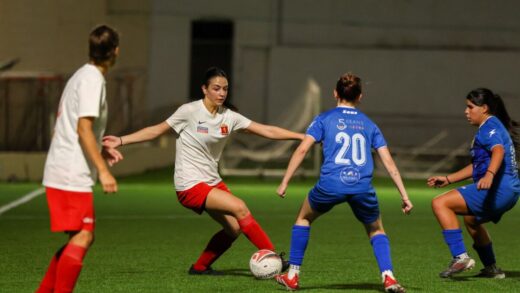
Lead Images: Michael Azzopardi (Swieqi United) / Elise Bajada
Stay up to date by following The Sporting Fan on social media: Instagram ~ Facebook ~ X

1 Response
[…] will be the sheer number of players that the game will lose again next season. As discussed in the 2024/25 recap, there were more than a whole team’s worth of players who vanished throughout the course of […]