 by
by The Malta Football Association has confirmed that Turkey against Malta will be broadcast live on TVM as the Women’s National Team prepares for its League B opener. Broadcasting details for the home clash against Switzerland are still expected in the coming days. The announcement also brings renewed attention to the ongoing debate around broadcasting structures and visibility in women’s football.
Turkey Against Malta Broadcast Confirmed
The Malta Football Association (MFA) has confirmed that the UEFA European Qualification match between Turkey and Malta to be played on the 3rd of March (15:00) will be broadcast live on TVM. On the other hand, the broadcasting details for Malta’s home match against EURO quarter-finalists, Switzerland (7th March, 19:00), are expected to be confirmed in the coming days. Tickets are available for purchase online.
The Malta Football Association also confirmed that the U19 friendlies between Malta’s Women’s U19 National Team and Romania, will be live-streamed on the Malta FA Youtube Channel. The U17 matches to be played later in March will follow in the same format.
The confirmation also reignited a familiar discussion around broadcasting standards in women’s football — a topic that followed Malta during their previous League B campaign.
MFA Responds As Topic Of Centralised Broadcasting Raised Once More
Given the queries regarding the broadcasting details as Malta pushes toward another League B appearance, the Malta Football Association issued a statement to The Sporting Fan, highlighting once more the differences in operational framework between men’s and women’s football.
“Unlike senior men’s international football, where broadcasting and several production elements are centrally managed by UEFA, the structure for women’s competitions operates differently. In most cases, football associations are responsible for organising and financing host broadcasting, live production, media services, and various logistical aspects of match delivery.”
“As a result, the level of coverage and technical presentation depends largely on the resources and operational capacity of each individual association. This creates a different working environment compared to the men’s game, where many elements are centralised.”
“Our aim remains to continue strengthening standards, improving visibility, and building the women’s game sustainably,” the MFA’s statement finished.
Welcome To League B
The topic of broadcasting has reared its head as Malta’s Women’s National Team heads into competitive fixtures at a higher level.
The topic was in debate in 2024 as the Football Associations of Portugal & Malta had still not come to an agreement twenty-four hours prior to kick-off. In fact, the agreement was reached less than twelve hours before the match – and only following comments from both coaches Francisco Neto and Manuela Tesse to The Sporting Fan, calling for action.
The call for UEFA to centralise functions had also already been voiced back in 2024 to no avail, and comments from the MFA confirm that the issue is very much unresolved long-term, two years down the line.
Indeed, many countries at League B and League A levels have taken it upon themselves to utilise this as a business opportunity. Portugal is among the federations that have turned women’s broadcasts into a business opportunity, creating a framework toward a sustainable business model with a fully-fledged broadcast channel solely dedicated to its’ footballing exploits.
The contrast continues to show at operational level. Switzerland is yet to win a major tournament, with their best finish coming at the last EURO competition. Sources suggest that the Swiss federation has asked for no less than seven camera positions for their clash against Malta at the Centenary Stadium, as they search to showcase their product in the most professional manner, and this is just one facet of it.
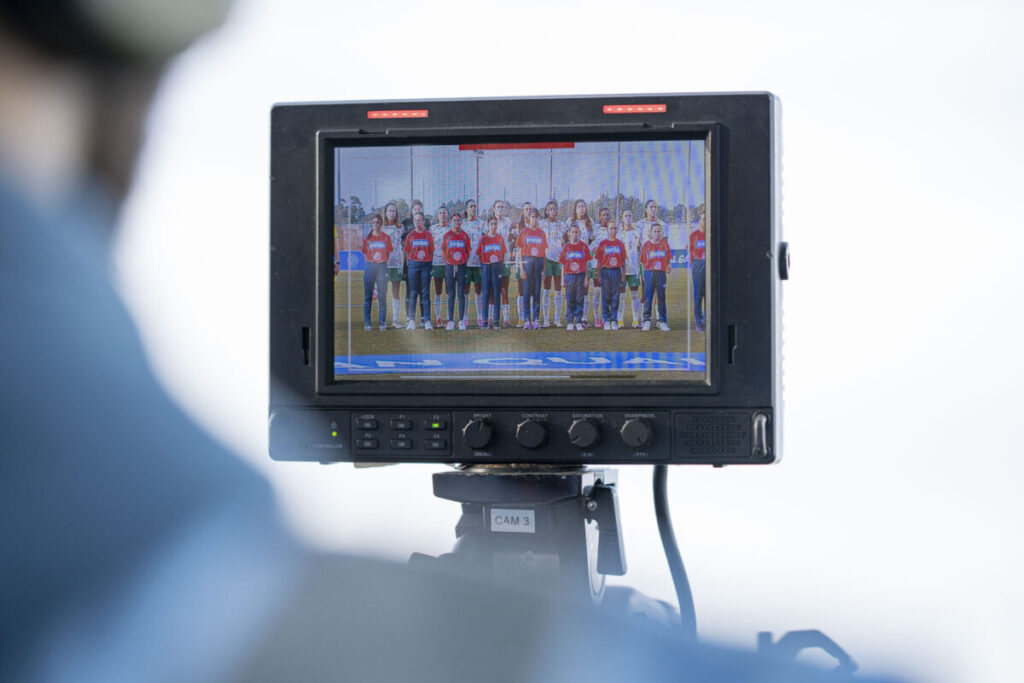
At the other end of the spectrum, two years down the line, a country like Malta, finds itself in the same position – pushing for discussions with UEFA to progress to centralise broadcasting, as the nation grapples with the reality of joining the more established football federations who have transitioned the sport into a product.
The question now is whether smaller nations can raise standards quickly enough — or whether UEFA will eventually move toward centralised broadcasting to level the field.
Lead Image: Brandon Bonett
Stay up to date by following The Sporting Fan on social media: Instagram ~ Facebook ~ X