 by
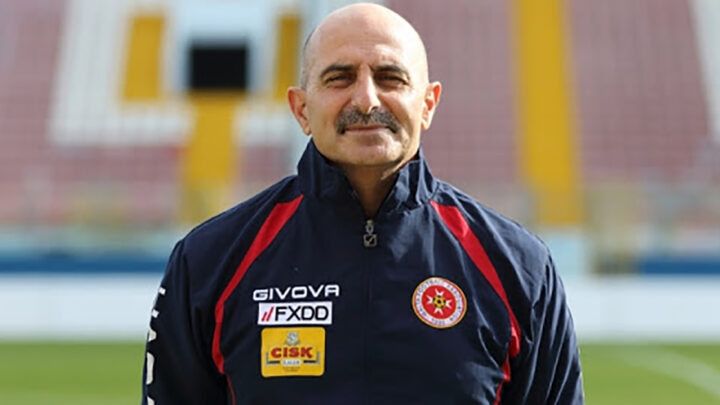
by Across more than two decades in Maltese women’s football, Pierre Brincat was a crucial pillar as the game evolved from improvised beginnings into a structured national project — one now attracting scouts, foreign-based players and expanded technical staff.
In a wide-ranging conversation, Brincat reflects on the milestones, challenges and decisions that shaped two decades of Maltese women’s football. Asked to look back, he returns first not to trophies or milestones — but to the early foundations that made everything else possible.
Building The Foundations
Eleanor Saliba (ES): How does the journey you’ve had in women’s football in Malta compare to what maybe you one day hoped to achieve?
Pierre Brincat (PB): A lot of what we see today — players wanting to come play for Malta from abroad, scouts coming to Malta to watch players, and the technical staff around the national team coach — were things I never even dreamed of when we first started.
I was completely alone, so my main objective was always to grow our numbers.
I still believe this — without new young players joining and training, we cannot move forward. It’s not about the number of teams having a women’s side, but the quality.
The key points are that clubs are sustainable, have young players coming up, and that everyone helps each other — including the MFA supporting clubs.
Financial income from the women’s game is still low, so I understand clubs needing support to raise the level. But I still see talent, especially in young players today.
The biggest advantage I had when I started was that there wasn’t as much competition from other sports. Today there are many more options and it’s easy to lose players, so we must take better care of them.
Choosing The Women’s Game
ES: What made you go into coaching, and specifically – a coach in the women’s game?
PB: I started coaching men. The first women’s team I coached was at AirMalta, where we had both men’s and women’s teams. My wife was among the players, and that’s how I started coaching women. I wasn’t actually aiming to coach — I wanted to retire from playing and focus on other things away from football.
Then Mark Miller, who played and coached with me at Floriana, asked me to join him at Hibernians. After about six months, the women’s coach left and I was asked to stand in.
When I went into training, I realised this was my place. They were fully committed – even though we trained late at night – and they shared my passion for football. That made me want to help them grow.
ES: What was the toughest thing you had to face as a women’s football coach in your time, perhaps both at club and national level?
PB: My hurdles were two. First, I had technically gifted players — like a young Dorianne Theuma — but I needed to teach them how to play together.
Second, I needed to adjust how I coached. You cannot coach a women’s team the same way you coach a men’s team. My best coach was my wife, who guided me on how to deliver criticism so young girls would respond positively.
Women’s teams are a family and that dynamic is unique. With Hibs we won every title except the first year, and what kept players motivated was that family feeling — we even had events outside football like picnics.
I always went prepared for every session. Players appreciated that because it showed respect. The women were making sacrifices simply because they wanted to play football, and I was there because I wanted to be there too.
Even today, though players get more financially, it is still far from the men’s game, and coaches must remember that or they will lose the dressing room.
Building A Winning Culture
ES: In speaking with several players, I often hear about this winning mentality you brought to Hibernians. What do you think you did to keep players hungry for more titles?
PB: You must keep challenging players and changing things. Every pre-season was different and I kept training fresh throughout the season. You must motivate players to come every day, and that requires preparation and new challenges.
As a coach I was always looking for new exercises and ideas. Getting your license is only the start — you must keep up with how football evolves.
And of course, rival teams pushing to beat you also helped keep us sharp.
The biggest rivalry was with Birkirkara. After my first year at Hibs, I was lucky that we played a friendly against an Italian side. At the time there was also George Micallef who was coaching Birkirkara and he had even more experience than myself in the women’s game. We had discussed it and we set up a squad together, but I took care of the sessions and the players really enjoyed them.
Of course, then when players enjoy the training and they have no legal commitments to anyone, then they would want to come join the team. So, at Hibs we got a lot of new players coming in after that, from Rabat, Lija etc. so I strengthened in this way, besides the several young players coming up.
From then on, I worked differently. While others focused on buying players, I focused on developing talent. I was the first to have a youth team, bringing through players like Mandy Debono, her sister Shana who was a very good goalkeeper, Ylenia (Carabott) and so many others.
I started integrating young players with seniors, which gave us a balance of experience and youth. Once we had numbers, I pushed them to learn new systems — that’s how we stayed competitive.
Success at club level soon pulled him into the national setup — where rivalries followed him.
National Team: Uniting Rivals Under One Shirt
ES: How did the decision to leave Hibs and create the national team come about and what was that like?
PB: From a national team point of view, I started as an assistant coach with Mark Miller for the men’s U17 and U19s, while Dr Mifsud was in charge. My condition was that I retained the ability to coach the women’s team at Hibs.
Then Dr Mifsud approached me to start the women’s national team. My players at Hibs didn’t take it too well because I had to leave — it wouldn’t make sense to coach both.
The biggest issue I had was that Hibs and Birkirkara were huge rivals at the time. My biggest challenge was finding a way for the Birkirkara players to accept me as their coach. I’m sure the Hibs players felt I was harder on them then, because I wanted to show my aim was always to choose the best players for Malta.
A person who was crucial in helping bridge that gap was Chantal Fenech. She really helped bring unity so we could become a true national team.
ES: In almost every interview I’ve had with various players who made their debut with the national team when you were in charge, the line ‘then Pierre came one day and I was called up to the national team’ has become almost a relic. A few of them were very young, so what did you most look for when making the decision to bring a player into the national team setup?
PB: To be honest, there weren’t many players of the required quality to choose from. The minute I saw someone with quality and eligibility, I called her up.
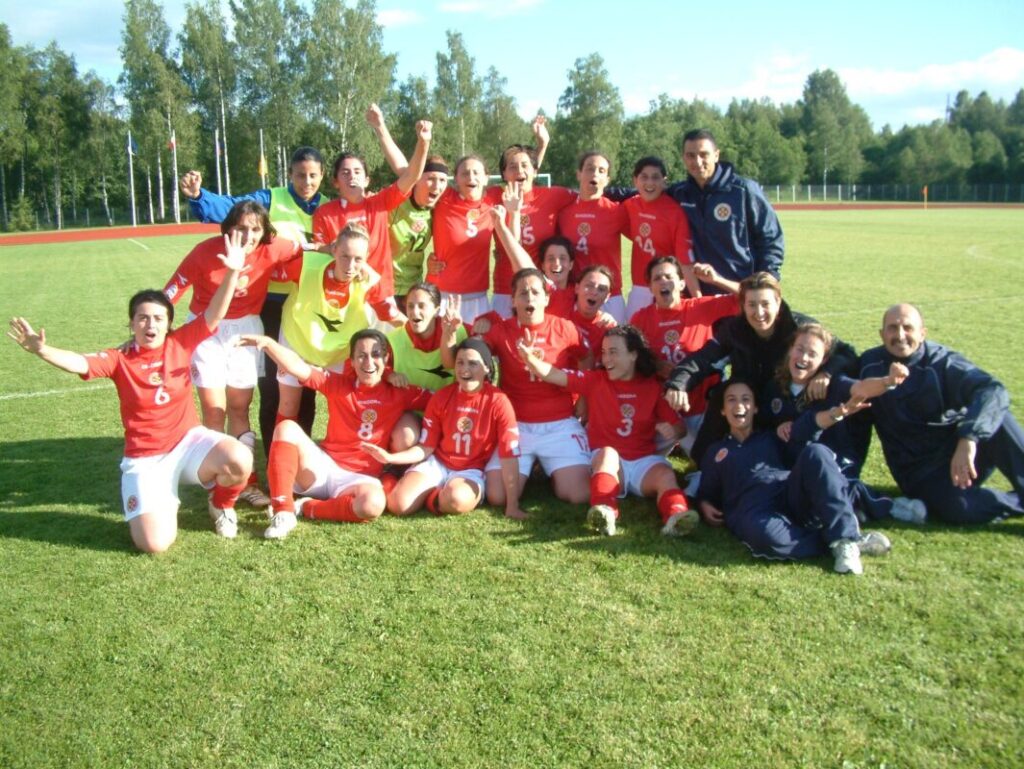
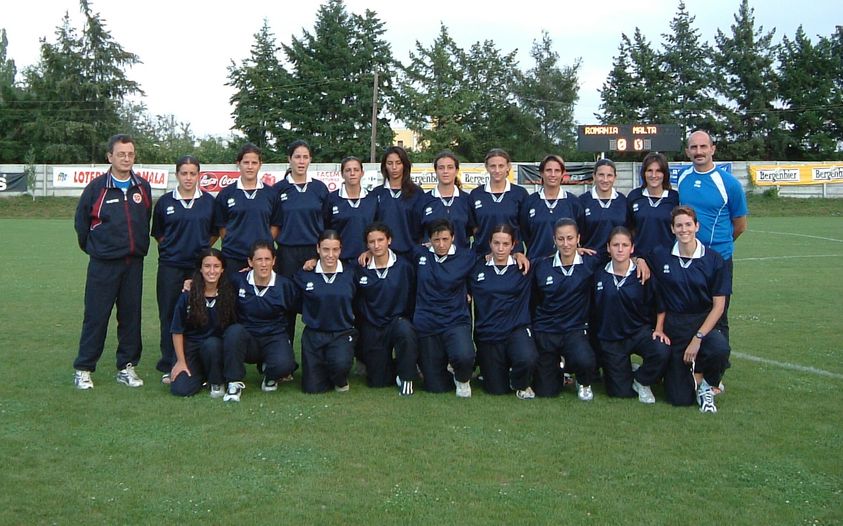
For our first match in Romania I had exactly eighteen players.
I remember playing Iceland — we conceded heavily at home, but away we improved a lot. I had many injuries and had to play several U19 players like Brenda Borg, Shona Zammit and Alishia Sultana. I was proud because they followed instructions perfectly. Keoney Demicoli also had a brilliant match in goal. Contrary to coaches today, I didn’t have many players to choose from.
One injury would have caused big problems. Today there is more choice because we worked to grow players from a young age.
Between 2003 and 2015 Pierre Brincat silenced critics as he steered Malta into its first win against Estonia until reaching the highest achievement in coaching – topping the preliminary World Cup group in 2014.
From Touchline To Boardroom
ES: What prompted the transition into administration?
PB: After more than ten years as coach, I felt that if I were a player, I’d want new ideas and a new voice. I had benefited from different coaches in my own playing career, and I believed that was healthy. I spoke with my assistant Mark Gatt and explained I wanted to retire from coaching.
My plan was actually to stop football altogether.
However, even as national team coach, I was doing administrative work — organising youth festivals and helping with structure. Maria Mifsud was overseeing several sections and needed support, and that’s when Dorita Agius joined us.
When I told technical director Robert Gatt I was leaving coaching, he asked me to stay in administration and continue building the women’s sector. I realised a lot of work had been done and I was worried things might stop moving forward if I left. At that point there wasn’t even a Women’s Football Department.
I agreed to stay part-time but said we needed someone full-time, and I chose Dorita because she was very organised. Later, MFA President Norman Darmanin Demajo asked me to come in full-time, and I accepted.
If you ask me what I prefer in football, I will always say being a player first, then a coach, then an administrator. But being Director was a teaching experience, and I’m happy to have had the opportunity to do all three roles.
The League Debate
ES: The teams today are much less than they were before and the players too. With the benefit of hindsight, do you stand by that decision?
PB: Yes. Many clubs tried — Birgu, Santa Venera, Hamrun and others — but if you don’t invest and approach it with commitment, you won’t reach the required level. I believe you must build correctly from the ground up.
Clubs have a right to say finances are difficult, but effort also matters. When I started at Hibs I had no finances and little support, but I still had players because we showed respect and dedication.
The coach is hugely important. I urge clubs not to appoint coaches just to fill a gap — players know when someone has no interest.
I think in regard to player counts, we’ve seen shifting dynamics and it’s good to question. Mgarr are top of the league today, and I’m happy for them, but I remember a time when Mgarr had so many youth players that Mary Muscat called me to stop sending her players, that Mgarr is full up.
Today, Mgarr has no youth players. So, something failed there and that is something that worries me. I want every club to have a strong pool of players.
Hibernians have a lot of players and perhaps we have a stronger amount in the south who want to play. However, Mgarr’s case shows that there were players in the north, and I believe that there are still players for us to find there. So, while I am happy for Mgarr to see them strong in the senior team, I am not happy when I see clubs focusing solely on the senior team.
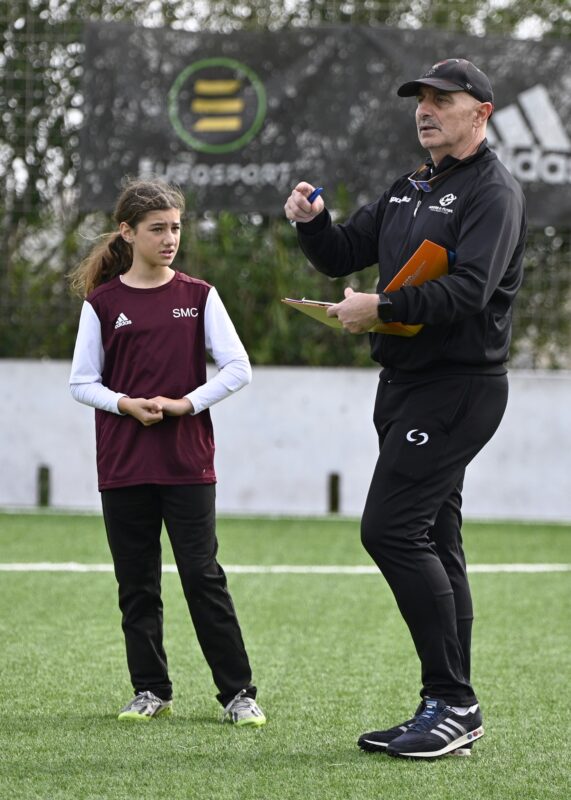
I organized festivals and after-schools with Dorita for so many years I always told clubs: organise open days, show players who you are. Players won’t appear out of thin air. I fully understand that these coaches and administrators are part-time, but as I said, I spent a lot of my career like that, even when I was a national team coach. If you love the game, you will do whatever is needed.
Clubs are bringing in good foreign players, which is positive. But if you’re paying them, use them to coach younger players too. Think long-term.
And the senior coach must stay connected with the whole club — U21, U16 and so on — because eventually you’ll need those youth players. Melita is a club who I’m very proud to see, growing a strong group of girls who have gone from U13 to U16 and hopefully we’ll see them soon in the U21.
ES: What is something you wished to implement but never got the chance to?
PB: Club licensing. We discussed it almost twenty years ago with Maria Mifsud, but it never happened. Being frank, the MFA didn’t give it much importance, but I wholeheartedly believe it is an important thing.
It’s not a system intended to punish clubs. It’s a system intended to reward you, even financially, according to your efforts. For example, you have an appropriate setup with a coach, assistant coach and goalkeeper coach, that’s a good thing, so I reward you with something for that. You bring in a physiotherapist, that’s another positive and you get rewarded. Things that are reachable for clubs, that push the game forward and that are sustainable.
UEFA gives funds to distribute, and I don’t believe every club should receive the same amount regardless of effort. Clubs who invest and develop players should be rewarded. That creates incentive for everyone to improve. I had spoken even with UEFA representatives on this on the ability to gain the independence to divide the money accordingly ourselves. The club licensing is the way to do this.
Competing Interests
ES: There is a perception that the MFA pushes players abroad while the senior domestic league has felt neglected. Is that perception wrong?
PB: There are two separate issues. First, UEFA is working on compensation systems so that when a club develops a player and she moves elsewhere, that club receives something in return.
Right now, if a player leaves Malta to raise her level, it’s positive for the player and for the national team — but the club loses out. That compensation system is important.
As for our league, I agree it needs more attention. The biggest issue is the lack of good grounds. I’ve personally gone to inspect pitches and speak to clubs trying to find solutions.
Dingli was a good example because the club respected the women’s game, but lighting and pitch quality still needed work. If the pitch improves, more matches could be played there. In my view, matches should also be played at the Centenary Stadium or Victor Tedesco Stadium. If we want to raise the level, teams must play on good pitches.
We also need people to understand that pitch availability is a real issue across Maltese football. MPL clubs complain about pitches too. Training alone is a huge cost for clubs, and women’s football has far less financial income than the men’s game.
Beyond that, within these confines we have to understand that problems arise late at times and there is nothing you can do except find an alternative on short-notice. This is not a unique problem for Malta, we see this even in other countries.
In an ideal world, women’s football would have its own stadium — used for everything from festivals to league matches and national teams. That’s a long-term dream.
Still, one positive today is that the league is contested by four teams instead of two. That’s healthy competition and something to be proud of.
ES: Were there decisions you feel were misunderstood by players, clubs or media?
PB: When you’re in that position, you must take decisions. If you try to satisfy every club, you won’t move forward because you will never get everyone’s agreement. Some decisions didn’t work perfectly, but the reasoning behind them matters.
For example, we introduced the 135-minute rule because we were seeing identical line-ups in youth and senior leagues. The best players were playing too much. It didn’t work perfectly, so we need to amend it, but the intention was to protect players.
Another practical example, in U16 we had complaints that pitches in Kirkop and Marsascala were too small. But we had players as young as twelve — they couldn’t physically handle full-sized pitches yet.
So we tried a middle ground, letting top teams play on bigger pitches after the split. Then we got backlash from other teams who felt it was unfair.
The third – and this is the implementation I’m most proud of – was The Academy. It caused a lot of backlash when we started. But it allowed us to provide resources many clubs couldn’t afford then — a coach, assistant, goalkeeper coach, physical trainer, physiotherapist. It wasn’t meant to take players away from clubs; it was meant to support their development. I felt validated when Devis Mangia later adopted a similar model in the boys’ sector.
There were things I wished to do differently there too. I wish all Academy coaches were female, but we simply don’t have enough female coaches yet. When selecting coaches, I look first at character, then football ability, because these are young players and safety comes first.
I also acknowledge that some coaches in The Academy needed development, but we must give people opportunities to grow. Female assistant coaches in the national setup should be allowed to coach clubs too. UEFA requires certain licenses, but if those coaches don’t work day-to-day at club level, they stop developing. I’ve tried to explain this, but clubs often oppose it. That limits us.
So, there will always be backlash. I’ve made mistakes and I admit that. But every decision was intended to push the women’s game forward.
Beyond The Pitch
ES: Were there wider demands — like visibility, broadcasts or commercial growth — that you wished to implement but couldn’t due to resources?
PB: Yes. Things have improved and the MFA has helped, but the women’s game has grown very quickly. The administrative workload increased massively.
Today, Manuela (Tesse) oversees technical matters while Dorita (Agius) leads administration. Honestly, Dorita needs at least one more person because the workload is huge, but every person comes at a cost.
If we compare ourselves to countries in the lower half of the rankings, we’re doing well given our resources. When I started as national team coach I was alone. Today there are thirteen staff members around the senior national team.
The MFA has more teams now — senior teams, youth teams, hubs, futsal, beach soccer — everything requires resources.
UEFA and FIFA also face challenges. Funding is distributed according to hierarchy, meaning stronger nations receive more while already having commercial income. If smaller nations are expected to catch up, they need more support.”
Through UEFA workshops and international collaboration, Brincat shaped discussion on the women’s game but also observed how smaller nations attempted to accelerate development — with one example standing out in particular.
Looking Beyond Malta
ES:Which country do you admire most in how they’ve developed women’s football?
PB: Andorra — and our history with them explains why.
When I was coach, Andorra were a weak team and we won comfortably. Recently, in a U16 Development Tournament, they beat us by several goals. It was clear they knew each other very well and were tactically strong.
I had a hunch, and this was confirmed by their staff after the match: Andorra picked their best players formed a team and put them in a boys’ league in Spain. That gave them constant high-level competition.
If I had suggested this in Malta, I would have been criticised. But we’ve seen other sports do it — even waterpolo.
I believe a national youth selection playing in the senior league could help development. Clubs worry they would suffer, but those players would eventually return to club football stronger.
Clubs also complained when foreign-based players were chosen for the national team. But every country does this.
If a player has Maltese descent and is good enough, she deserves the opportunity. Selection is always based on quality.
I’m proud when players go abroad to stronger leagues — it raises the national team level. At the same time, players in the local league must make a big effort to adapt when joining the national setup.
Andorra shows a small nation can progress if it works smartly. But money will always make a difference.
The Moments That Stayed
ES: Achievement Most Proud Of As A Coach
PB: I remember every milestone — first goal, first win, first result against a higher-ranked team.
But the biggest highlight was winning the preliminary group to reach the next round of the FIFA Women’s World Cup qualifiers.
At club level, winning the first league with Hibernians will always be special.
ES: Toughest Match as Coach
PB: The second match as national team coach. I was alone — no analyst, no friendlies beforehand.
After losing 3–0 away to Romania, I chose to play at Ta’ Qali for the home match. It was a naïve decision because our players weren’t used to such a big pitch. We lost heavily and I received a lot of negative messages saying women’s football was a waste.
It was a tough period, but I used it as motivation.
Losing 12–0 against Spain was also difficult. The players gave everything but the level difference was huge.
That match helped highlight to UEFA why structural changes were needed — which later came with the Nations League format.
ES: Player Who Was Difficult but Effective
PB: I actually liked strong characters. Players like Ylenia Carabott, Tereza Zammit and Joanne Vella gave me a lot of trouble — I sent them home from training many times — but they gave everything in matches. Those are players you want in your team.
Today I see coaches cutting players quickly because of attitude. I always say: don’t take the easy way out. Sometimes you can help shape that player.
ES: Player Who Was a Joy to Coach
PB: The eighteen players of the first national team will always be special. We started something unknown together and they made huge sacrifices. Without them, none of this would exist.
ES: Biggest Achievement as Director
PB: Two things stand out: when Mark Gatt achieved the most points in an open group before the Nations League, and the two promotions to League B under Manuela Tesse.
ES: Toughest Moment as Director
PB: The hardest moments are when you have to remove staff members from positions. It’s never easy because everyone is trying their best.
I’ll also take this opportunity to apologise if I ever came across too strong — the pressure of the role sometimes affects you. My intention was always to maintain good relationships.
ES: People Most Grateful For In Football
PB: Victor Ellul at Hibernians, and Dorita Agius at the MFA. Dorita has been a crucial pillar — someone of few words but a lot of work. Her workload kept growing and she never said no.
The Next Step
ES: One final question, what is your hope for the game?
PB: I’m realistic. If we can consistently finish in the top two of League B, then we can start dreaming bigger.
Our domestic league is healthier now with more competition, but ultimately the measure is how the national team performs, because it brings together the best players.
We’re not far away — but we must make the next step.
The Sporting Fan thanks Pierre Brincat for taking the time to be able to bring you this feature, while publicly acknowledging his efforts to always meet criticism, praise and suggestions, dished out on this page in equal measure, with dialogue – always in the interest of growing the game.
Thank you for reading. If you enjoyed this please consider sharing it with a friend who you think would enjoy it. You may also want to read other interviews from the ‘Spotlight‘ series.
Lead Image: Malta FA

Great Inside! Thanks to The Sporting Fan and the Retired Coach Pierre