 by
by Behind the excitement of matchdays and trophy-lifts are several administrative individuals pondering and making decisions toward the long-term future of the game. In this interview, The Sporting Fan sat down with the leaders of the Women’s Standing Committee, Kelly Agius Pace and Dr Alistair Schembri, to get their view on the role of the Committee, the achievements, challenges faced and the reward in being part of a group actively pushing the women’s game in Malta.
The passion for football is often pictured in players celebrating goals, scenes of crowds ecstatic for their team’s triumphs, a referee dishing out a card or a coach in profound thoughts on the touchline.
However, behind all of that is an administrative hum, one that ponders the bigger picture and that has the potential to set new goals, drive change and set the path toward new horizons. It has arms within clubs, but also has those working within various factions of the Malta Football Association.
The Women’s Football Standing Committee was revitalized last year and it serves as the link between clubs and the Women’s Football Department within the MFA, with a seat on the Executive Board of the MFA.
Elected to lead it for the first time, were Kelly Agius Pace as its Chairperson, and Dr Alistair Schembri as its General Secretary. In this interview, the two shed light on their decision to form part of the Committee, the role of the Women’s Football Standing Committee, challenges and implementations in this past year, and the reward in being part of it.
Disclaimer: The views expressed by the two individuals in this interview are their own and do not necessarily reflect the view of the clubs they represent.
The Decision To Become Part of The Committee
Unsurprisingly, it all started with a love for the game.
Kelly Agius Pace is a retired footballer and former national team player. Asked about her journey to this role, she replied, “I originally loved football, but I had my foundation in athletics. I started playing football when I was around fourteen years old, where things changed because I was at St. Catherine’s (school) and they had the team of Raiders. As soon as I started playing football I completely fell in love with it and forgot about athletics.”
Agius Pace debuted in the league with Melita, before moving to Birkirkara where she spent the majority of her playing career. An ACL injury at 26 years old derailed her playing time, but she followed it with short stints at Swieqi United and ultimately finished her career at Mgarr United.
Agius Pace explained how a tongue-in-cheek rivalry with the Greens (Mgarr United) evolved into the feeling of being part of a close-knit family within Mgarr United. It pushed her to maintain an active part following the decision to hang up her boots.
“I’m fairly competitive and I used to playfully tease Mgarr United’s about their lack of trophies. However, I didn’t just find a team but a really close-knit family in a way that I had never felt. I think it was this which pushed me to start getting involved in administration in the final year of playing, before I fully committed to the administrative side of things once I stopped.”
However, Agius Pace reflected that the step into the Women’s Football Committee stemmed from a different place, “The motivation to join the Standing Committee came from a fear that I was seeing women’s football drive forward in Europe at a fast pace, but seeing things going backward in Malta. I will not be so obnoxious to say that I will be the person that makes it go forward, but at least I wanted to be a part of a group of people that are trying to push it forward.”
Dr Alistair Schembri recounted his journey toward the Committee. Similarly, it was one of small steps that led to an administrative role, “I always loved football, I had a short stint playing with Hibernians when I was young. However, then specifically my interest in the women’s game grew when I had my own daughter. She’s now sixteen years old and has been playing since she was eight. Of course I followed her journey, going to matches and taking her to training.”
Eventually the itch to get involved gripped the parent, “One time I offered the Technical Director, Andrei Agius, my support in the women’s sector should the team need it. At that stage I started to get involved as a club delegate at U16 level. Eventually, I got elected as the club’s representative on the Women’s Standing Committee.”
The two were subsequently elected by the Standing Committee in their respective leadership roles. Kelly Agius Pace holds the role as the Chairperson of the Women’s Standing Committee, while Dr Alistair Schembri holds the role as the Secretary of the Women’s Standing Committee.
Who Forms Part Of, What Is The Purpose & Power Of The Committee?
The Women’s Football Standing Committee is a committee that falls within the remit of the Malta Football Association (MFA). Every club that has a team forming part of any women’s league that is organized by the MFA has the right to nominate a representative to form part of the Women’s Football Standing Committee.
Kelly Agius Pace explained the role and objective of the Women’s Football Standing Committee, “It is a forum where representatives from each club come together for a healthy discussion on the overarching things in women’s football. In that room, it is about a group of minds who voluntarily bring thoughts, observations and ideas to push the women’s game forward.”
Aligned to the vision, Dr Alistair Schembri continued, “The Committee works to promote the women’s game in general, but to also give ideas on how the grow participation and retain participation throughout.”
Additionally, he continued on the second duty, the importance of that club representative being a link between the Committee, MFA and their club, “The role of each representative is also to communicate important messages and ideas from their club to the Committee, but equally to revert back with feedback from each Standing Committee meeting back to their club.”
Although coming into the Committee through different paths, the two admitted that their concerns for the game was the common denominator for their efforts. The two have just finished their first year leading the Committee, which has set the foundation while ironing out initial hurdles that they highlighted.
Dr Alistair Schembri gave some insight into the participation in the past year, “We had ten representatives across the different leagues within the women’s leagues. This year we expect new representatives due to the new introduction of some teams in the women’s game.”
Giving a view of the meetings, he continued, “We do not always agree, because of course representatives are bringing different ideas from their own paths and clubs. However, the discussions have been held with a sense of respect among individuals.”
As leaders, the two have an additional role to bring the ideas and suggestions emerging from the Women’s Football Standing Committee to the overarching MFA departments. “As its leaders we bring the recommendations and feedback to the MFA, starting by first communicating with the Women’s Football Department.”
Thus, Agius Pace’s involvement in Mgarr United, and Schembri’s involvement in Hibernians, means that they have a dual role which they must balance for the good of the game within the Committee. As their clubs’ representatives they are a voice for their club, which is a responsibility they must uphold. However, their leadership roles within the Committee also means that for specific leadership tasks they must shed that association and act as a neutral party.
In this regard, Agius Pace referred to the experience of the Women’s Football Department’s leaders, the Head of Women’s Football, Pierre Brincat, and Administrator, Dorita Agius, “We propose solutions and try to find an agreement with them on the best way forward. Of course, one must consider the experience the two have in leading women’s football to the place it holds today. However, from a flip side also, the Women’s Department has actively listened and referred to the Standing Committee for feedback on important matters.”
Additionally, the coach of the women’s national team, Manuela Tesse, also steers things with influential input as the Technical Director on women’s football in Malta.
Questioned on the decision-making power of the Standing Committee on the women’s game in Malta, Kelly Agius Pace remarked that the power held by the Committee is different to what many have perceived it to be originally and that this was a challenge faced until the reality set in for the members and external parties.
She said, “It is not so much a decision-making committee, but more of an advisory one. This was something that perhaps many misunderstood initially. However, we have been able to bring forward important initiatives that have been implemented to good effect this year.”
Still, Agius Pace remarked that the Standing Committee has won additional power within the MFA by being awarded a seat on the Executive Board of the MFA. “The Executive Board is the level where overarching decisions are made at MFA. So, this seat gives the Committee a stronger position to voice concerns in an equal manner to other leagues falling within the MFA, branches and associations falling under the MFA’s remit.”
What Are Some Of The Implementations Done This Past Year?
The two explained that there was significant amount of time spent discussing the possibility of a health insurance for players. Although the discussions are still on the table, the duo remarked that there was good progress made.
Another initiative in the past year was the introduction of a feedback system on the referees officiating the women’s games to be able to aid the Referees Department. The Standing Committee reached an agreement with head of referees, Alan Mario Sant, on a method that would help the department identify officials doing well and those needing extra support on particular instances in the match.
In a nutshell, the system devised introduces a pointing system to rate the officiation in a match. The points are given by an adequate representative from the clubs involved. Where there are big discrepancies between the two clubs, this is first tackled by the Standing Committee. However, if the two parties agree that a particular match suffered very low levels or otherwise was of great quality, then this feedback is given to the Referees’ Department. They would then look through the footage in that match and provide technical feedback to the officials in question to aid their development or give them recognition.
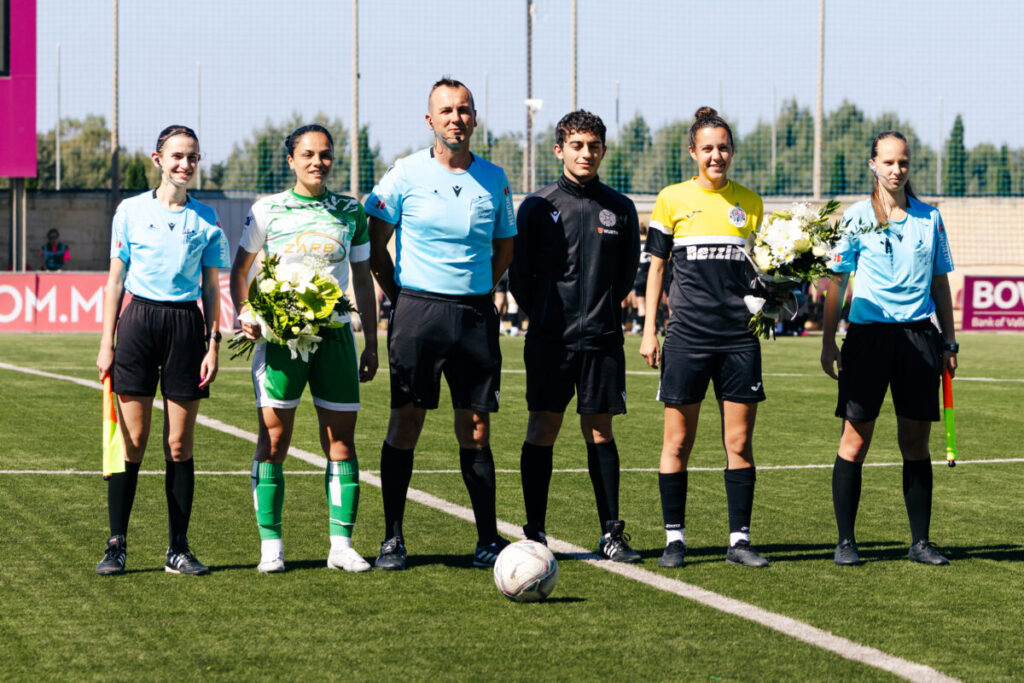
The two discussed the two sides to it, first that it will push clubs to be active in providing feedback in a timely manner. This is since this will become obligatory for clubs to fill in this form within a timeframe from the game itself, without which they cannot lodge complaints. On the flip side, it is a constructive way to give feedback to the referees’ department who are then able to carry out their own technical assessments and ultimately aid officials in their development.
Kelly Agius Pace remarked, “We acknowledge that everyone makes mistakes and everyone has a bad day. The idea here is not to punish, but rather to find ways in how the Standing Committee can develop ideas of how we can improve together.” Alistair Schembri echoed, “This enables us to give active feedback in a constructive way so that the game improves. This is a solution that helps everyone and this is where the Standing Committee tries to focus its efforts.”
Another initiative tackled within the remit of the Standing Committee was on the fixtures of the Assikura Women’s Knockout in view of the yearly clashes with examinations. In the past, this led to various issues in the past with ultimately players missing out due to these clashes and fallout between all involved.
In this regard, the Standing Committee reached a formal unanimous agreement that if a match clashes with the examination of a player, the clubs involved must agree without fail that the match time is changed.
As to the broader discussion of the timing of the release of fixtures and venues (and by extension notice of changes in venues), Kelly Agius Pace remarked, “There are real constraints due to lack of resources. I think here is where together we must be conscious of our constraints, and this is a problem that affects all football in Malta, not just women’s football. I do not believe the problem is due to planning negligence. A lot of the pitches in Malta are adequate for training, but not for matches, which restricts things.”
She continued, “The time of the fixtures is another hurdle and ultimately gate money is a real factor, where one must consider that costs to run a stadium must somehow be funded. As for women’s football itself one must consider that it does not pay for officials and grounds. I think it’s important to look at the broader picture.”
While the overarching power remains with the MFA on the organization of the league, Kelly Agius Pace remarked that the Standing Committee has given its suggestions on the fixtures and venues, “We provided a shortlist of four to five grounds that would be suitable for the 2025/26 together with the MFA Women’s Department. The Department had the responsibility and worked to lock these grounds for the women’s game.”
The senior league matches until December have been released and will be played at Centenary Stadium, Victor Tedesco Stadium, Charles Abela Stadium and Dingli Ground.
Finally, the Committee is made up of non-technical individuals. This means its members are not equipped with the know-how to direct that (the technical) side of the game and this was a gap that the Committee aimed to address at the end of the last season.
In fact, Kelly Agius Pace noted that the formation of an informal technical sub-committee has been encouraged among the active coaches in the women’s game with the aim of informing the Standing Committee. A representative from that technical group presents ideas to the Standing Committee once a month, and then the Committee would feed that to Women’s Football Department and the overarching MFA.
Referring to the objective of the Committee, Kelly Agius Pace remarked, “As you can see, these are initiatives where collectively representatives coming from each club felt that a problem was impacting the game as a whole. Our work then is to suggest potential solutions to the Women’s Department and try to find a way to resolve them.”
What Are Some Of The Challenges Faced & How Are They Being Addressed?
As expected, the Committee faces all sorts of challenges that the game goes through. As the Committee’s leaders, Kelly Agius Pace and Alistair Schembri are tasked with coordinating the Committee toward the consensus or at least giving a voice for each issue. The two were probed about the challenges faced.
Hinting at the difficulty in finding a solution that pleases everyone, Kelly Agius Pace said, “The path chosen may not always be to everyone’s liking but it is the one which is chosen for the best of the women’s game. If mistakes are made, we are actively looking at how to re-direct course toward a better alternative.”
Questioned on their challenges as leaders of the Standing Committee, they highlighted two areas. The first was to bring an understanding that the role and power of the Standing Committee is an advisory one and not a decision-making one. The second was the effective communication to and from the Committee to clubs.
The league restructuring was a topic which the two identified as the toughest to tackle within the Standing Committee this year and one that broke the mirage of the power of the Standing Committee as a decision-maker.
Kelly Agius Pace remarked, “I think this topic, of the league structures, was one which particularly underlined the Committee’s role is as an advisory, more than a decision-making one. As a committee we brought stakeholders together for discussions, including bringing in the technical point of view and proposal. Ultimately all of this has led to the decisions made for the leagues to be played in the 25/26 seasons for the senior, U21 and U16 league.”
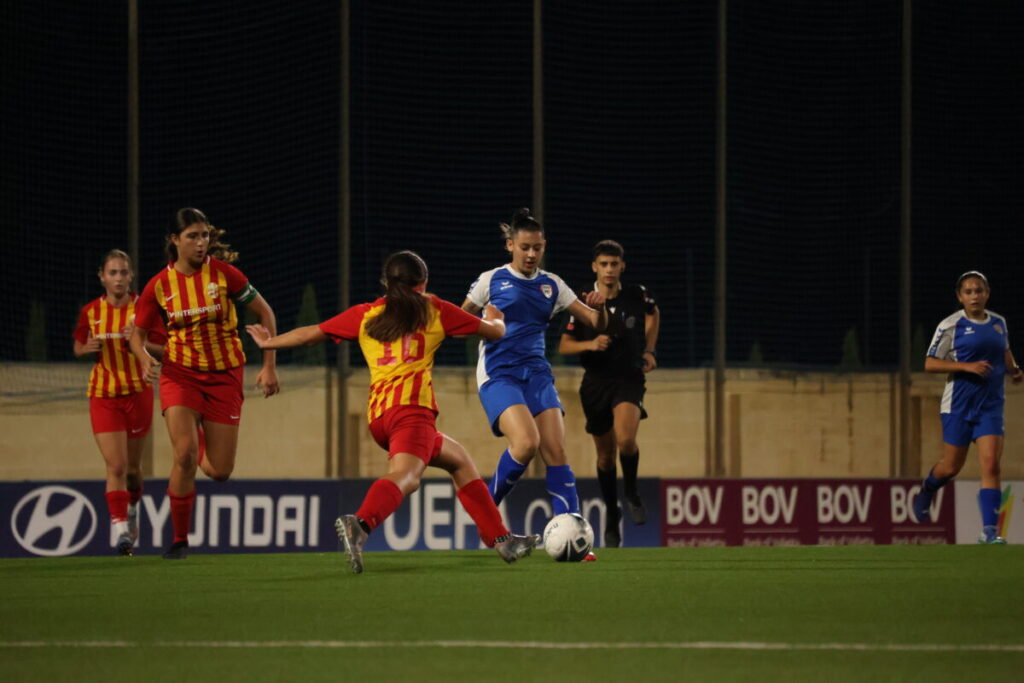
Giving insight into the process, she said, “This took several discussions, several meetings of long hours debating over different issues and ideas. There was significant backlash and I even received direct messages from individuals within the women’s game who felt that the Standing Committee was not effective. Of course, I tried to tackle these directly with the individuals since I am very much aware these would not come from a vindictive place, but rather real pain over previous experiences in the game.”
Alistair Schembri echoed, “It was a particular stage of a season and I think the expectation of some was that what was proposed by the Standing Committee would be what is put in place. However, the reality wasn’t this.”
Addressing the fact that the solution does not satisfy all parties, Kelly Agius Pace finished with, “We must understand that past experiences are a teacher. There are things which personally I don’t agree with, but one must also consider that if in the past there was uncertainty over whether matches are going to be played or not, then that is something that must be addressed.”
The accuracy and timeliness of communication was also identified as an area for improvement as the Standing Committee started to re-operate last year under different leadership. Particularly, initial challenges were faced in ensuring that club representatives communicated key issues and decisions back to their clubs effectively, and vice-versa that they accurately represented issues hitting their clubs in the Standing Committee discussions so that they could also get the spotlight.
Alistair Schembri addressed the impact, “If the discussions within the Committee are not communicated back to clubs in the right way, its function is limited. Additionally, if the feedback requested is not brought back in a timely manner, then there are delays in taking decisions which affect the ability to push the game forward.”
Schembri identified a particular example with technical members of clubs, such as coaches, having various ideas which had been discussed in the Committee but that feedback was never circled back to these coaches. In this regard, the formation of a technical sub-committee who would have the opportunity to name a representative that would directly present these ideas to the Standing Committee is one effective way thought to tackle this gap.
What Are The Positives?
One big positive was that the attendance of members for Standing Committee meetings was high. There was more than seventy-percent participation throughout the season, which is a big improvement over the Standing Committee’s previous cycles.
Alistair Schembri weighed in, “I think this increase in attendance was a big positive in the re-initiation of the Standing Committee and the perception of the Standing Committee has started to change compared to previous years for the better. I think these are positives in this year of operation, showing that there was a serious intention from all involved to be active in their role, that we discuss and have constructive disagreements but always in a respectful environment. Ultimately, there is a democratic vote and we move forward.”
He continued, “I believe this past year’s work sets a strong foundation for us to continue working and improving the game in the next few years. I think this path will raise the credibility of the clubs and the women’s game domestically as a whole. Speaking for the women’s game, I think it is easy to point fingers, but I think what we can do as clubs is work together and make ourselves into the best version first. This is the first thing in our control. The more we help ourselves become better, the more credibility we gain and the better the standing will be of the clubs, ultimately the Standing Committee, and the women’s game.”
Are There Challenges Too Big For The Committee?
The game is often thought of from the perspective of matches, but as the above shows, there are several layers to it, all of which the Committee faces. The two were questioned whether this past year ever raised thoughts of the need for further individuals or the feeling that tackling the entirety of the women’s game (from grassroots to senior level) under one committee is too much.
Alistair Schembri weighed in, “I think as long as I see individuals working together toward the same goals, I am willing to face the challenges and work to find solutions for the game to rise further. So, far in this past year I would say that I feel that a lot of the people involved have the right intention to improve the game in Malta and I am happy to be part of that group.”
Kelly Agius Pace remarked that the holistic view is crucial for the success of the game, “One of the things we underline in every meeting is that it is all a process, from grassroots to senior level. The problems you face at grassroots will continue to progress to the senior level unless they are tackled at the root. Additionally, some of the problems are not inherent to the women’s game, but a symptom of demographics and a short-term thinking culture.”
The two were unanimous in their thoughts that they are under no illusion of the challenges that the game will continue to throw up, even as things improve. However, both underscored that they are ready to work if all individuals pull the rope toward the common goal of improving the game.
Kelly Agius Pace replied, “The Standing Committee has a limit to its impact within clubs, and similarly there are restrictions coming from the MFA and the higher levels of UEFA and FIFA. However, those of us in the Committee are the people dealing with the day-to-day administrative issues within our clubs. So, we are the first to be impacted by poor decisions. It also means we have the power to try to choose sustainably and that will help us along the way.”
She highlighted the challenges faced of clubs giving walk-overs in the past season and the effort made to communicate and understand the issues that these clubs were facing. However, she reiterated that the effort must come from both ends to improve the situation, and that as much as possible long-term thinking must be adopted to avoid these situations.
She finished, “Applying that long-term thinking at the Standing Committee level will help us move forward to provide better feedback and solutions to the MFA. Ultimately, we must also remember that those in the Women’s Department have the experience which we must also respect.”
On the other hand, some problems being tackled are of a much wider nature, such as structures determining the organization of the league in its financial aspect and club-licensing structures. As noted above, while the two topics have been discussed, the ultimate decision lies with the MFA Women’s Department and the wider MFA. However, the two acknowledged the active requests by the MFA Women’s Department for feedback from clubs in view of the club-licensing structures. This latter initiative is one of the focus areas of the MFA Strategy launched in the past weeks.
What Makes It Rewarding?
Alistair Schembri noted, “Personally, I think it becomes rewarding when to see numbers growing at every level. We are seeing increases in younger ages, but the aim is to see the success in raising these players and retaining them in the ages of eighteen to twenty years old. To see the clubs compete and increase in numbers with all clubs involved offering strong competition is another target. Finally, to see bigger exposure for Maltese women’s football domestically and internationally.”
He finished, “It will take a lot of work and time, it is rewarding to see that effort turn into positives for the game. If we continue to work together toward one common aim, then I believe there is the potential for success and that is rewarding.”
Kelly Agius Pace echoed the sentiment, “The numbers must increase, unless that happens the futuristic view will always be dampened. I think it is clear from the EURO final that women’s football is exponentially growing in numbers and quality, from every perspective in Europe. I think we’re yet to catch onto that wave.”
She continued, “When we get close to that wave taking over the women’s game in Europe, when we start using the same foundation structures, the same visibility and respect toward players and individuals that the game is getting in Europe, when we start acknowledge the players in Malta who are strong and have had the opportunity to go abroad but chose to stay in Malta and push the game here, that is when I will feel the work we are doing is rewarding. When we start giving the recognition that they deserve and to see the numbers grow, that is when it is rewarding.”
Giving a tangible example of the work being done by clubs to improve the game, Agius Pace hailed the success of Swieqi United in the UEFA Women’s Champions League to continue the winning form set by Birkirkara in the competition in the past years.
Looking at the wider impact of these positive results, she said, “Our coefficient is still low which is blocking us from competing in the second European competition launched by UEFA this year. However, these wins are a step of realising that potential of having Maltese teams go further in the Champions League and raise the coefficient toward having a second team participating in Europe.”
She finished, “These are big goals, but I firmly believe that the work we are doing, that each club is doing and the Standing Committee by extension, is pushing us toward these objectives. It’s not enough, we must push more. However, those results at the highest levels would be the rewarding moment. My objective is that Malta’s women’s game closes the gap to the top in Europe, that is when I will be happy.”
Until then, the Standing Committee will be steadfast toward the achievement of these goals as the women’s game heads into the upcoming footballing calendar. Malta’s domestic leagues kick off this Tuesday with the Assikura Women’s Youth League (U21).
I would like to thank Kelly Agius Pace & Dr Alistair Schembri for taking the time to sit with me to be able to bring you this feature. I look forward to see the efforts of the Women’s Standing Committee in the next year.
Thank you for reading. If you enjoyed this please consider sharing it with a friend who you think would enjoy it. You may also want to read other interviews from the ‘Spotlight‘ series.
Lead Image: Elise Bajada
Stay up to date by following The Sporting Fan on social media: Instagram ~ Facebook ~ X