 by
by Manuela Tesse was extended for four more years at the helm of Malta’s Women’s National Team last December. While the senior team is on its path toward claiming a promotion back to League B, Manuela Tesse spoke on the achievements of the past two years and her view of the important steps for the upcoming years.
Setting Goals With The Benefit Of A Foundation
Malta’s Women’s National Team coach, Manuela Tesse, penned a four year extension last December, following an opening two years. In terms of results, Manuela Tesse’s first stint in charge was characterised by a run-in period of friendlies, following which the team secured a promotion to League B in the inaugural UEFA Women’s Nations League. It was followed by a League B campaign in which the team secured one point, and though relegated, earned the respect of their rivals in the football displayed.
Manuela Tesse was questioned on what she believes are the key aims achieved in the last two years that will be crucial as a basis for the four ahead. She replied, “I think the first objective was to increase squad depth and I believe we have done so. We had a limited number of players capable of playing at higher intensities required against stronger teams and we knew that injuries will always play a part, as we have experienced in these past few months. This I believe we achieved in many ways, one of which is the change in the league structure which is more intense and increasing the level of training that players are doing in Malta so that they can compete at the necessary level.”
International window selections have featured a number of rotations, with several players given the chance to impress in those windows to widen the depth. Additionally a long-term camp held at the end of the 2023/2024 season gave the national team coaches a chance to spend more time training several players playing in Malta.
The turn of the year was also accompanied by an increase in squad depth through new players eligible to play for Malta’s Women’s National team through attained citizenship. These were namely two, in Oceane Grange and Fiona Buttigieg who have since debuted in the current UEFA Women’s Nations League campaign.
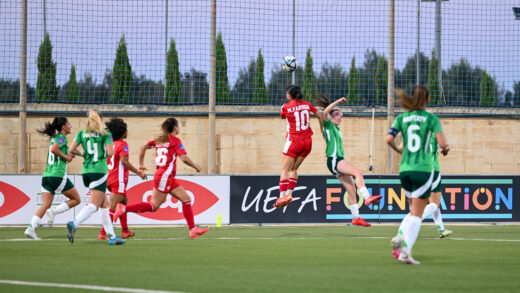
Besides increasing squad depth, the Sardinian has also pushed for a positive approach in football for Malta’s Women’s National Team. It was one which was unafraid to push forward in attack even against the likes of Portugal and Hungary. Casting a look onto the results, Tesse continued, “In terms of results we achieved the objective of promotion in the first UEFA Women’s Nations League. We want to keep going.”
Changes In The Setup Of The National Team
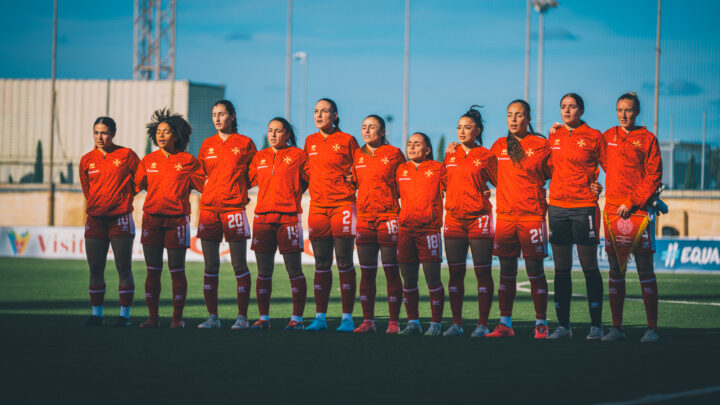
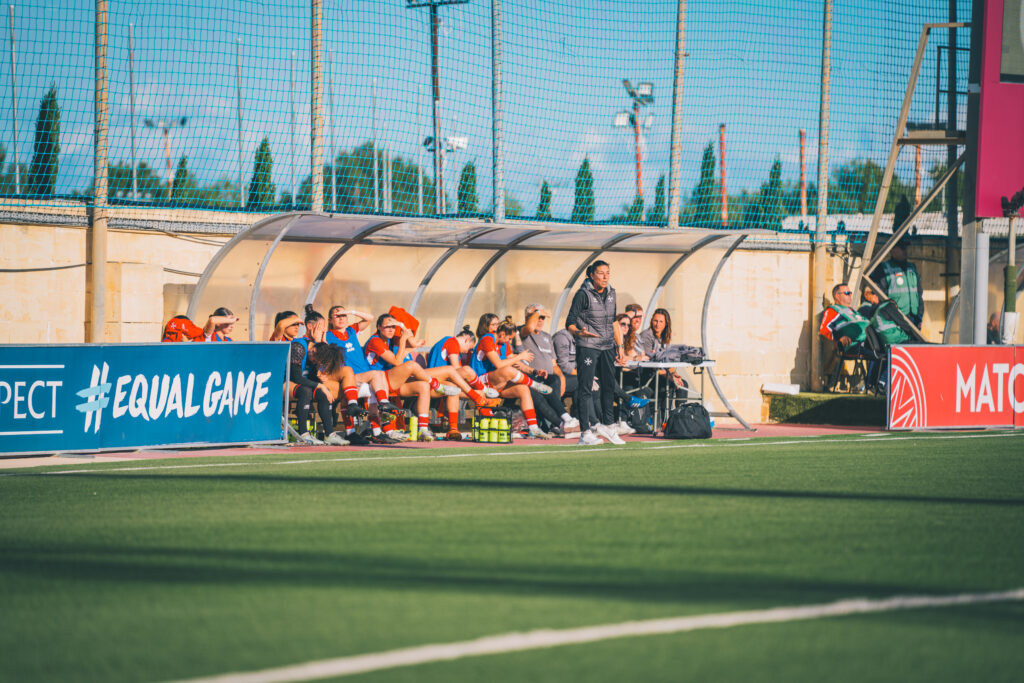
Manuela Tesse’s extension came in parallel with changes in her staff setup prior to the start of the current edition of the UEFA Women’s Nations League. Former assistant coach and national team player, Dionne Tonna, was replaced by Piero Panzanaro, who also coaches Malta’s U16 Men’s National Team.
There were other changes as well since the inaugural edition of the UEFA Women’s Nations League, with Roderick Bajada taking over match analysis duties, while this UEFA Women’s Nations League campaign saw Brandon Tanti become Team Manager, instead of Amanda Dimech.
Questioned on the impact of the changes, if any, Manuela Tesse replied, “The changes happened due to various reasons, including personal ones for some of the outgoing staff who needed to focus on other things. However, I believe the changes can be positive for players. I look back to my development in Italy where one of the problems was that we had the same coaches every time. This meant that players’ growth stagnated because you have the same coach for ten years. So, bringing a new, high-level coach like Piero, with his background and knowledge, is something that benefits the players for sure.”
Bridging The Step From The Youth National Team To The Senior Team
While the senior national team is having a fairly good spell under Manuela Tesse, the number of players bridging into the senior team is limited. The importance of building the next generation has been mentioned at length, including the need to take a hard look at the domestic youth leagues. However, for now this remains in discussion, with no real hard structures being set in the leagues, coaching setups or squad restrictions.
On the other hand, the overall poor performances & results at international level at youth level show the clear gap that exists between Malta’s youth players and those from competing countries. Even more so, when one considers that opposition was often what most would consider comparable to League C & League B level nations.
The linkage between the youth national team coaches, Clint Tabone and David Attard, and the senior team coaches is crucial for an effective pathway into the senior national team. Manuela Tesse was questioned on what are the things that are being imposed at every level, as opposed to the aspects which are flexible to the cohort.
She began, “The system changes based on the characteristics of the players. For example, I started off with Malta’s senior team with 1-4-3-3 because it was the best for the group of players available. This was tried with the youth team, but I immediately pushed for changing this because there were no wingers. It is the principles which should be the same across the groups. So, you can have the same principles but in a different system depending on the same players.”
The Sardinian noted that there is also the need to allow some flexibility when players are still developing, “Additionally, at youth level sometimes it is better to not specialise position too early because there is still some growth to happen, which could make some players more suitable for a different position if they are allowed that time to grow.”
The Next Steps: Building Structures, A Wider Base At Youth Level & The Use Of Data
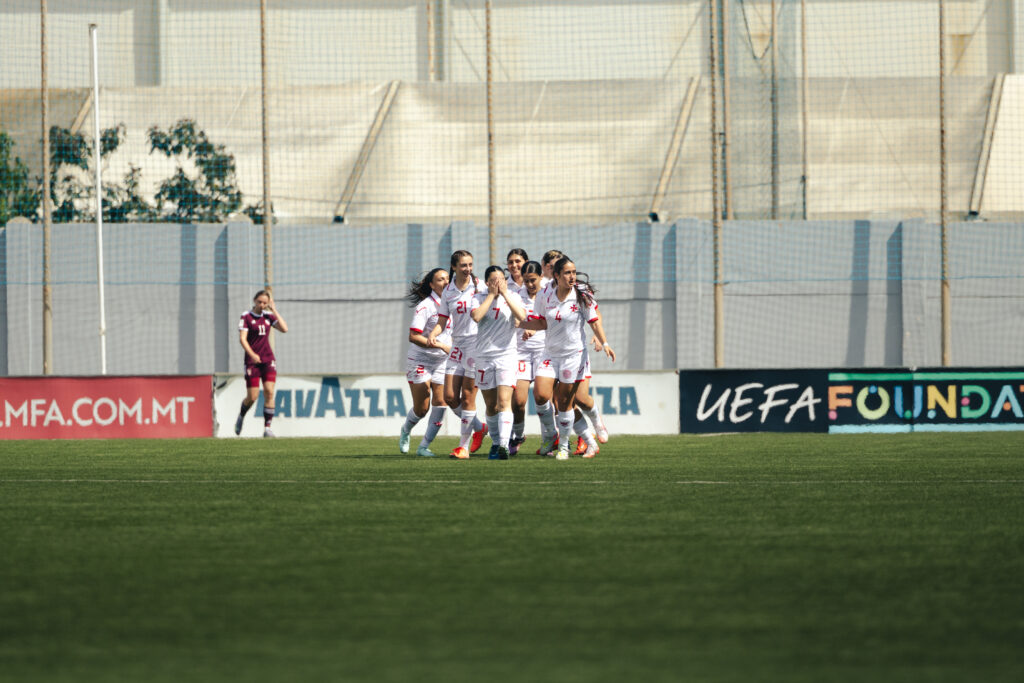
Manuela Tesse believes that the philosophy set with the senior team, and that is slowly being pushed to the younger players, will be crucial for the next few years.
Asked about the next few years from a global perspective as a senior team coach and the impact on the next generation, Tesse remarked, “Now we must think about the future. We want to keep the same philosophy in terms of playing style, but build a lot of things outside the pitch. One of the crucial aspects is to improve the youth level. The next objective is to widen the base.”
Probed about the challenges she sees in achieving this, Tesse continued, “I think the most crucial thing is to work hand in hand with clubs. I think players who have formed part of our national team are aware that the work we’ve done together in the past two years has been worth it. We’ve seen a lot of individual improvements. However, now I think the main thing is to work with clubs to build the right periodisation for young players.”
The Sardinian acknowledged that a hard look is needed at the way the already limited pool of young players is being stretched across leagues. “In order to do this we must also look at the structure of the youth league. We all know that the same players playing in the U19 league are playing in the U16 league or the senior league.”
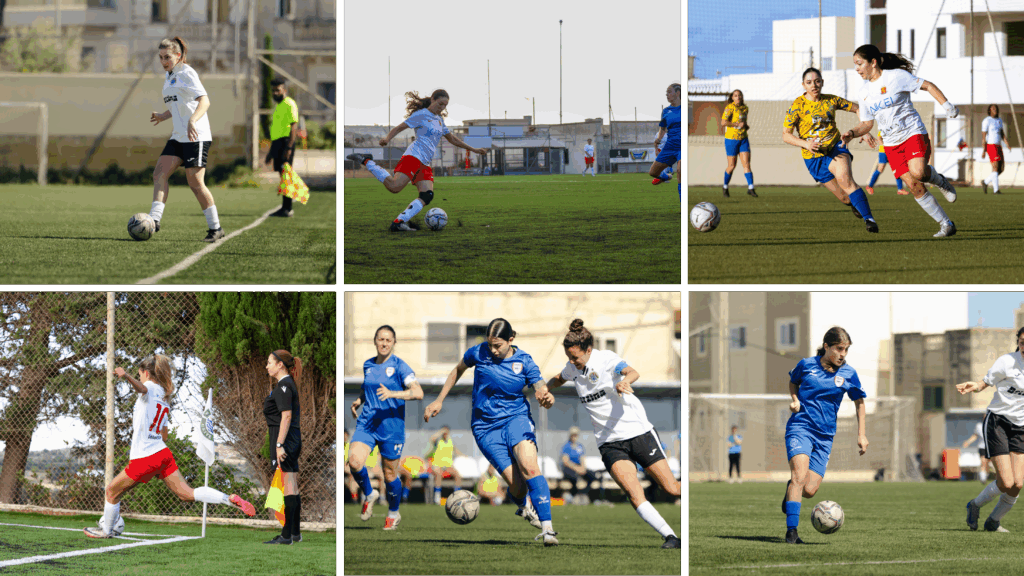
Having had time to analyse the matches in the different leagues over the past two years she continued, “The level of the football at youth level is still fairly low when put on the same scale as competing nations. So, players are spending time in these lower level matches and then don’t have the time to train at higher level. We cannot build them into strong future players if they are not spending time training properly. So, I think we need to work with clubs to understand their challenges and what we can do together to help players achieve their potential.”
One other aspect that Manuela Tesse was probed about was the use of data. The professional sporting world is run by quantitative metrics. This is something that Malta’s football still lacks in.
“We have already started on this within our limits. So, for example we have given some GPS trackers to national team players playing in the domestic league during this season in selected matches. The data showed that the intensity of the league is not very far from what we are reaching at national team for these players, which means that the clubs are doing a good job.”
Looking to the future, Tesse continued, “As a national team we still shared our GPSs with other national teams forming part of the Malta FA, so now we are pushing to have our own to be able to carry out more studies. Once we do, we can adopt the same principles of sharing the GPSs the same way the men’s teams do between national and club setups for a unified collection of data which is also capturing more players and teams in the women’s league.”
Elaborating further she continued, “The target would be to be able to select matches and fit all players in that match with these GPSs so that then we, the national team together with the coaches of the clubs, can have a picture of how the whole team is performing. For example, this already gives the coaches a picture of whether all the team is reaching the same average or not. This would make clear which players need to push more. Based on that data the club can do better periodisation, which will help to increase the level of the Maltese league and by extension the national team.”
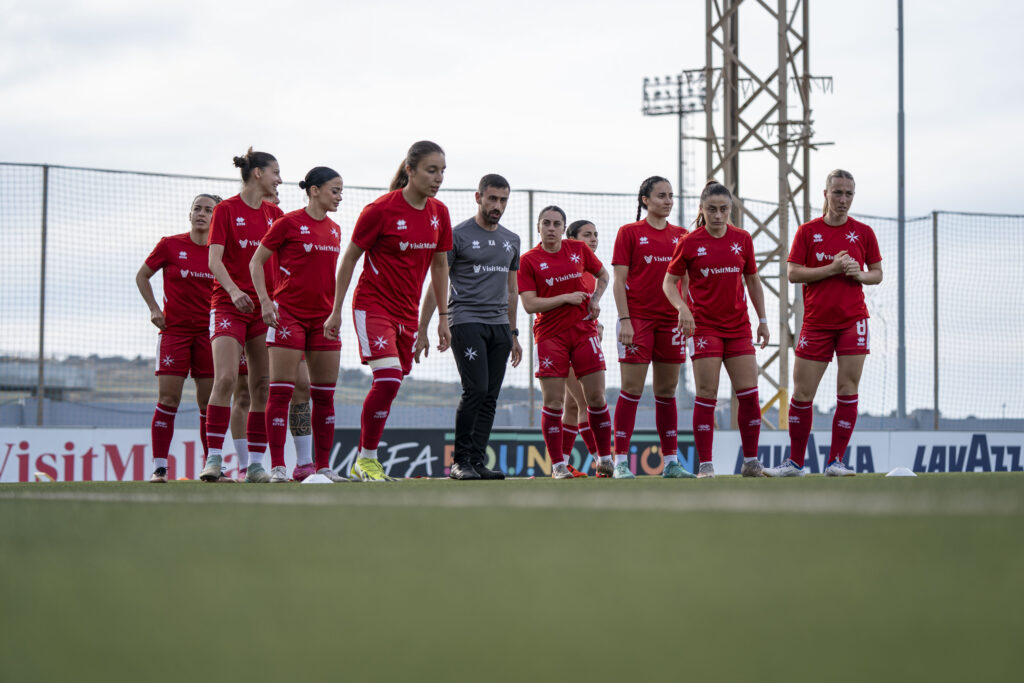
Switching focus to national team tests, Manuela Tesse nodded to equipment purchased by the Malta Football Association, that is now also available for both the women’s and men’s teams to use for national team purposes.
As for the use of data gathered at national team level, Manuela Tesse continued, “We compare the data we have gathered at national team level to the best international teams. We know that we have improved a lot in the past two years, but we are still far from the top and our aim should be to keep pushing forward. The positive thing is that we now have a physical trainer (Karl Attard) who although is part-time, is completely dedicated to the women’s team. This means that he will be collecting a lot of data and our primary focus is to push the players playing locally to reach higher levels. We trust that those playing in professional setups are training every day at a high intensity, so our aim is to work to get our local players toward their levels.”
Tracking data for physical attributes appears on the top of the agenda, but there was not much insight given into the gathering of individual player event data, such as measurements of key forward passes, interceptions, successful tackles, expected goals, goals prevented and more. While at national team level this is understood to be implemented for international matches, such widespread data at domestic league level appears to be still a long way off, bar any individual club’s own ambitions.
However, Manuela Tesse concluded with her desire to keep bringing coaches and their players closer to the national team group, “My training sessions during the international window are always open for the local coaches and their technical staff to join. In my first tournament I invited all clubs but it was not met so enthusiastically. However, within these two years our relationship has grown and I am happy to see more coming to the sessions. I believe this is a positive thing that is crucial to achieve these targets.”
Promotion As A Motivator For Long-Term Growth
All of this work is central to the success that Malta could have in a few years time. The motivation for the work needed should be found in the desire to keep the positive streak of results at national senior level going, the recognition of the clubs’ investments to continue to yield improving levels in the domestic league, as well as a desire to see the ripple effect at younger age groups. At the same time, it would be foolish to completely sacrifice the long-term picture for short-term results.
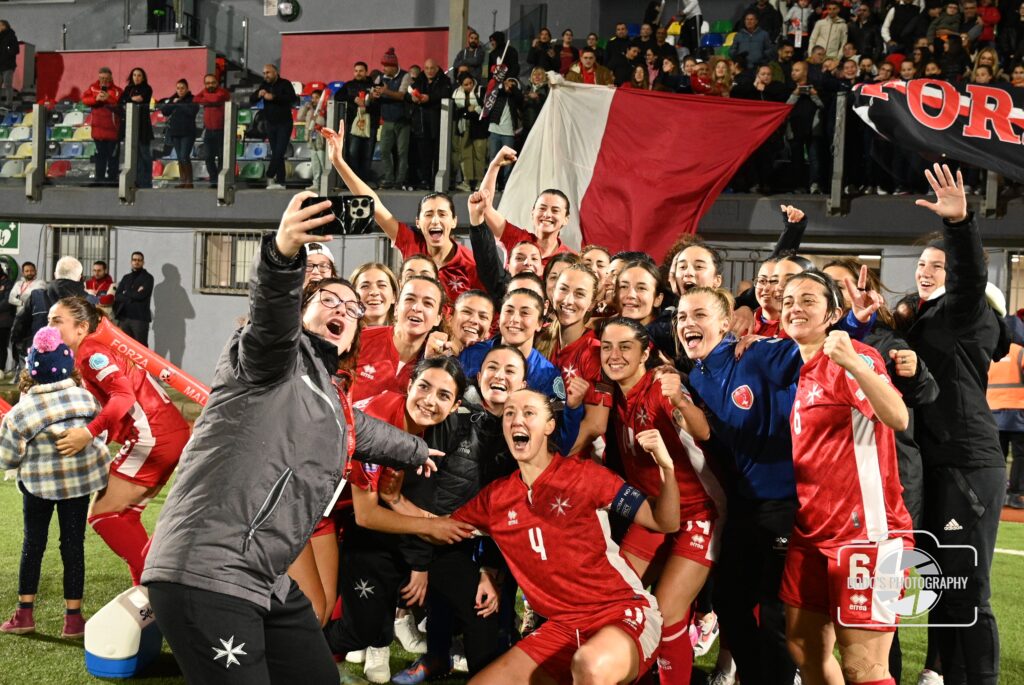
Malta’s senior women’s team are now edging toward a final two fixtures in the UEFA Women’s Nations League to secure a place back in League B. They currently top the group on seven points, trailed by Cyprus on 5 points. The side started on shaky terms with a defeat to Cyprus by 1 – 0, before bouncing back with victory against Andorra and two wins over Georgia.
Malta’s Women’s National Team will play at the Ta’ Qali National Stadium in a direct confrontation against Cyprus on the 30th May (19:00). A victory will make Malta mathematically unreachable and thus confirm promotion to League B. Tickets are available for purchase online.
Lead Image: Brandon Bonett
Stay up to date by following The Sporting Fan on social media: Instagram ~ Facebook ~ X