 by
by Hibernians clinched the U21 title in an unbeaten campaign, with Kathleen Saliba discussing squad depth and player development to navigate a demanding season shaped by new regulations, while stressing the need for collective growth across the league — in a title moment that also carried understated off-pitch undertones.
Excellence Built On Depth, Delivered With Discipline
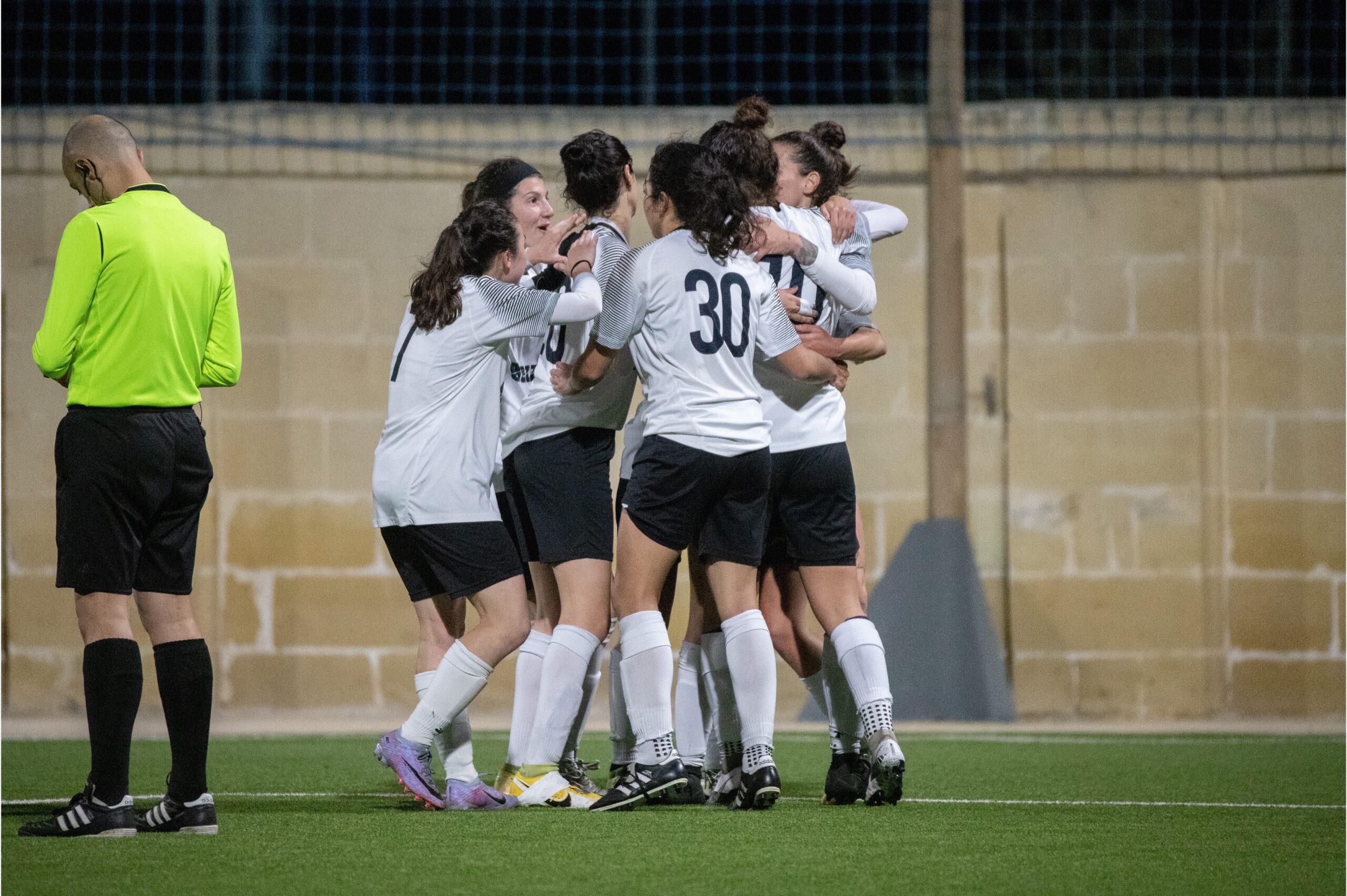
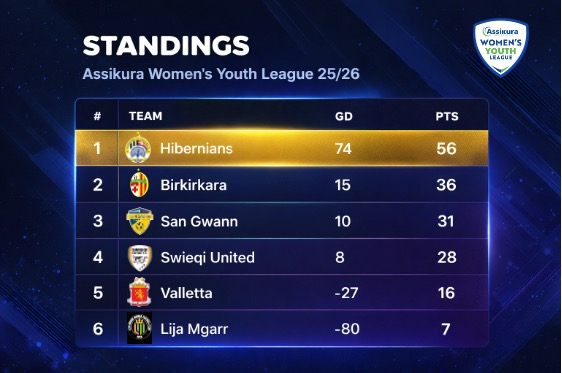
Hibernians’ U21 title win will stand as one of the most complete campaigns in recent Maltese women’s youth football. Unbeaten across the season, with 18 wins, two draws, 56 points and a +74 goal difference, it was dominance sustained from start to finish.
But this wasn’t just about results. It was about consistency — not only in performance, but in navigating a season that demanded constant balance between development and winning, amid regulation restrictions.
Head coach Kathleen Saliba entered the campaign aware of her squad’s strength. Even then, the scale of the gap came as a surprise.
I knew I had a strong team at the beginning of the season, but I didn’t expect such a big gap. I think being completely honest some of the teams in the league also diminished in strength.
That gap, however, needs context.
Because dominance in this league is not entirely new.
Swieqi claimed the title in unbeaten fashion two years ago. Last season, they secured back-to-back honours again — this time wrapping up the title early, even if not with the same flawless record.
Hibernians were closing the gap and have now followed that trajectory, claiming the crown with a campaign that echoes the same authority — but under a different, arguably more demanding framework.
Winning In A System That Demands Compromise
This season introduced structural changes that reshaped the youth landscape. The transition from U19 to U21, combined with the 135-minute rule across youth and senior football, forced clubs into constant rotation.
Play 90 minutes in the youth league, and a player is capped at 45 in the senior match. The cycle then continues in reverse.
For coaches, it became a weekly puzzle.
Kathleen Saliba weighed in on the challenge, “You must really adapt and work very hard to be able to give all players playing time, while managing to keep the team on track to get points.”
Saliba’s approach together with the women’s setup at Hibernians leaned firmly toward development, “We always prioritised playing time because for players to develop they need match practice. It was sometimes very tough to give everyone minutes and keep everyone happy, but I believe the important thing is to communicate and keep the team together.”
But what separated Hibernians from much of the league was their ability to do both — develop and win — without compromise in either.
And that comes down, in no small part, to depth.
Depth As The Difference-Maker
Hibernians possessed one of the deepest squads in the league — a factor that proved decisive under the new regulations.
While every club had to navigate the same 135-minute restrictions, not every club had the same capacity to rotate without weakening performance levels.
Hibernians did.
They combined a strong academy pipeline with key additions to reinforce quality across the squad.
“We work very hard on our academy and we always work to have long-term sustainability in the players coming through to senior level. However, we also strengthened well by bringing in good players who boosted us as well.”
That depth allowed them to absorb the constraints of the system — to rest players, rotate effectively, and still maintain a level that others struggled to match consistently.
This is not to diminish their achievement. Quite the opposite.
It highlights one of the key pillars behind it.
Because while other teams were equally making the effort to balance development and results under the same rules, not all had the resources or squad breadth to execute it as effectively.
A League Still Searching For Balance
And that is where the wider picture begins to take shape.
Hibernians’ success reflects a club doing many things right — structurally, developmentally, and competitively. But it also shines a light on the disparities that still exist across the league.
Saliba herself points toward the need for collective growth.
We need to work together as clubs to strengthen as a whole, especially to help our youngest players to be ready for the game.
The concern is not new.
Recent results at U19 national team level have already underlined the gap between domestic progression and international demands. Players stepping up are learning quickly — sometimes harshly — where those differences lie.
“We have players who featured at senior level, but we also have much younger players who are not ready. I think when it comes to senior level football with the club, I worked very closely with Martina Borg (head coach) to balance playing time and also navigate forced changes due to injuries. I think every time a player is given the opportunity to play at a higher level, they show them and us where we need to work for them to bridge the gap.”
And while clubs like Hibernians — and previously Swieqi — have demonstrated what strong structures can achieve, the question remains whether that level can be replicated more widely.
The Structure Is Changing — But Is It Present?
This season also unfolded against the backdrop of structural changes within Maltese women’s football. New roles, new frameworks, and a renewed emphasis on development pathways have been introduced.
But presence matters just as much as planning.
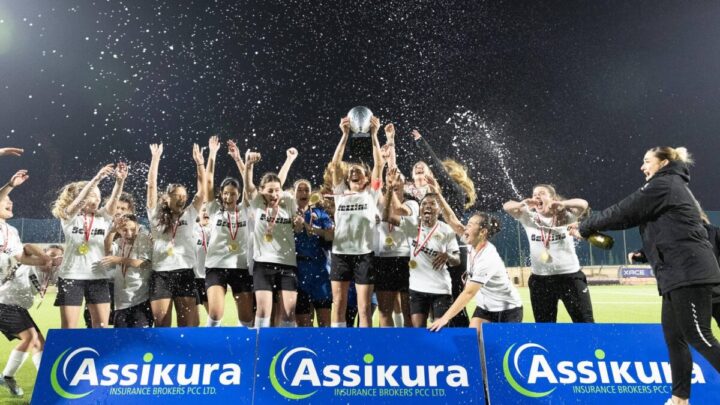
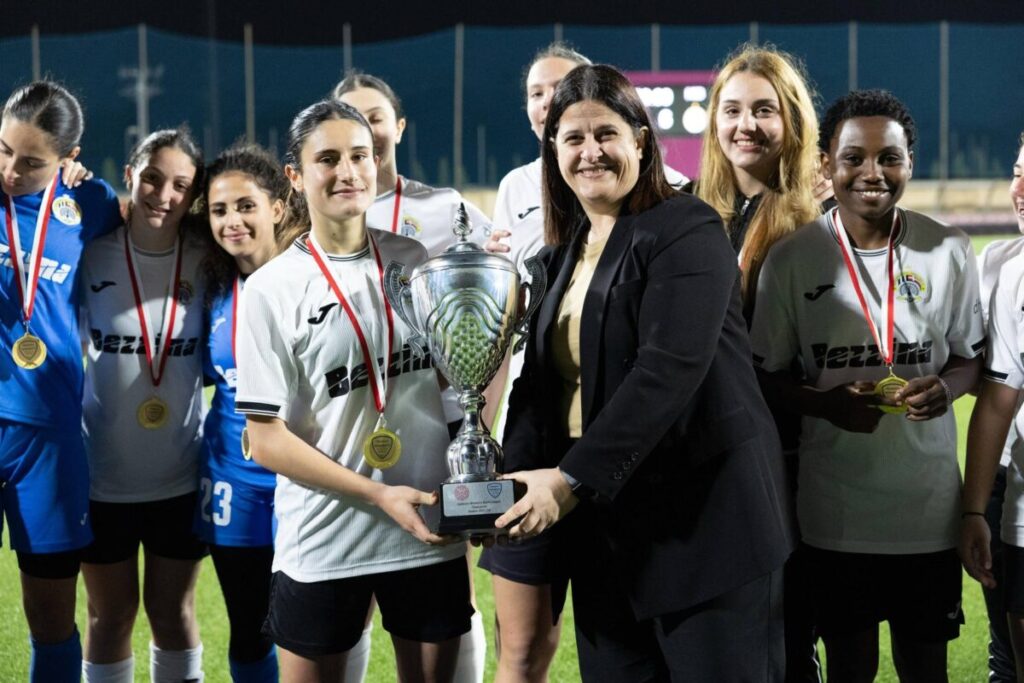
Because when Hibernians lifted the trophy to cap off an unbeaten season, the absence of key figures did not go unnoticed.
No Technical Coordinator.
No Manager responsible for the administration of the women’s game.
No Vice President overseeing women’s football.
Instead, the honours were handed over by the General Secretary, Dr Maria Azzopardi — a respected former national team player — but given the changes, not the figurehead expected to represent the new direction of the women’s game.
It is a subtle detail. But in a season defined by development, structure, and progression, symbolism carries weight.
More Than A Title
Hibernians did everything right. They developed players, recruited smartly, managed a restrictive system, and delivered results with consistency and clarity.
But their success also holds up a mirror.
A dominant champion in a league still searching for balance.
A development pathway still bridging gaps between youth and senior levels.
A structure that exists — but is not always visible when it matters most.
And perhaps that is the real story of this unbeaten title.
Not just how Hibernians won — but what their victory reveals about the game around them.
Lead Image: Malta FA
Stay up to date by following The Sporting Fan on social media: Instagram ~ Facebook ~ X