 by
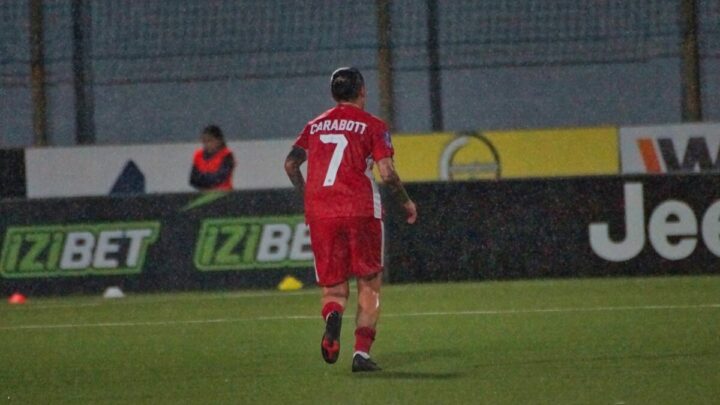
by A self-professed bad loser, Ylenia Carabott will go down as the scorer whose goal delivered Malta’s first ever celebration of a victory in the women’s game on the international stage. Having announced her retirement, the nine-time top scorer sat down with The Sporting Fan unveiling the off-pitch personality contrasting the fiery forward Malta had gotten used to on the pitch. We discussed trophy-laden years at Hibernians, moving to rivals Birkirkara, life as a professional abroad and the hidden pains of walking away with 97 caps for Malta.
Eleanor Saliba (ES): When did you know you wanted to play football and how did you join Hibs?
Ylenia Carabott (YC): I come from a footballing family. Funnily enough, my parents never played, but my grandpa played as a defender with Floriana and my uncle, Edwin Farrugia, also played with Hamrun Spartans and played for Malta. When I was about eight years old I started to regularly go to watch Manchester United with my uncle and my cousin, I fell in love with the game. It was the season they won the treble (1999) and so of course it was perfect timing. Several of my cousins also play football, I was the only girl in the family but like them I also loved it and wanted to play.
I started playing with boys at school, then started playing with the boys of Fgura when I was around ten. At the time, Pierre Brincat spent around three years I think trying to get my parents to agree to send me to play with the girls team at Hibernians, but they were quite hesitant since at the time it was still considered a male’s sport. However, eventually my dad caved and took me to Hibs when I was fourteen. And I never looked back. There were moments when I doubted, but I always loved the game and kept pushing through.
ES: What was the point you knew you’d call it a day?
YC: I think since having the ACL injury in 2021 the road has been tough and it (retiring) passed through my mind many times. I’ve had some issues with further nagging injuries and also had some tough times with coaches. I started to lose some of that enthusiasm for football, treating it more as a job, and lacking that passion at club level.
At national (level) I think it was still quite different because the pride in representing your country is different. So, I kept pushing through the pain, with the target of reaching the 100 caps and hopefully go beyond for Malta. I felt there was a mutual understanding with the coach (Manuela Tesse) about my target, but I’ve seen less and less game time and call-ups with the national team. Combining the pain, the feeling in general and the fact that in the past international windows I was not called up despite following instructions and doing everything I can, I took the decision myself to hang up the boots at 97 caps. The pain of working toward that call-up and to be overlooked in the last few call-ups or just sit on the bench, is hard.
It is a disappointment to have fallen short so close to it because I think there were opportunities where I could have helped the team. I think I’ve given a lot to the game, to Malta, and there’s no denying that I think it will hurt for a long time not to have been given the chance to reach that milestone.
However, I’ve made my career, and I leave head held high that I’ve always given my best.
Between 2003 and 2017 Ylenia Carabott formed part of a Hibernians side that dominated the women’s game in titles. She scored 334 goals in 257 games, while bagging nine top-scorer awards, eight of which were won consecutively between 2009 and 2017.
ES: What are your best memories about your time at Hibernians and what do you feel kept the team in that position to maintain a winning momentum?
YC: I think it is no secret that I am a bad loser, which by definition means I want to win every game and every title. Hibernians was a team made up of players who wanted to win, and Pierre (Brincat) instilled that mentality in us, that never-say-die attitude. So, I fit in well with that ideology. I never wanted to play football just to play, I want to play to win. A lot of us that grew with that mentality. I understand we got a bad rep at times for continuing to score in the double digits even late on, but our mentality was to keep going until the end.
We fought hard between us, like a family does, but it was all stemming from a place of wanting our team to be the best it can be and win as many titles as we can.
I think what’s important to mention though is that Birkirkara was always a big rival for us and I think they pushed us to improve. So, I think the dominance is only a part of the story, but it is also credit to how much Birkirkara also pushed us every year to get that win. As a forward, I remember Rebecca D’Agostino as the best defender and facing her was always a challenge and a motivation to improve myself as a forward. That rivalry was important, I think kept us motivated.
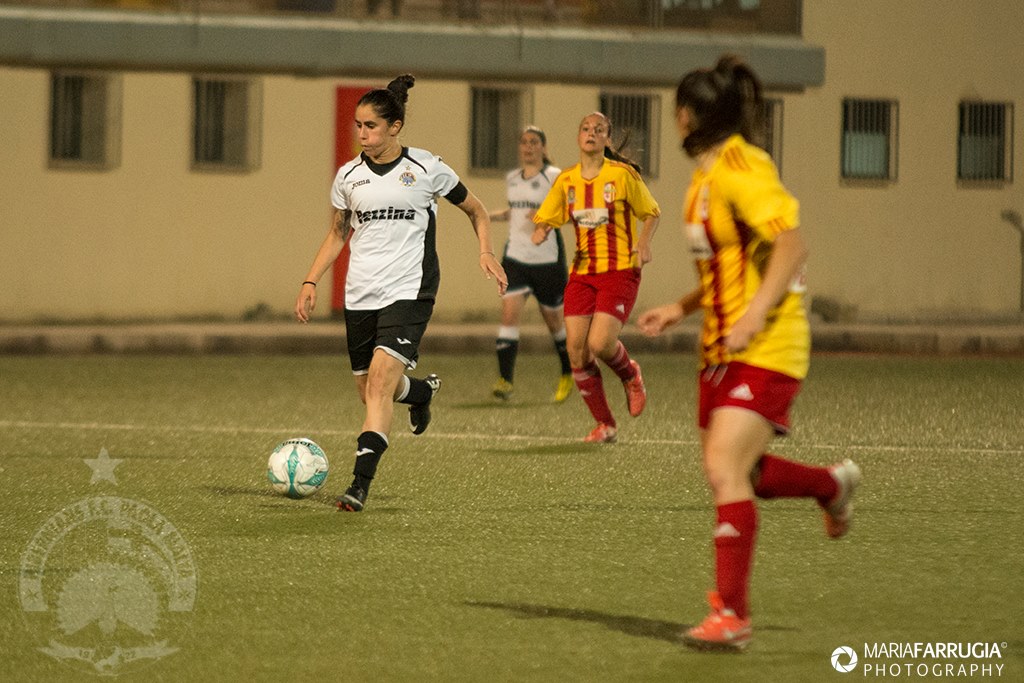
ES: You made the decision to go to Birkirkara in the summer of 2018, a year before Hibernians disbanded. It was arguably one of the most controversial transfers in the women’s game in Malta. What prompted that move?
YC: I had done my ACL and I rushed back to get to playing. I was not fully recovered but I think I was in a state where I could play those fifteen to thirty minutes and I felt I could contribute. I wanted to win and am outspoken as a person. I had a clash with the coach at the time. I spoke with the club and made it clear that I didn’t want to play under the coach. There were no changes from the club, so I left for Birkirkara.
ES: What was it like to achieve the first draw with Birkirkara in the UEFA Women’s Champions League?
YC: It was an unexplainable feeling. I had missed the champions league draw with Hibs because I was abroad. The draw against Cardiff was within my first matches with Birkirkara, so to go into a team, play in the competition and help the team achieve that first draw was a very rewarding feeling. I was well aware that my departure from Hibernians was controversial, as this was still a time when the rivalry was between Hibs and Birkirkara, so, for me to perform as I did, given everything, was important.
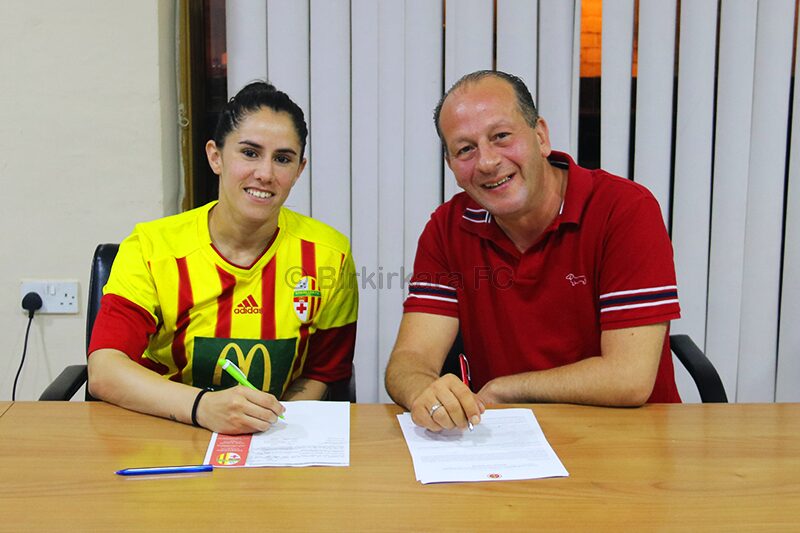
Ylenia Carabott left Birkirkara after two seasons, having played thirty matches and scored fourteen goals. Her departure went beyond Malta, joining Chievo Fortitudo in Italy’s Serie B, to mark her first spell abroad. Further to that, she joined Charleroi in Belgium’s top tier, with spells also with England’s Keynsham Town, Gillingham Women, London Seaward and Fylde. With a return to Spezia in Italy in between, and also some time with Sweden’s Alby FF and Ange IF, Ylenia Carabott is one of very few Maltese players with unique insight, having experienced football in different countries and tiers.
ES: How did the decision to go abroad fair against what you had gotten used to in Malta?
YC: The mentality was completely different. I always wanted to go abroad and had offers to leave before but I always stayed in Malta for personal reasons. However, circumstances fell into place and I felt it was the right time to leave after Birkirkara and leave Malta altogether to test myself in a different environment.
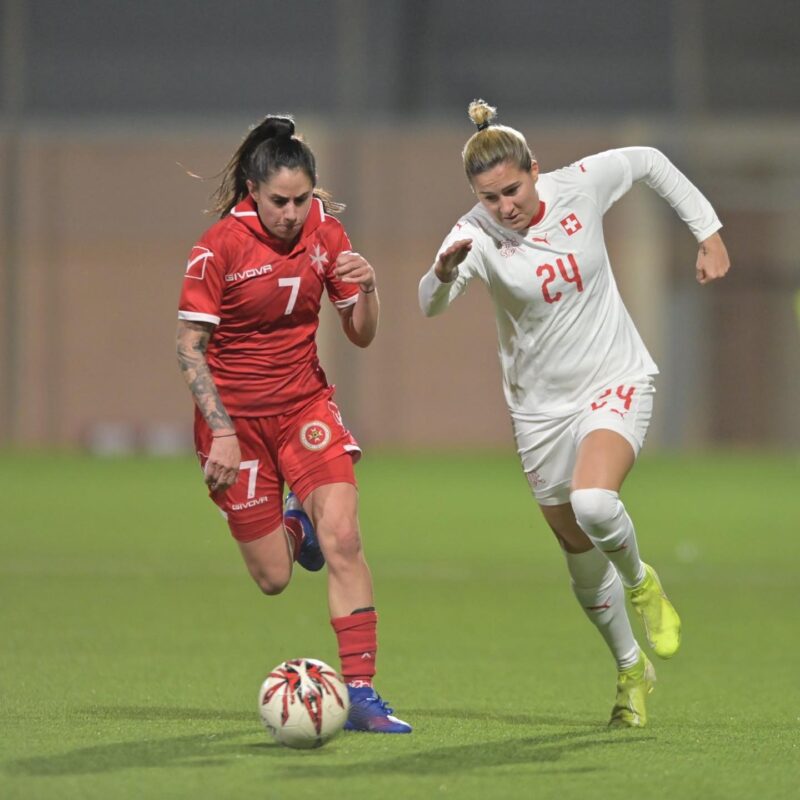
Playing in Serie B in Italy was of a higher level. It was one of my best seasons both at club and country level, having also scored to earn the draw against Switzerland, but then Covid struck and everything went south. I was playing close to Bergamo and though I left as quickly as I could I was not allowed to play with the national team because of the fourteen-day quarantine rules. (A bittersweet smile painted on her face, she said) Those are two matches that would have put me to 99 caps maybe today, it is what it is.
ES: How did experiences differ and was there a club that stands out in the way you felt treated as a player?
YC: I think the best team was Gillingham. It was the best setup. Unfortunately, I came back home because my dog died and was a bit off mentally in between November and December and eventually moved to a different club. So, I didn’t spend as much time with them as much as I wished.
I think looking at the teams, I played in the highest division in Belgium, but in terms of organization, English clubs were always the best and in third division of England the football is close to the level of the top tier in Belgium.
The game in Italy is very technical and tactical, whereas in England physicality is very important. I think Sweden was more a case of tasting an experience abroad, it was not as high a level as I wished for, but at the time it was still a better setup than what we had in Malta. Things have changed in Malta since, I think clubs are much more equipped today for sure.
I think the only thing I would change in my career is to come to England a season earlier.
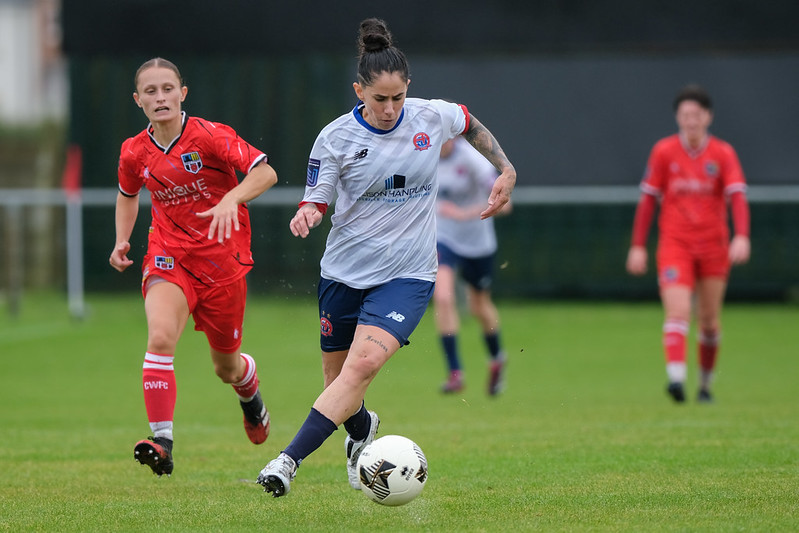
ES: You were used to winning in Malta and several clubs have also improved their setups since. However, as a player, what were the things that you really appreciated when you went abroad that you wished you had in Malta?
YC: I think the fact that we simply had a dedicated dressing room for the women’s team was already a big improvement. In Belgium, we were treated exactly the same as the men, where we had a goalkeeper coach, fitness coach, assistants to the coach, the physio and the team doctor. When I tore my ACL, I immediately started the rehabilitation. We trained three times a week in gym in the morning, and five times a week in the evening, besides the match.
So, it was full-on and professional. I understand it’s tough to have the same thing in Malta, but with six teams it is difficult to see whether there is any desire for that.
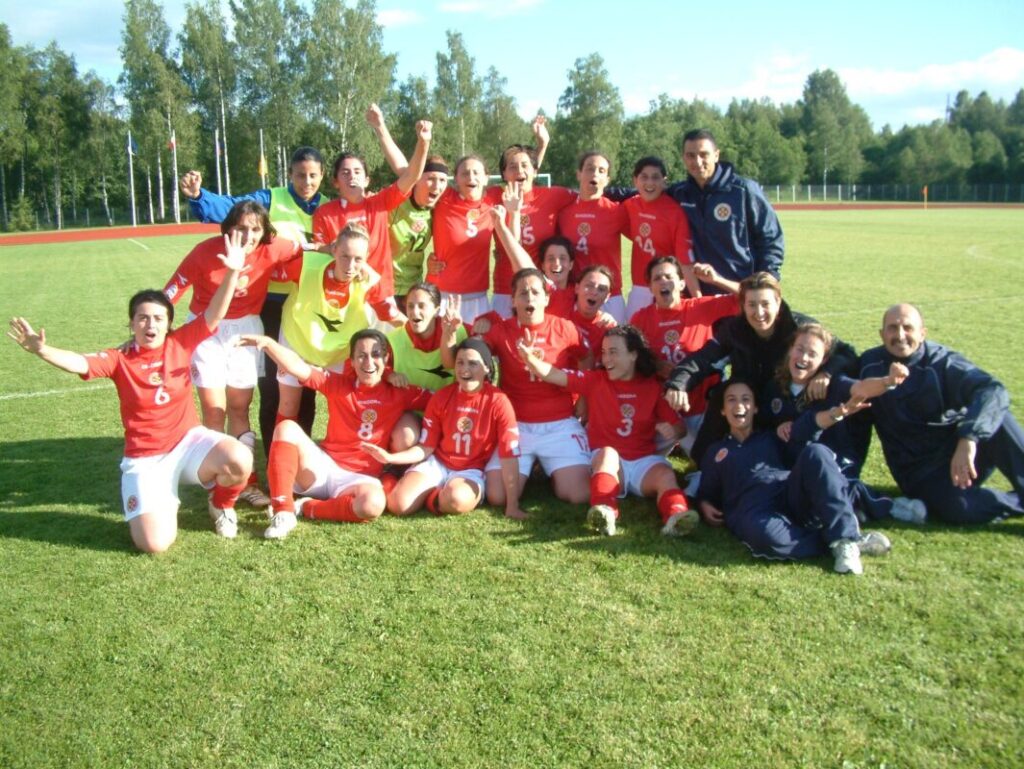
Ylenia Carabott remains one of a few players that formed the early years of the Malta Women’s National Team. She will go down in history as the author of the goal that enabled Malta to win its first match against Estonia by 1 – 0 in 2008. She also formed part of the squad that qualified for the preliminary group stage of the FIFA Women’s World Cup in and part of the side that got the Nations League promotion. 20 goals, 3rd all time for Malta’s Women’s National, in 97 appearances.
ES: What do you remember about scoring the winner to claim Malta’s first victory against Estonia in 2008?
YC: I remember it like yesterday. Dorianne (Theuma) delivered the free-kick, it’s right there in my head, I can picture it to this day. It’s indescribable, the elation of scoring the goal was already big, to then achieve the victory with the team was a huge moment.
As a forward you want to score, my mentality as a forward was that I wanted to score all the chances that I had, to make sure that I did my best for the team to win with as many goals as possible. Donning the Maltese shirt was already a proud moment, to score the goal that gave us the victory as a team made me the happiest girl in the world and it meant the start of something big.
I still was very young, around nineteen, and I remember when I first was called up at sixteen, Pierre (Brincat) received plenty of questions as to how come he felt I was ready. I thought in that moment it was repayment to him. I think as a player, when a coach believes in you, you do everything for them.
ES: You’re one of the few players to have played under all three coaches who have led Malta’s team, in Pierre Brincat, Mark Gatt and Manuela Tesse. How has the national team evolved in your view?
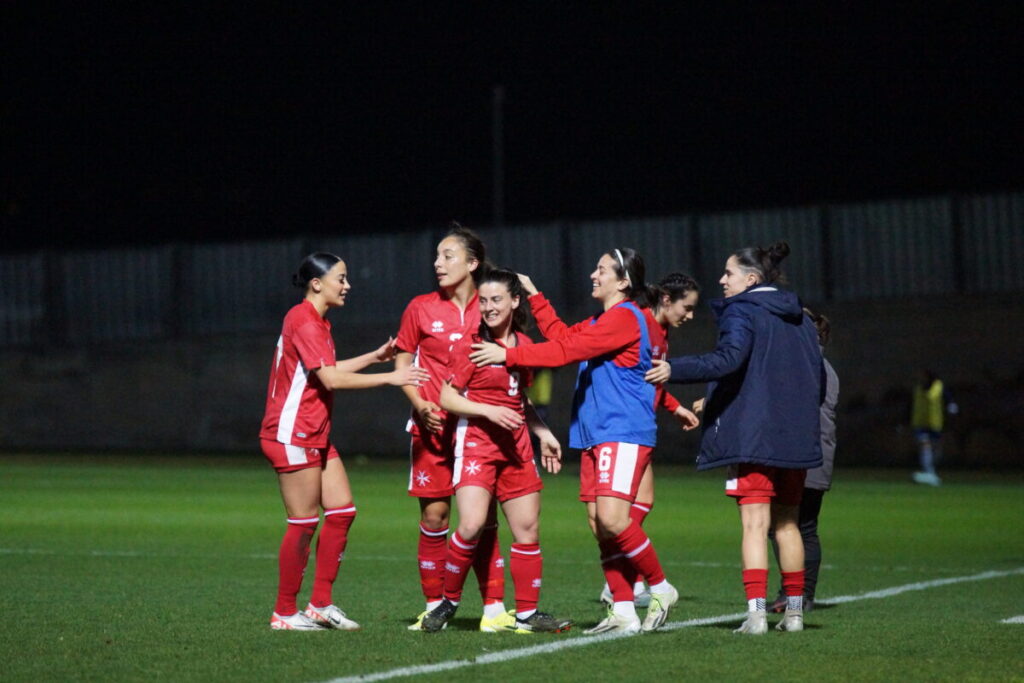
YC: It had to evolve, I think there was a time when some tried to keep us back and didn’t want us to make that next step. While I wish I had been given the opportunity to reach my milestone by Manuela (Tesse), I will still say that she’s pushed the team forward as well, both in setup and in the football.
I think it helped a lot that several of us went to play abroad helped the team, probably it helped the team more than the changes in coaches. I think players brought different experiences and we always tried our best to bring it back to the national team so that we could all grow together. I will say that Emma Lipman also brought with her a difference in mentality, having had a spell also at Manchester City.
ES: Were there moments when you played against international countries that you had met with before and was surprised by the sudden improvement that they brought?
YC: Looking back, losing by big scores against Spain and Denmark, we used to be absolutely stunned by their level. However, it was also part of the learning curve for us and I will never shy away from saying I played those matches, because you learn from such humbling defeats as well.
However, I think there were teams against whom we were used to winning comfortably, like Luxembourg, Estonia, Latvia and Andorra, who have made huge strides recently. The results against Malta and others have shown that. I think it feels like we are stagnating compared to them and they’re closing the gap, improving fast. In my opinion, considering the amount of players that we have playing at the top leagues in Italy, I would expect us to win those matches comfortably. However, it hasn’t been the case. So, yes, in all honesty there have been times where I’ve wondered whether we’re improving quickly enough or stagnating compared to the growth of other nations.
ES: You hang your boots having scored 20 goals, most of which playing with a country that was defensive in mentality for a long time, noting that the concept of the Nations League is fairly recent. As a forward, how did you adapt to the difference in approach, considering that at club level you were racking up goals at will, whereas at international level you probably had to play a very different game?
YC: It was hard playing as a forward with Malta. It was not a fun game, ninety percent of the teams we were playing against were much better than us, which meant we played with a defensive mentality. To even touch a ball as a forward was hard, let alone score a goal. I wish I was playing in these times when we’re playing against teams of our ranking, I’d enjoy that for sure.
However, in those times I was the first defender. Especially, with Pierre (Brincat), my target was to close down as much as I could and try to help us get the ball back. With Mark (Gatt) it was a painful reckoning, I remember playing against Italy or Denmark he had announced that I wouldn’t play because the team didn’t need a striker for such a match. Obviously, I questioned that, since I believed as a striker I had an important job to hold up the ball and as I said I was always outspoken. I prided myself on the work ethic I brought on and off the ball.
There were a few games where I could really enjoy being offensive, against Luxembourg, Estonia and maybe Cyprus, but for the most part of my career with the national team, it was a defensive game. That’s the difference in today’s matches, where the team is playing against similarly ranked teams.
The Curiosities
ES: Why the number seven?
YC: David Beckham, nothing to add to it.
ES: What was the most memorable season?
YC: It’s tough to pick one, the last season with Pierre at Hibs was one of the best ones. Of course, individually, every season I finished as a top scorer was a memorable one, but I think the last one (2017) was particular. As I said, I’m a bad loser, I needed to score five goals to get the top scorer award, and I scored them in the last match.
ES: What was the toughest season?
YC: The season I did my first ACL in 2017 was the worst. I started pre-season very well, tore my ACL after 27 minutes against Birkirkara. I got injured and had the clash with the coach and ended up leaving the club, essentially leaving my family behind. Can’t get worse than that.
ES: Is there a moment that sticks out in your career, a goal, a pass or maybe a particular battle?
YC: Scoring the hat-trick against Birkirkara, when I was with Hibs. There was a huge rivalry, so scoring a hat-trick against them was special.
ES: A teammate who you felt you were completely in sync with mentally on the pitch?
YC: Without a doubt, Dorianne (Theuma). We played together for so long, she didn’t even look, as soon as she got the ball she’d place the pass, I would have already started the run and we’d combine for the goal. I always looked for another player like her, never found a teammate who I was as in sync with. I like to think we were a dynamic duo, she delivered the assists, and let’s face it she scored a lot as well, I will still believe she’s the best player we’ve ever had in Malta. However, yes that was usually dynamic, that she delivered the assist and I was up front getting the goals.
I can’t imagine what it’d be like if both of us were starting the career today. I wish I played more with Rachel (Cuschieri), because we only played together at national team level, but Dorianne will always be the player I was most in sync with.
ES: If you had to start your playing career today, what is an element that you would work on more?
YC: I think strength training, it’s as important as football. I think a lot of the injuries I had were because my strength was never built properly, besides the dynamics of my knees due to genetics. However, I think had I had proper strength training throughout my career, and not just when I got injured, then maybe my career would have been less injury-prone.
ES: Is there something you feel is overlooked or underestimated about you as a player?
YC: I think my work ethic was often overlooked, so my target to help the team to win the ball back was appreciated by some coaches, but not by all. I obviously wanted to score, but the mentality was always to fight for every ball.
ES: Thing you will miss the most about being a player?
YC: The atmosphere in the dressing room, the team fighting together for a win both at club and country, the goals, the feeling of winning, the adrenaline. I’ve missed it for a while, I’ve not won a league since I left Malta, since 2019. However, thinking about it still brings a smile to my face. I will miss sharing the pitch with a few of the players, especially those of Malta, some of them, like Rachel, are family to me at this point.
ES: Thing you will NOT miss about being a player?
YC: The anxiety I felt at national team level in recent years. The dynamic wasn’t right for me, and I believe things could have been handled better. I spoke up for players, because I didn’t believe it was the right attitude, maybe I am paying for that. However, I stand by what I did. The injuries are another thing I will not miss.
ES: Favourite venue that you have played in?
YC: Luxol – it may be funny, but there’s big memories I have there. Those were beautiful moments. In terms of the complexity of a stadium, the stadiums in Denmark and in Turkey were beautiful, but Luxol has the best memories.
ES: Proudest moment in your playing career?
YC: It will always be the debut with the national team. It remains an unexplainable feeling, to don that shirt at sixteen was unbelievable. I was not expecting it, but there was an injury in the team and Pierre came and told me I would start. I didn’t stop running. There were many games that I will remember fondly, but playing for Malta for the first time remains the proudest moment.
A final question…
ES: What’s next for Ylenia Carabott?
YC: I would like to take a break from football for now, I think I need it. I have some coaching badges but for now I want to take a break. Then, I will see if I miss it too much.
I would like to thank Ylenia Carabott for taking the time to sit with me to be able to bring you this feature. It was an absolute privilege to reminisce with one of Malta’s most prolific forwards.
Thank you for reading. If you enjoyed this please consider sharing it with a friend.
Lead Image: Lara Schembri
Stay up to date by following The Sporting Fan on social media: Instagram ~ Facebook ~ X