 by
by An early header from Yulya Carella reshaped both teams’ plans in the Knockout final on Friday, with Ryan Vella noting it affected both sides and Charlene Zammit emphasising a need to remain compact, as Mgarr United and Birkirkara found limited room to alter the course of the final.
Early Goal, Altered Plans
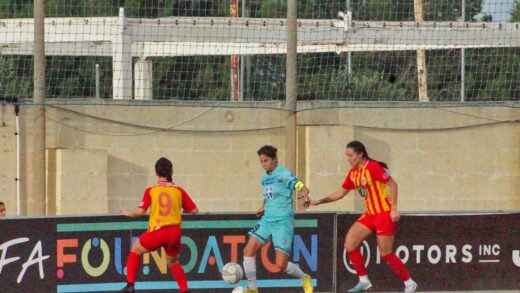
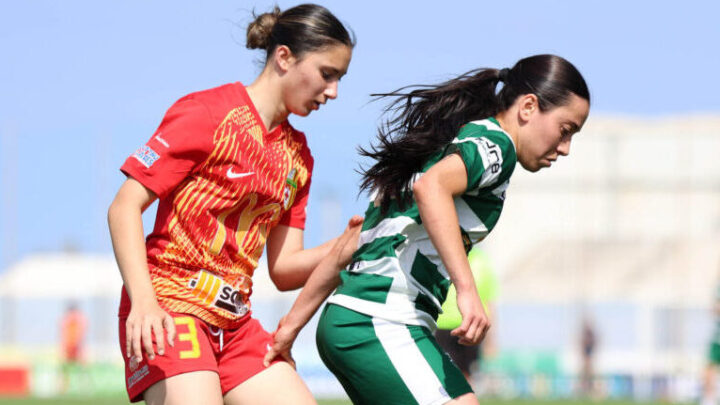
There was a question before the kick-off of the Assikura Women’s Knockout final, of whether it would be defined by control and restraint rather than a dominance, given the trajectories and the most recent draw between the two at the Victor Tedesco Stadium. What neither side could fully account for, however, was how early that balance would be disrupted.
When Yulya Carella met Luz Hernandez’s cross on the tenth minute to give Mgarr United the lead, it did more than separate the sides — it altered the conditions under which both teams had prepared.
For Birkirkara, the plan had been clear.
“We’ve been in this position before and this is what I told them at half-time,” Charlene Zammit explained. “We kept believing right until the end that we could find that goal. We stuck to the approach of remaining compact because we didn’t want to risk lowering the morale further, while picking our opportunities.”
That compactness remained, even as the need to chase the game grew. The adjustment, when it came, was delayed rather than immediate — a calculated risk to preserve structure before committing further forward.
“With nothing to lose,” Zammit later shifted Momo Ueda into a more advanced role as part of an attacking trio. “I think we’ll keep wondering about that goal, but overall I think tactically the plan was good. I think we just missed that final push today to find the goal.”
Yet the early goal did not only reshape Birkirkara’s approach.
Ryan Vella acknowledged that the moment disrupted his own side’s intentions as well.
“It affected both of us. From their end they planned for a mid-block and then had to come out a bit more in the second half. From our end we were geared up before the match to have a strong opening half because we were playing against the wind. However, I think the goal affected us negatively, we were a bit clumsy on the ball then. I think if I could be critical of us, we should have been sharper in the final third.”
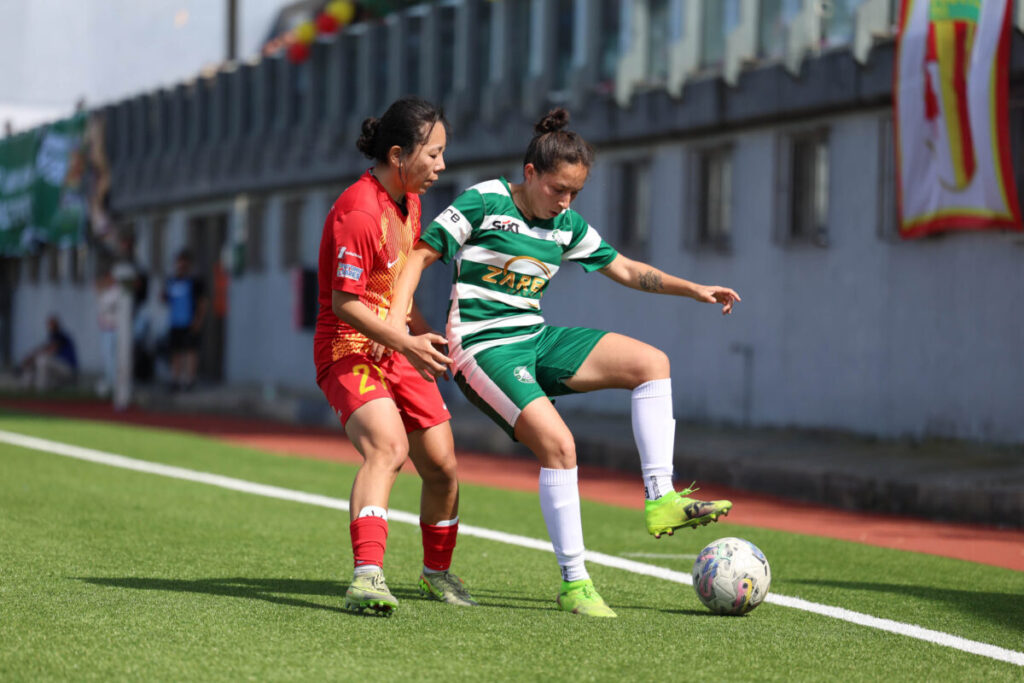
That dual disruption defined the match. Mgarr United, ahead but not at their fluent best, moved into game management. Birkirkara, structured and disciplined, found themselves balancing belief with caution.
“I admit it wasn’t our best performance,” Vella added, “but ultimately, in a final getting that goal is the important thing and we saw it through.”
Limited Levers From The Bench
If the early goal shaped the tactical framework, the latter stages of the match revealed something more structural — the limited capacity, on both sides, to change its course.
In a final where energy levels dipped and momentum rarely sustained, only one substitution was made across the two teams.
For Birkirkara, the constraint was explicit.
“It was the only substitution I could make,” Zammit said, pointing to the realities of her bench — several lengthy injuries taking out players from contention, leaving a thin group stretched across both senior and youth commitments in the same week.
The context was significant. Several players had featured in the Youth Knockout semi-final, which extended beyond ninety minutes just days earlier, adding to the physical and mental load carried into the final.
“Even though it was the only substitution I could make, I still believe we were set up very well,” she continued. “We’re contesting a side who is fully set up with senior players, I’m sure they’ve had more time to recover since playing their semi-final on Sunday. I don’t attribute the loss to that, but certainly these things always play a part.”
Despite those limitations, the emphasis remained on application.
“In the end, I am proud of the team in that no matter how many minutes they played throughout this week, they kept making runs until the end. They gave their all to get that goal and it is not just today, it reflects a characteristic that has been developed when you consider how we won against Swieqi.”
The defensive structure held for long periods, even as attacking output proved harder to sustain.
“I think defensively we were very compact. We missed Steph(ania Farrugia) in the sense of having that mental push that she gives to the team.”
And yet, even in defeat, Zammit’s assessment of her side’s contribution remained measured.
“In the end, I am super-pleased and proud of these women, some of them are so young, they played a senior final and I believe we were better than our opposition at times today.”
That claim was not without grounding. Birkirkara found moments — through transitions, set-pieces, and late adjustments — but were unable to convert structure into a decisive action.
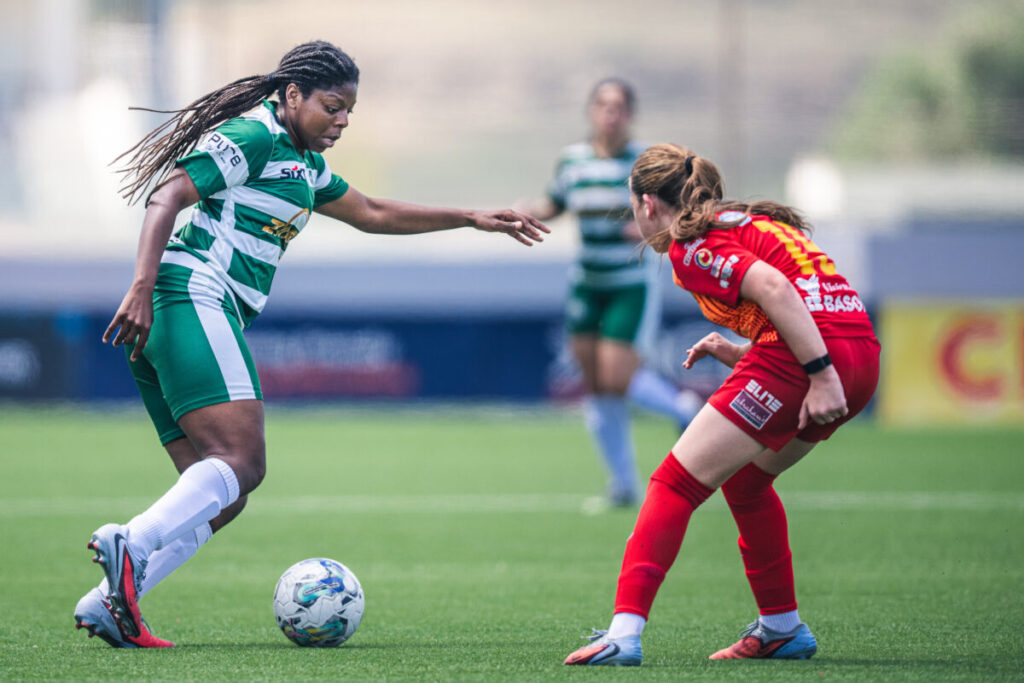
On the opposite bench, the absence of substitutions carried a different meaning.
For Mgarr United, it was less about limitation and more about choice.
“We knew we’d need to be patient because they are a very organized side and they work a lot without the ball,” Vella said. “They’re young as well, so they have a lot of energy to give to a match. Sometimes players take this for granted. I think considering that several of them played extra-time mid-week and gave their all in ninety minutes is something very positive for Birkirkara.”
When asked directly about the lack of changes, his response pointed to a broader view of the match.
“It wasn’t something decided just about today’s match. We closed off the season with two strong performances against Hibs and a strong match against San Gwann in the preliminary round of the Knockout. I think they were the best performances this season from us in terms of football. Perhaps today we made a slight step back, but as I said in a final with a goal in hand, you do what you must do to manage emotions and see it through.”
Where Birkirkara searched for a way to change the game, Mgarr United focused on ensuring it did not change.
Two Teams, Two Stages
Beyond the match itself, the final offered a clearer reflection of where both teams stand within their respective cycles.
For Birkirkara, the path to the final has been shaped as much by adaptation as by progression.
Following early-season changes in the technical setup, Charlene Zammit assumed the role of player-coach, supported by Janice Xuereb and experienced figures within the squad. Throughout the campaign, players adjusted to new roles, and a young core took on increasing responsibility.
“I think it was an incredible thing,” Zammit reflected. “When you consider where we were when I took over to being in this final in terms of development. I didn’t do anything different, but I think I delivered the information that I felt we needed as a team.”
The learning curve remains ongoing.
“Our younger players still have things to learn tactically at senior level, some things you learn by experience. However, overall, I think seeing them today against a fully-senior team – we can see a bright group of players.”
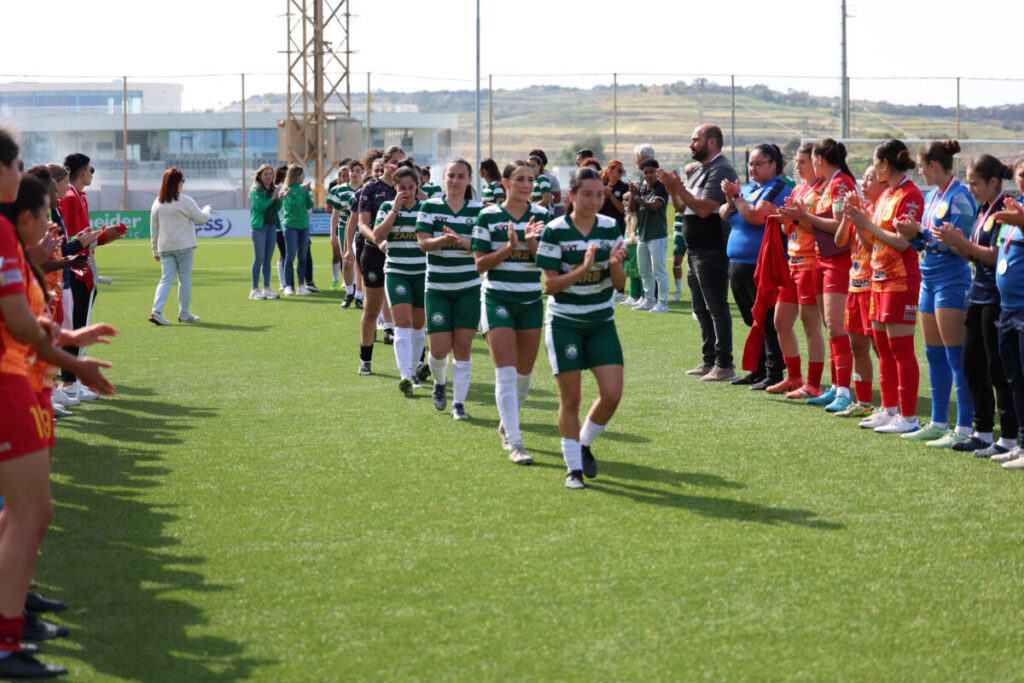
In contrast, Mgarr United’s trajectory has been one of consolidation.
“Last year we were celebrating lifting the first ever trophy. I wouldn’t have believed you if you told me we’d be here today,” Ryan Vella admitted. “However, we always believed that the first Knockout was the nudge to get us to this position.”
This season has reinforced that shift — from breakthrough to continuity.
With the league, Jubilee Cup, and Knockout secured, attention now turns outward.
“We know we have a new challenge ahead, in the Champions League, and we are excited for this. I know that we have a strong basis, so with some small tweaks I believe we are ready to give our utmost to compete in July.”
For the current campaign, however, the conclusion was succinct.
“A perfect season,” Vella summarised.
The final, in many ways, reflected those differing trajectories.
One team established the lead and managed it through experience and control. The other remained within reach through structure and belief, but found the final step just beyond them.
For Mgarr United, it marks completion. For Birkirkara, rejuvenation.
Lead Image: Lara Schembri
Stay up to date by following The Sporting Fan on social media: Instagram ~ Facebook ~ X