 by
by From Pembroke’s second division triumph to captaining San Gwann through a gradual rise in belief, Annabelle Rapa reflects on the changing expectations of the women’s game, stepping away three matches shy of a century for San Gwann, and a sport still navigating the space between amateur structures and professional ambition.
Across more than 200 appearances in Maltese women’s football, Annabelle Rapa experienced the game through multiple phases — from the days of second division football and limited youth structures to a modern landscape pushing toward higher standards while still carrying many amateur realities.
From lifting the second division trophy with hometown club Pembroke to captaining San Gwann through a gradual rise away from the bottom of the table, Rapa’s career mirrored many of the shifts within the women’s game itself: changing expectations, changing environments, and increasingly difficult demands on players balancing football alongside everyday life.
Now stepping away from playing just three matches short of reaching 100 appearances for San Gwann, the former skipper reflected on the changing culture of the women’s game, the value of developmental pathways, and the realities facing players in a sport still caught between amateur structures and professional ambitions.
Beginnings
Before discussions around league structures, professionalism and coaching philosophies, football for Annabelle Rapa started in far simpler surroundings — playing in the streets alongside boys and gradually finding her way into the women’s game at a time when opportunities remained limited.
Eleanor Saliba (ES): When you look back now, what first drew you into football, and how easy — or difficult — was it to get involved at that time?
Annabelle Rapa (AR): “I started off playing in the streets with boys and it was something I really enjoyed. I used to play in secondary school with Rachel Cuschieri and she used to encourage me a lot to join football. I think she had just joined Birkirkara’s women’s team from San Gwann boys at the time.
However, there was still a taboo around girls playing football and my mum was a bit hesitant as well.”
A later move to MCAST would eventually pull her into organised football more seriously, when a fellow student encouraged her to attend training with Pembroke.
AR: “At that point I was sixteen and decided to give it a shot. She stopped after one session, but I really enjoyed it and kept going. Coach Rikky (Pace) was a big part of that.
Initially it was tough because I wasn’t eligible to play with the U16s, but I trained with them and then started playing games the following year until Pembroke folded as a team.”
The Second Division Era
At the time Rapa entered senior football, the women’s game in Malta looked very different structurally. While youth football largely revolved around U16 level before transitioning directly into senior football, the senior competitions operated with first and second divisions — creating what many players effectively experienced as a developmental bridge into the senior game.
ES: You were part of the game during the period when the second division still existed. What do you remember most about that time — both in terms of competition and the general atmosphere around the league?
AR: “There were a lot more teams, so it was fairly competitive. The idea of promotion and relegation added a different challenge.
The split was logical because we knew there were different levels, so for players building confidence and experience it was good to play in the second division first and gradually improve. You got playing time and learned through matches.”
For younger players especially, the structure offered something that Rapa feels is now harder to replicate: meaningful senior minutes without immediately being exposed to the league’s strongest sides every week.
AR: “It also had an edge to it because if you got promoted there was a real feeling of celebration, while at the same time knowing a much bigger challenge was coming.
The fight to avoid relegation gave you something else to battle for too.”
ES: How different did that structure feel compared to what players experience today, with fewer teams and a single division?
AR:“I think even comparing our seasons with San Gwann in recent years when there was the split, we improved from finishing at the bottom to going fifth and then reaching fourth. The split helped us improve.
When you play against teams like Birkirkara, Swieqi and Mgarr, you know those aren’t matches where you’ll have many opportunities on the ball.”
That gap in quality, she believes, can quickly shape mentality as much as results.
AR: “Sometimes I think we were too defensive against these teams, to the point where you can’t really challenge them properly or try to attack.
But it’s difficult mentally because not every player is willing to take risks against stronger teams. I always tried to encourage players to push forward and not shy away from the challenge.
There’s too much fear around losing by a lot of goals. Losing 3–0 or 5–0 is irrelevant — the question is how much you learned from the match.”
Rapa sees recent structural changes as part of a wider challenge facing player development and squad depth in Malta’s women’s game.
AR: “The reality is that the 135-minute rule caused further drops as well, in my opinion, because a lot of the players in the game are U21 players. They couldn’t play across both leagues and missed out on a lot of playing time this season.
Then we saw two more teams drop from the league.”
ES: What did the achievement of winning the second division title with Pembroke represent at the time, both personally and for the team?
AR: “It was a really great feeling because we were all very young, around sixteen or seventeen years old, and we worked hard for it.
It’s definitely one of the memorable moments from my career.”
Different Clubs, Different Football Cultures
As the women’s game gradually became more structured, Rapa experienced that evolution across several different environments — from beginnings at Pembroke to more tactically demanding setups at Raiders Luxol and increasingly ambitious projects elsewhere.
ES: You’ve played across several teams — Mosta, Swieqi United, Raiders Luxol, Pembroke Athleta, and most recently as captain at San Gwann. How would you describe your journey through those different environments?
AR: “My perspective shifted a lot because I had very different coaches at each club.
Johann Scicluna coached me at Luxol and he was a top coach. Going from the more amateur mentality at Pembroke to a different setup at Luxol was a big adjustment. Training became more tactical and physically demanding, while the approach to matches was different too.
You start learning different things about positioning, systems and how to approach games.”
The move between clubs, however, was rarely straightforward. Some changes were forced by circumstances, while others reflected the uneven realities of women’s football environments at the time.
ES: What about making the decision to move between clubs?
AR: “Different moves happened for different reasons. Pembroke folded, so that move wasn’t really my decision.
The move from Luxol to Swieqi happened because I felt uneasy about certain things I was seeing and experiencing, so I decided to leave.”
At Swieqi, Rapa says she experienced something that still stood out within the women’s game at the time: a feeling that the women’s section genuinely mattered to the club itself.
AR: “It was the first time I felt part of a club that genuinely valued the women’s team and cared about the women’s game.
That was important for me because it showed there could be a different way of doing things.”
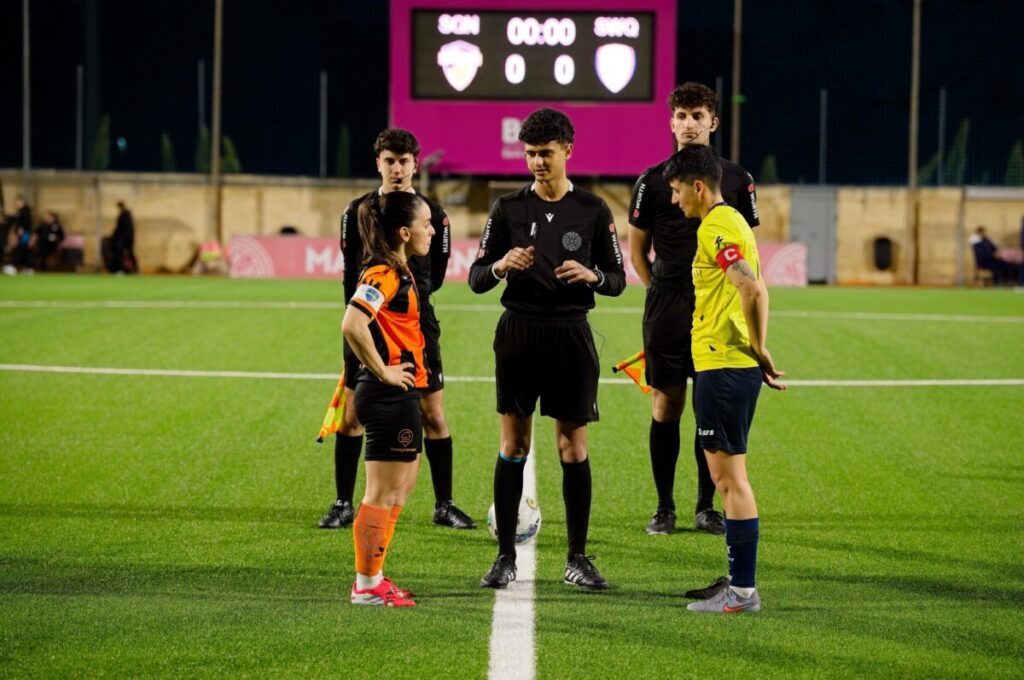
Training and playing under coaches like Keith Gouder also added further tactical and footballing perspective, but as standards rose across the league, new realities started emerging for players outside the top tier of squads.
AR: “I also worked under Keith Gouder there, which was another important learning experience.
But eventually I started getting older and honestly felt a bit disheartened when the Hibernians team folded and many of their players joined Swieqi.”
For Rapa, the arrival of several established national team players changed the internal dynamic — not through conflict, but through the growing competitiveness of places within squads becoming increasingly ambitious.
AR: “When I saw players like Dorianne Theuma, Charlene Zammit and Emma Xuereb joining, these were players I had always looked up to and I didn’t feel I could compete with them for playing time.
At that point, playing time was all I really wanted. I already knew the national team wasn’t realistically in the picture for me, so I felt it was time to move away.”
That search for minutes and continuity would eventually lead her toward Mosta and later San Gwann — clubs operating in a different reality from the title challengers, but where belief and stability would gradually begin to grow.
AR: “Coach Ray had been chasing me for a while, so I moved to Mosta, and eventually we all moved to San Gwann.”
Belief Beyond Damage Limitation
At the start of San Gwann’s journey in the women’s game, the club was operating in a very different reality from the league’s leading sides. Results often revolved around limiting damage against stronger opponents, while instability both on and off the pitch made long-term progress difficult to sustain.
ES: As a captain, how did your role evolve — especially in a team that was trying to grow and stabilise?
AR: “The armband never really affected me too much. Maybe I felt a bit more responsibility, so I spoke up more than I otherwise would have.
But honestly, football helped me grow in that sense because I’m naturally very introverted. It gave me confidence to speak more both on and off the pitch.”
Leadership, however, was less about speeches and more about trying to gradually shift belief within a squad still learning how to compete consistently.
AR: “I don’t think I could completely change players because some things have to come from the players themselves.
But I always tried to lead by example and give teammates a bit more belief.”
ES: San Gwann went from struggling at the bottom — even having to concede a final match against Birkirkara — to topping the bottom group within two seasons. What changed during that period?
AR: “It’s difficult to explain fully, but the coaching change made a big difference.
We came from a season with a lot of instability and then with Julian Camilleri we got stability. Along with that came a different mentality where we started believing we could actually play football.”
For Rapa, one of the biggest changes was psychological. Matches previously approached with survival in mind slowly started becoming opportunities to compete.
AR: “Before that, especially between the Mosta and early San Gwann periods, it often felt like everything was about damage limitation.
Once we started scoring goals and picking up points, the belief changed. Against bigger teams we started believing we could at least compete, limit the scoreline properly and maybe even score ourselves.”
ES: It’s been difficult for teams to break into the top four. From your perspective as a player, is that gap becoming harder to close and why?
AR: “No, honestly I think had we believed a bit more we might have gotten a win against one of the top four this year.”
One moment in particular still stands out to her.
AR: “Looking back at the match against Birkirkara, we were 4–2 down and had a penalty to make it 4–3, but we missed it.
I believe that if we had scored, it would have been a huge moment psychologically for the team because scoring three goals against Birkirkara would have given us even more belief moving forward.”
At the same time, Rapa acknowledges there are still clear limits to how quickly clubs outside the established top sides can close the gap.
AR: “I think matches against Mgarr and Swieqi were still more difficult this season, so I don’t think we were fully there yet. But against Hibernians we always created something, and that itself was progress when you consider that a few years earlier we barely dared attack.
So even though I’m no longer part of the team, I would still say that if the players believe, closing the gap further is possible.
But obviously there are limits too. Sometimes you need players who bring something different and the pool is small, so it’s difficult for clubs.”
That reality, she believes, extends beyond football itself. Reputation, stability and perception still heavily influence where players choose to build their careers.
AR: “The club’s name makes a difference when players are deciding where to sign. Naturally many players will choose the bigger clubs first. So for us at San Gwann, one of the first objectives was changing the reputation around the club and then trying to build from there.”
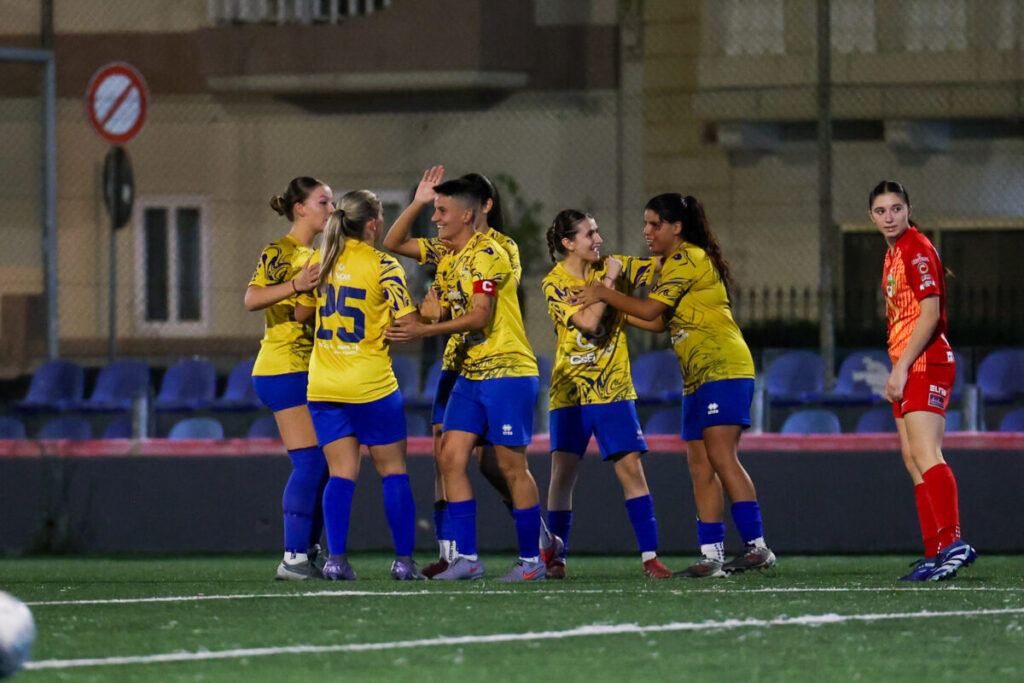
ES: Do you feel the current structure of the league helps or limits that competitiveness?
AR: “I don’t think with six teams there’s much you can really do structurally. The split can’t happen because it would become too repetitive, even more than it already is. At the same time, even though Mgarr were very strong this season, I still felt matches against the other teams were competitive enough that you never felt completely out of them.”
But the shrinking number of clubs remains one of her biggest concerns for the future of the women’s game.
AR: “From a player’s perspective, I still wish there were more teams because it would naturally make the league more interesting and competitive. Losing two more teams this season was worrying and we need to avoid that happening again.”
The Cost Of Raising Standards
As the women’s game in Malta became more organised and demanding, players increasingly found themselves balancing rising football expectations alongside full-time work, studies and everyday responsibilities — often without the structures normally associated with professional sport.
ES: You’ve played through a period where the game has become more structured and demanding, but is still largely amateur. How has that shift affected players — especially those balancing football with other commitments?
AR: “I think first we need to realise how much players are trying to juggle.
This was actually something I spoke about a lot with Julian Camilleri when he first joined because I was captain at the time.”
One of the biggest misconceptions surrounding the women’s game is assuming it functions under the same realities as the men’s game — particularly when it comes to managing players and expectations.
AR: “I think it’s overlooked how different the women’s game is from the men’s game and sometimes coaches coming from the men’s game struggle to realise how different the dynamic is.
Even how criticism is delivered to players can be different and that’s something coaches need to adapt to because you can’t afford losing players when the numbers are already small.”
She credits Camilleri for gradually adapting to those realities during San Gwann’s progression.
AR: “He adjusted very well with time and ultimately it became a really positive experience working with him and achieving what we did.”
But beyond coaching approaches, she says the daily realities facing players are often underestimated.
AR: “Young players are balancing school schedules while still wanting some kind of social life like everyone else. Then as you get older, responsibilities change again.
For me it was normal to finish a full day of work, go to training and arrive home at around 10:30 at night. Then I still needed to prepare dinner and get ready for another full day after that.”
The increasing demands of the game, she says, eventually create limits that are difficult to ignore.
AR: “No matter how much you try, after so many consecutive days going from one thing to another, at some point you won’t be able to give 100% all the time.
Then you have to consider that every player is living through completely different circumstances, so naturally there will be a lot of variation.”
At the same time, expectations within the women’s game have continued rising.
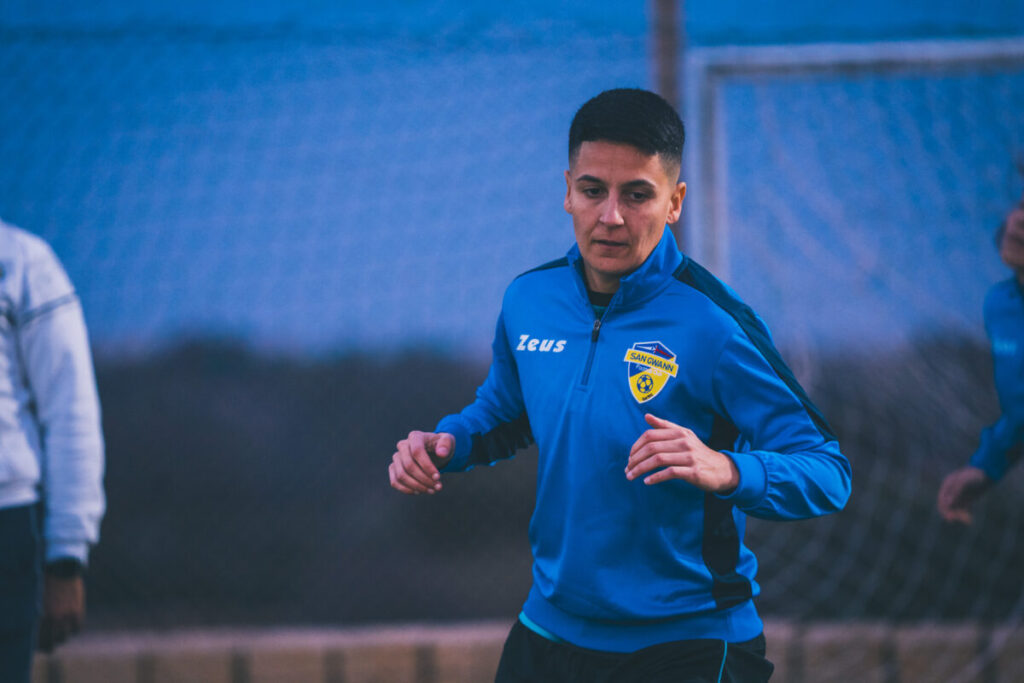
AR: “We moved from training three times a week to four times a week plus matches. Players are trying their best, but without proper remuneration they still have to balance football with full-time jobs.
It’s not like the men’s game.
So I think sometimes coaches also have to understand players from that perspective and appreciate the smaller wins.”
Still, Rapa does not believe the answer is lowering standards. Instead, she sees the modern game as demanding a clearer commitment from players while also requiring the wider structures around them to evolve.
AR: “At the same time, from a player’s perspective, if you want to play football then you have to train properly for it. If you want to graduate, you study — and football is the same.
There are more opportunities today, so if I was starting again now, the question I would ask myself is how much I really want to play football. Because the opportunities exist, but you have to work for them.”
ES: Do you feel the demand toward a more professional setting has created new opportunities, or new pressures?
AR: “I think there’s a lot of expectation around the game becoming ‘professional’. But when people say that, what do they actually mean? For me, professionalism means having a good ground to train on, proper coaching staff, decent training times, good pay for players, staff and coaches, and the same facilities available to the men’s teams.
If you want players to behave professionally, then the professional environment needs to exist as well.
You need resources and honestly I don’t think we’re even fully there at national team level yet, let alone club level.
Professional is a big word because ultimately that means football becomes your full-time job, and we’re still far from that.”
Instead, she sees the women’s game in Malta as existing somewhere in between — no longer fully amateur in expectations, but not yet fully supported either.
AR: “We expect players to train like professionals, but at the same time the game itself still needs to take steps so that everything around the players progresses as well.”
Quietly Stepping Away
Rapa eventually concluded her playing career after 233 club appearances, stepping away just three matches short of reaching 100 appearances for San Gwann.
ES: You announced your retirement close to the end of the league, but rather abruptly in the season. Was this a moment where you felt it was the right time to step away, or one where circumstances pushed you toward that decision?
AR: “There were some things I didn’t really agree with. I’m someone who believes strongly in my values and tries to stick to them even when it’s tough.
Even though I would have reached 100 matches with San Gwann had I played the final three league games, and I originally intended to finish my contract before retiring, I couldn’t continue playing while not agreeing with what I was observing.
So I made the decision to stop. I will leave it at that.”
ES: Do you feel players in your position, especially experienced ones, are currently well supported in the game?
AR: “I don’t think so honestly. I think there are very few individuals who really care about longevity and what happens to players after they stop playing.”
Preparing for life after football, she says, helped soften the transition personally — though she recognises not every player experiences retirement in the same way.
AR: “I think if I wasn’t already preparing myself to move into coaching, I’m not sure how I would be handling retirement right now either. It probably would have been much harder.”
Looking Ahead
Despite stepping away from playing, Rapa does not see her relationship with football ending. If anything, her focus has gradually shifted toward understanding how the next generation of players can be supported through a game still trying to define its own future.
ES: Looking back on your career, what moments or achievements stand out most to you?
AR: “I think winning the second division with Pembroke is probably the obvious answer. We were very young and honestly I barely understood football properly at the time, but it was still a huge experience for all of us. Scoring a goal for San Gwann was a pure football moment and it was nice to feel that release to push my team toward victory.”
But beyond medals, goals or league positions, Rapa measures much of her career differently.
AR: “I was never the most technically gifted player, but I do feel that throughout my time in football I influenced people through my character and hopefully encouraged others to push themselves and improve.”
ES: How do you feel about the state of the women’s game in Malta today?
AR: “A lot of things are still the same unfortunately — poor grounds, difficult training times and the women’s game still coming after the men’s game in terms of priority.
Sometimes even pitch rentals come before women’s team training sessions.”
At the same time, she believes the modern women’s game faces challenges very different from the ones that existed when she first entered football.
AR: “Today there are far more things competing for the attention of young players. As a coach now, I realise how much harder it is to keep young players engaged.
If one session goes badly, you can lose them.”
That challenge becomes even more difficult within a player pool that remains relatively small and increasingly stretched.
AR: “We still don’t have huge numbers of players and that’s just the reality. Foreign players help increase the pool, but I also understand why clubs sometimes need to join forces because there simply aren’t enough players available to compete properly.”
Still, Rapa believes there are visible signs of progress too — particularly in coaching structures and wider visibility around the women’s game.
AR: “One positive is that there are more coaches genuinely interested in coaching women’s football now, even though there are still challenges.
It’s also encouraging seeing more female players wanting to move into coaching because that means clubs are slowly building more complete coaching setups instead of relying on just one coach.
I think better coaches naturally improve the football itself because players are exposed to a wider understanding of the game.”
Increased international visibility around women’s football, she says, is also gradually changing how younger players relate to the sport.
AR: “Looking abroad helps as well because young players today have more female footballers to look up to.
Seeing young girls and boys wearing shirts with female players’ names on the back is a positive thing and hopefully that influence reaches Malta too.”
ES: Do you see yourself staying involved in football in any way going forward?
AR: “Yes. I’m currently working through the UEFA B Licence and I would like to build something as a coach.
Right now I’m more interested in youth development than a highly competitive environment, although maybe that changes over time.”
That focus on development reflects the wider perspective that emerged throughout Rapa’s career — one shaped less by chasing elite football and more by understanding how fragile pathways within the women’s game can sometimes be.
ES: What is your hope for the next generation of players coming through the game?
AR: “I hope the women’s game in Malta continues growing. I hope we see more passion from younger players and that this eventually leads to more teams and a more competitive league, because ultimately that also strengthens the national team.”
“So I would encourage players to keep pushing if they truly love the game, no matter how difficult it becomes.”
I would like to thank Annabelle Rapa for taking the time to sit with me to be able to bring you this feature. I look forward to seeing her shape the next generation of players!
Thank you for reading. If you enjoyed this please consider sharing it with a friend who you think would enjoy it. You may also want to read other interviews from the ‘Spotlight‘ series.
Lead Image: Brandon Bonett