 by
by Malta’s WU19s took two wins, seven goals and two clean sheets from their Saudi Arabia double-header, but Melania Bajada’s focus was on something longer-term: building a clearer possession identity, encouraging bravery on the ball and raising the speed of execution before the next UEFA qualifying test.
Starting A New Chapter
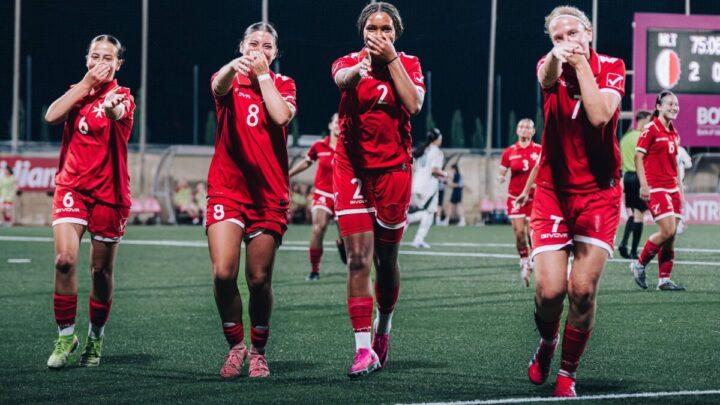
Malta’s Women’s Under-19 selection came through the June international window with two wins over Saudi Arabia, seven goals scored and two clean sheets, but head coach Melania Bajada placed the main value of the double-header in what it allowed the group to start building.
The WU19s won the first match 3-0 before following it with a 4-0 victory, completing a productive pair of friendlies at the Centenary Stadium. The scorelines brought a clear return, but Bajada’s assessment pointed toward the beginning of a new cycle for the group.
“Obviously, I’m very pleased with the number of goals we scored, the chances we created, and the fact that we kept two clean sheets,” Bajada said. “However, for me, the main objective of this window was to start a new chapter with the team and establish a clear identity in the way we want to play.”
That idea of a new chapter gives the window its proper frame. Malta were not only using the matches to win, but to begin shaping the football this group wants to recognise as its own.
For Bajada, that identity starts with possession and confidence on the ball.
“We want to be a team that plays football, is comfortable in possession, and shows confidence on the ball,” she said.
That is a clear statement of intent, and one that sets a demanding direction. Possession, if it is to become more than a preference, requires responsibility from the player on the ball and movement around her.
Confidence Through Possession
The Saudi Arabia friendlies offered Malta the space to begin working through those ideas in a match environment. Bajada had spoken before the window about facing a different type of opponent to the European sides Malta more regularly encounter, and the two matches appear to have served the purpose she had in mind.
“I believe Saudi Arabia was the right opponent for us,” Bajada said. “As I already mentioned, one of our main priorities during this window was to build confidence within the group, especially in possession. I felt that against this type of opposition, the players would have more opportunities to be on the ball, express themselves, and be creative.”
That context matters in how the results should be read. The wins were convincing, but the more useful measure is whether Malta used that control to develop habits that can carry into the next stage.
“That was our main focus throughout the window, and I believe we made good progress,” she said. “The players showed a willingness to take responsibility in possession and play with confidence, which was very encouraging.”
The confidence Bajada described was not simply treated as a product of winning. Her reading of the window placed it closer to daily work, repeated habits and trust within the group.
“The biggest lesson is that confidence comes from the work you do every day,” she said. “The players showed that when they are brave on the ball, trust themselves, and trust the team, they can play good football and create chances. The results were positive, but more importantly, we took important steps towards the identity and style of play we want to build.”
The Balance Between Credit And Honesty
Comfortable wins can easily soften the analysis, but Bajada was clear that the scorelines should not hide the next layer of work.
“I think it’s important to find the right balance,” she said. “Of course, we should enjoy the results because winning matches and keeping clean sheets is never easy, and the players deserve credit for that. But at the same time, we have to be honest in our analysis.”
That honesty gives the window its sharper football meaning. The next step is not only to want more possession, but to make that possession quicker, cleaner and more reliable.
“There are still many areas where we can improve,” she said. “One of the main things is ensuring that we are always available to receive the ball and provide good passing options for the player in possession. We also need to improve the weight and quality of our passing, as well as the tempo of our play. We want to move the ball quicker, be more consistent in possession, and play with greater intensity.”
Those are the details that will decide whether the identity can hold against stronger opponents. Availability to receive, passing quality, tempo and intensity are the difference between having the ball and controlling the game with it.
A Different Test From Saudi Arabia
The value of the opponent sits in that context. Saudi Arabia gave Malta enough room to build confidence on the ball, but Bajada still felt the matches brought useful challenges at different moments.
“Saudi Arabia still provided a good test and challenged us in different moments of the game,” Bajada said. “Overall, I think we responded well. The players showed confidence on the ball, tried to play the way we want to play, and made positive steps towards the style of football we are trying to develop.”
That phrasing is important. “Tried to play the way we want to play” is a more useful benchmark than the scorelines alone. It suggests the double-header worked as an early-stage test of direction rather than a final proof of where the group stands.
For Malta’s U19s, that may be the right way to understand the window. These were not matches that answered every question. They were matches that helped establish the questions the group must now keep answering: can Malta remain brave on the ball, move it quicker, make possession more consistent, and keep those habits when the level rises?
Speed Becomes The Next Test
That next test has already taken shape. Malta have been drawn in Group B6 of League B in the 2026/27 UEFA Women’s Under-19 Championship Round 1, together with Romania, Czech Republic and Kazakhstan.
The competition will feature 52 teams, with 28 in League A and 24 in League B. Malta were placed in Pot 3 of League B, where the six group winners and the best runner-up will be promoted to League A for the second round.
The matches must be played during the FIFA Women’s International Match Calendar windows, unless all teams in the group agree on other dates. The available windows are 5th to 13th October 2026 or 24th November to 5th December 2026.
That gives Bajada’s assessment from the Saudi Arabia window added relevance. The confidence Malta built in possession is useful, but the qualifying group will ask different questions. Romania and Czech Republic, in particular, were directly referenced by Bajada as the level against which Malta’s next step must be measured.
“We know that in the upcoming qualifiers we will face strong opponents such as Romania and Czech Republic,” she said. “Against teams of that level, it is important that we maintain our identity and continue to be brave on the ball, but we must also execute everything at a higher speed. That’s the next step for us.”
That is the bridge from this window to the next one. Malta’s WU19s leave the Saudi Arabia friendlies with goals, clean sheets and a useful layer of confidence. The more important point is that the window gave the group a starting point for its identity. What comes next is the harder part: keeping that same bravery on the ball when opponents press faster, close spaces earlier and force every decision to arrive sooner.
“The results give us confidence,” Bajada said, “but they also show us where we need to keep improving.”
Lead Image: Malta Football Association
Stay up to date by following The Sporting Fan on social media: Instagram ~ Facebook ~ X