 by
by Malta’s WU17s scored twelve goals across two wins over Saudi Arabia, but Clint Tabone kept the focus beyond the scorelines, stressing the need to keep feet firmly on the ground as the group continues building its game model, internal competition and standards before the next UEFA qualifying test.
Building The Game Model
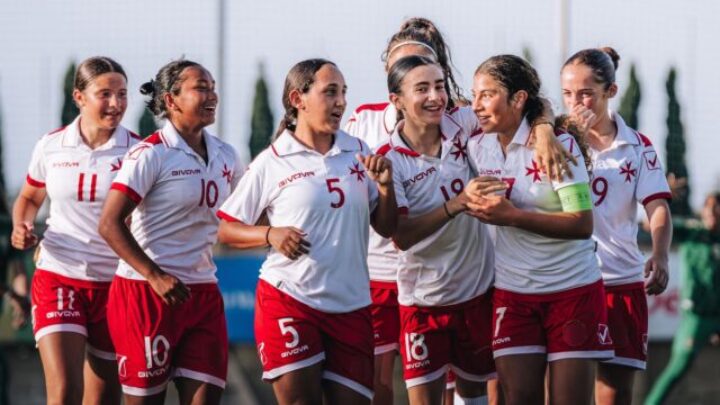
Malta’s Women’s Under-17 selection ended the June international window with two convincing victories over Saudi Arabia, but for head coach Clint Tabone the value of the double-header was never going to be measured by the scorelines alone.
The WU17s won the first match 5-1 before following it with a 7-0 victory, scoring twelve goals across the two friendlies. It was a productive return on paper, yet the more important assessment sits in what the matches showed about the group’s development, the players’ understanding of the game model, and the standards being built before the next phase of the UEFA European Qualifiers.
Tabone said the camp gave Malta the chance to reinforce work that has been developing across the season.
“We prepared very well throughout the camp to implement the game model that we have been building throughout the season,” he said. “Our main objective was to encourage the players to play with confidence, express themselves on the pitch, and maintain the consistency they have shown in previous matches. I was pleased with the way they applied our principles and approached both games.”
That response is important because it gives the window a clearer frame. Comfortable victories can sometimes tell only part of the story. The challenge for Malta was therefore not simply to win, but to keep using the ball with purpose, remain focused on their principles and show that the habits being developed in training can carry into match situations.
Measuring Progress Beyond The Scoreline
The scorelines suggest dominance. Tabone’s assessment, however, points more directly to process.
“Progress is measured by much more than the result,” he said. “When you believe in your players and the players believe in the staff and the process, improvement becomes visible over time. We wanted the players to play with confidence, remain focused on our principles, show character, and represent Malta with pride. The way they executed what we worked on during training was a positive indicator of their development.”
That distinction matters. In a window where Malta scored twelve goals, it would be easy for the attacking return to dominate the discussion. Yet for a youth national team, the more durable question is whether the performance contains transferable habits. Can the players repeat the same decision-making when the opponent presses higher? Can they maintain structure when they have less of the ball? Can they carry confidence into a match where the game state is tighter and the margin for error smaller?
Those are the questions that will become more relevant when Malta return to competitive action. Against Saudi Arabia, the players had the opportunity to express themselves in matches that Malta controlled for long periods. The next step is ensuring that confidence does not become detached from discipline.
Confidence, But Feet On The Ground
Tabone was careful to make that point.
“First of all, we need to keep our feet firmly on the ground,” he said. “With all due respect to Saudi Arabia, we know that future opponents will present different and greater challenges. Winning matches always boosts confidence, especially with such positive results, but there is still a lot for us to learn and improve.”
That is the correct balance for this kind of window. The victories are meaningful because winning at international level, at any age group, helps develop belief. But the scale of the scorelines should not remove the need for scrutiny. Malta’s challenge is to take confidence from the matches without allowing the results to become the whole story.
For Tabone, the clearest lesson was collective.
“The biggest lesson for the players is that when everyone works for each other, stays united, and commits to the team’s objectives, positive results will follow,” he said.
Healthy Competition Within The Squad
The double-header also served a practical purpose. With two matches available, the technical staff were able to rotate, assess players and create internal competition within the squad. That is particularly valuable at U17 level, where players are still developing physically, technically and tactically, and where international windows can quickly reshape the picture of who is ready for the next step.
“Of course,” Tabone said, when asked whether players used the opportunity to strengthen their case within the squad. “We used the camp to assess players and create healthy competition within the squad. We also rotated players to ensure everyone had the opportunity to show their qualities. This was important as we continue preparing for the next qualifying phase and evaluate the options available to us.”
That competition for places will now carry greater significance. The Saudi Arabia friendlies came before Malta discovered their next UEFA Women’s Under-17 Championship qualifying path, giving the staff a useful final reference point before attention turns toward a more demanding competitive setting.
Turning Friendlies Into Qualifying Preparation
“These friendlies were extremely important for us,” Tabone said. “They provided valuable opportunities to test players, evaluate our progress, and continue developing our game model in a competitive environment. We are grateful to the Malta Football Association for providing these opportunities, as matches like these are essential in helping us prepare effectively for the challenges ahead. The experience gained from these games will certainly help us as we continue our preparations for the next phase of the UEFA European Qualifiers.”
That next phase will place Malta in Group B6 of League B in the 2026/27 UEFA Women’s Under-17 Championship Round 1. Malta have been drawn with Serbia and Bosnia and Herzegovina, with the mini-tournament hosts still to be announced.
Under the competition format, League B is made up of 22 teams, with the group winners and the best runner-up earning promotion to League A for the second round. The matches must be played by 5th December.
That gives the Saudi Arabia window a clear place in Malta’s development calendar. The wins provided goals, confidence and minutes. The more important test now is whether the same principles Tabone saw across the camp can hold when the level rises, the spaces narrow and Malta’s young players are asked to show that their progress is not only visible in comfortable victories, but durable enough for the competitive challenges ahead.
Lead Image: Malta Football Association
Stay up to date by following The Sporting Fan on social media: Instagram ~ Facebook ~ X