 by
by Malta’s U19s open their European campaign under new coach Melania Bajada against familiar opposition in Israel and Kazakhstan, alongside a sterner test in Bulgaria, with the focus on belief, cohesion and growth within a transitioning squad. Bajada underlined her responsibility to rebuild and develop a new group capable of taking the next step, even while questions around retention and long-term continuity remain.
Malta U19s Begin European Campaign Under Bajada’s Leadership
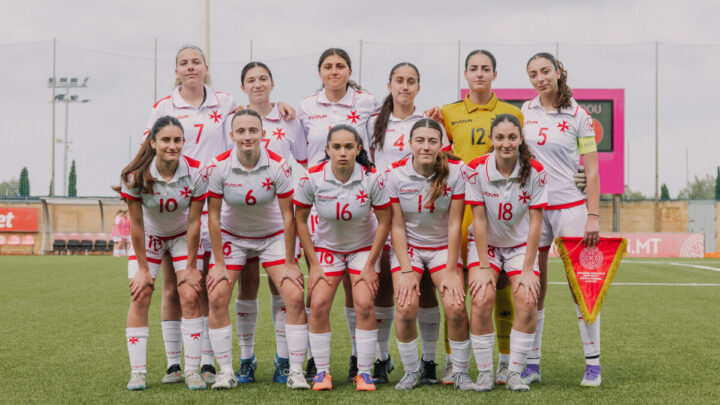
Malta’s U19 Women’s National Team return to UEFA European Championship action as from this afternoon, opening their campaign against Israel (at 14:30) before facing Bulgaria on Sunday (same time) and Kazakhstan next Wednesday at 11 am. All three fixtures will be staged at the Centenary Stadium.
This tournament arrives at a point of transition. A change in leadership sits alongside a squad profile that continues to shift beneath it.
Melania Bajada steps into the role following David Attard’s departure, inheriting a group that has shown signs of upward mobility — but also one that reflects the ongoing fragility of the pathway beneath senior level.
Attard vacated the role after just over two years, having taken charge in 2024. He most recently led the side in the competitive fixtures in December, accruing a first win against Kazakhstan, before the last international window where the team faced Romania in a double-header.
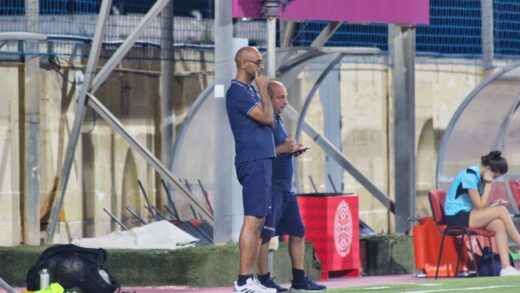
Melania Bajada formed part of the setup against Romania assisting Attard, before the announcement was made that she will be taking the head coaching position at this level.
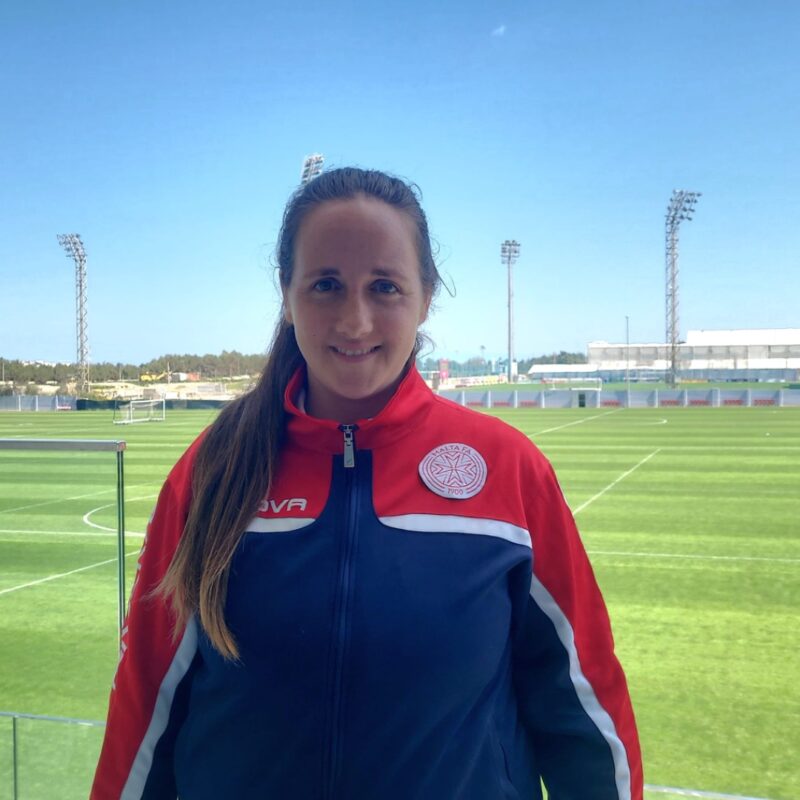
She is well known in the women’s game, having most famously led Birkirkara to the treble, as well as their first point at European level. Though stepping away from competitive levels in the past few years, Bajada continued to be a strong pillar in shaping Gozo’s future talents, before deciding to take on the national team position.
Speaking about the changes between club and national level since leaving Birkirkara and coming into this role, she replied, “I did not take a break from the sport. Over the past three years, I have been working as Head Coach of Kercem Ajax Nursery. However, there is a big difference between coaching at club level, like at Birkirkara, and working at national level.”
She continued, “At club level, you work with the players throughout the entire year, which allows you to build consistency and develop ideas over time. At national level, you only have short periods together, so preparation time is limited. This means you have to be very efficient and focused in order to get the best out of the players in a short time.”
Within that, Bajada aligns herself with the federation’s broader push towards a unified playing philosophy. In fact, she was vocal about the importance in the longer term pathway, “Yes, I believe it is very important to work with a unified philosophy. It gives players continuity as they move through different age groups and helps create a clear identity for the national teams. As coaches, it also allows us to support each other, share ideas, and challenge one another to keep improving. In the long term, this is essential for the development and success of the women’s national team.”
A Group Between Progress And Attrition
The U19 cohort continues to sit at the centre of wider discussion around Malta’s women’s pathway.
There are visible positives, especially with a few stepping up relatively early and having positive performances at senior levels. But those gains run alongside a quieter, more persistent issue — retention.
Bajada’s early assessment reflects both sides, “There are four players from the U19 group who have already made the step up to the senior team, which is very exciting to see at such a young age. It shows that there is real potential within this age group.”
Though new in the coaching position, Bajada’s response gave a clear picture of someone who understands the challenges at hand and the reality of the transitional period, “Now it is my responsibility to select a new young squad, develop them, and help them take that next step as well. I believe we have several talented players who can progress to the senior squad once they complete their U19 journey. At the same time, we have seen some promising players leave the game, which is always a challenge. That is why it is very important to focus on those who are committed, hungry to improve, and willing to put in the work.”
That step starts with the first selection which already features some new faces, including Valletta’s Carla Giles, with a retention of those who were making their first involvements at this level including Somaya Muscat (Valletta), Yasmine Ghenam (Hibernians) and Kristina Zammit (Valletta). Caitlyn Turner also earns another call-up following her exploits against Lebanon.
They are backed by a strong cohort who has continued to retain the faith even in transition, including the goalkeeping duo Erika Muscat and Maya Muscat. In defence, Amber Galea leads the charge with Stella Francalanza and Lara May Azzopardi in defence, while the midfield is led by Ema Micallef. Hibernians trio Lisa Calleja, Nyorah Celeste and Suzanne Farrugia Sacco also offer consistency among a wider group looking to continue their trajectory to senior level.
Familiar Opponents, Shifting Contexts
Malta enters a group that offers a degree of familiarity even in opposition. Kazakhstan — beaten 3–1 in December. Israel — a 3–1 defeat in the same window.
However, familiarity rarely guarantees predictability at this level, particularly with coaching changes on both sides.
Bajada gave her assessment, “Israel may present some differences, as they have changed their coach, who could bring a new approach or style of play. Kazakhstan, on the other hand, is likely to be more consistent since they have kept the same coach, although we expect them to analyse the previous game carefully and make adjustments.”
Bulgaria, meanwhile, represent a different type of challenge altogether — a side arriving from League A, bringing with them a level Malta has not consistently occupied and has struggled to return to in recent years.
Melania Bajada voiced the importance of a compact approach on Sunday in front of the home crowd, “Bulgaria is a strong team, and we are aware of the challenge they bring. Across all three matches, it will be important for us to stay compact as a team and remain confident when we are in possession of the ball.”
Defining Success Beyond Results
Results will inevitably frame the narrative, but at this level, Bajada’s definition of success leans deliberately elsewhere — toward internal markers that are less visible, but arguably more telling for a squad at this stage.
Showing continuity to David Attard’s tone, she identified the metrics for the team, “For me, this tournament will be a success if I can give my players belief and confidence, and help them feel that they truly belong at this level. I want them to trust themselves, be confident on the ball, and play as a collective unit. Of course, results are important, but at this stage, individual development is equally important. Helping each player grow and express themselves on the pitch is a key objective for me.”
The team will have the first opportunity to showcase their football this afternoon at 14:30.
Lead Image: Malta FA
Stay up to date by following The Sporting Fan on social media: Instagram ~ Facebook ~ X