 by
by From perennial runners-up to unbeaten champions, Mgarr United’s rise combined a shift in mentality, strong local identity and resilience — captured best by Abigail Camilleri’s words: “My dream wasn’t to win the league — it was to win the league for Mgarr.” Ryan Vella details the cultural change behind the squad’s progress, while Leanne Cefai represents the resilience that sustained their campaign.
An Unwanted Label
It had almost become a bad joke.
Mgarr United — the team that always got close, but never quite got there.
For years, they lingered on the edge of history, perennial runners-up in a league that often felt just out of reach. Promising squads came and went. Talents emerged, flourished, and moved on. Even in moments of brilliance, the final step remained elusive.
The 2023/24 season began with renewed optimism. New signings arrived, expectations quietly rose, but by January the familiar doubts crept back in. A heavy 5–1 defeat to Swieqi United seemed to confirm what many had come to expect — that the title would once again belong elsewhere and runners-up wouldn’t even be the consolation prize.
And then, something changed. Not overnight and not by chance – but through a transition that ran deeper than results.
A Shift in Belief
When Ryan Vella stepped in during February 2024, the challenge was not one of quality — it was one of conviction.
“We knew that the team had quality having reached finals and also finished as runners up,” Vella explains. “So, the focus turned to the mentality, to instill the belief in the team that they could make that final step.”
Rather than dismantle, in the summer of 2024 the club refined. A strong core remained — players like Abigail Camilleri and Brenda Borg, figures who had carried the club through its near-misses. Around them came experience: Ann-Marie Said and Veronique Mifsud, players who understood what it meant to win.
It was not a rebuild. It was a recalibration – one that would only reveal its impact over time.
“I think the change of the coach, together with the likes of Ann(-Marie Said) and Veronique (Mifsud) coming into the team truly changed our mentality in the squad,” captain Abigail Camilleri reflects. “Once we overcame that fear of big occasions — which we confirmed by winning the Knockout — we truly came into the season believing that we could do it.”
However, change extended beyond the pitch.
“I think in the past three years the committee changed, strengthened with new players who integrated well with us both in terms of technical ability but also challenged our mentality,” Leanne Cefai explains. “Putting it all together, we changed the belief inside the team and today is proof of that.”
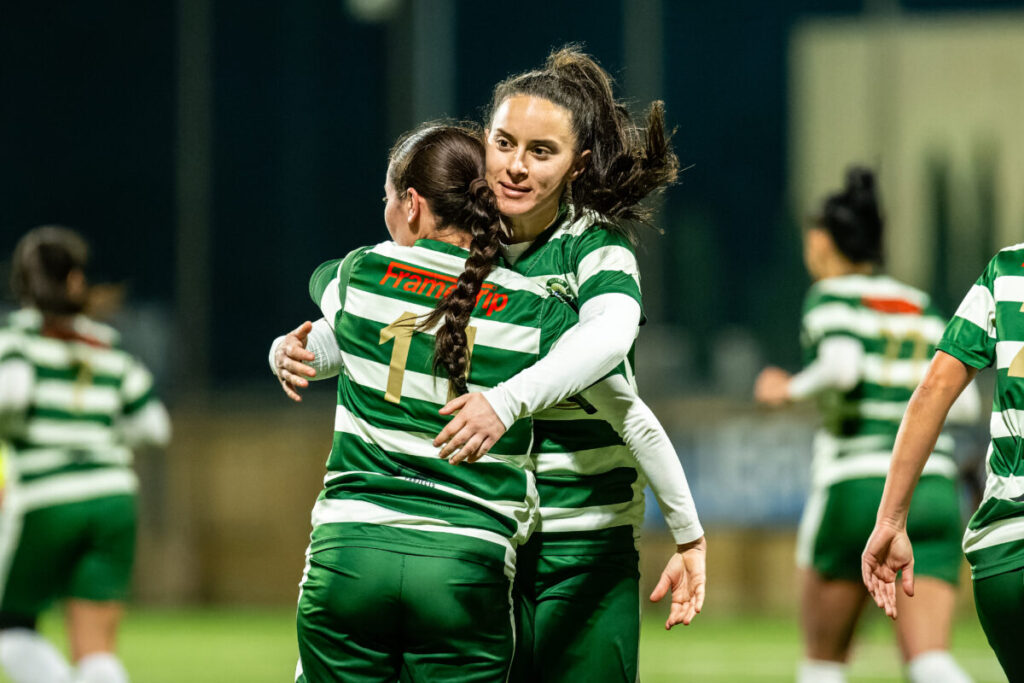
That evolution behind the scenes was equally important, even if it deliberately remained in the background. Kelly Agius Pace and Jeffrey Cardona became central to the operations behind the team.
“It is a tough question to answer,” Kelly Agius Pace says when asked to describe the changes. “I was a player before joining the committee — today belongs to them and the technical staff. As a committee we celebrate this with them. I hope that together we managed to address the deficiencies to allow our technical team and the players to get to this moment.”
For a club long defined by falling just short, the shift was collective — structural, cultural, and ultimately decisive.
Defining Moments
Champions are rarely defined by a single match. But certain moments shape the trajectory of a season.
For Vella, two stood out.
“We were losing 1–0 to Swieqi United and turned the result to win it 3–1 at Victor Tedesco,” he recalls. “Seeing the team respond like that, against the defending champions, showed me that we could do it.”
That opponent — Swieqi United — had already been identified as a key hurdle. Their rise, coupled with last season’s title and this year’s Super Cup success against the Greens, had positioned them as a benchmark Mgarr needed to overcome.
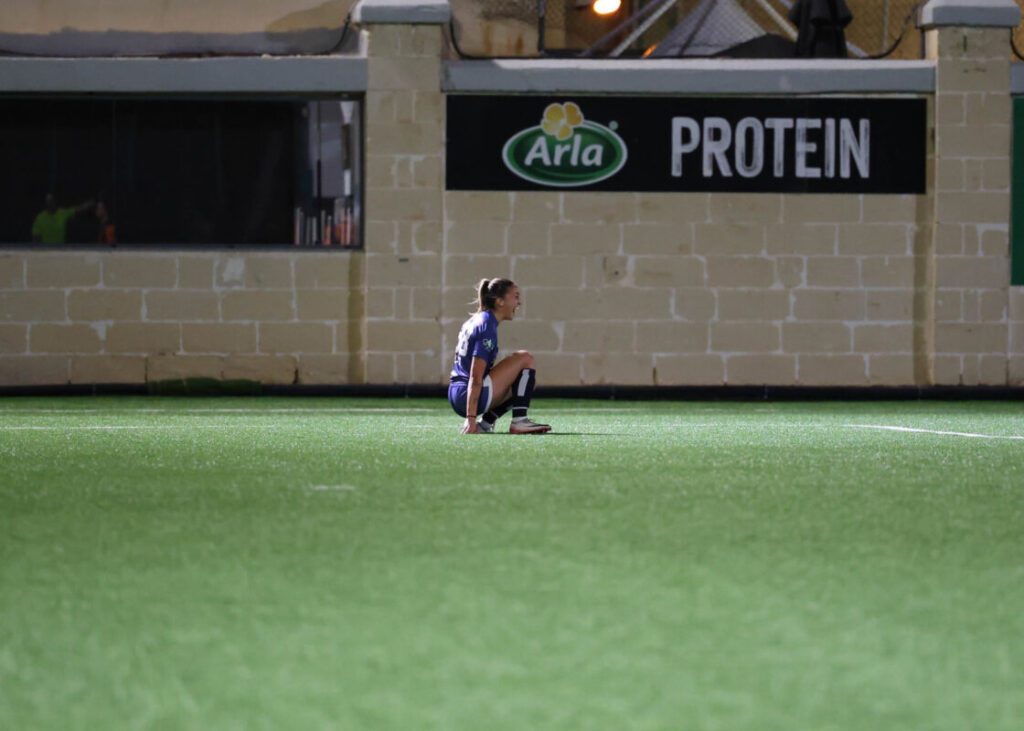
The psychological breakthrough continued in knockout football where the Jubilee Cup run itself carried layered significance. The semi-final victory over Swieqi United removed one barrier. The final against Hibernians presented another — a side known for tight encounters, with an additional layer of pressure brought by the occasion.
“I think the Jubilee Final cemented that further,” Vella adds. “We were losing late on and turned it around in the final minutes. Those matches confirmed that the mentality had changed and that these players were ready for anything.”
Across both competitions and league fixtures, those margins would go on to define the consistency required across an entire campaign.
Consistency, Not Comfort
Mgarr’s title-winning campaign was, on paper, dominant: 54 points, 17 wins, 3 draws, unbeaten across a four-round league format.
But numbers rarely tell the full story.
“No,” Abigail Camilleri insisted when asked if it felt as comfortable as it looked. “I think even though there is a big gap in the table, each match was a battle and there were many fine margins. We just managed to edge out the crucial moments to get the key goal here and there and keep them out long enough to earn the points. It was a mental push from start to end to maintain it.”
That mental endurance became their defining trait. Vella pointed to continuity as the silent engine behind it all: “We didn’t change much over the summer. We knew we had built the right foundations so we focused on recovering our injured players rather than making big changes.”
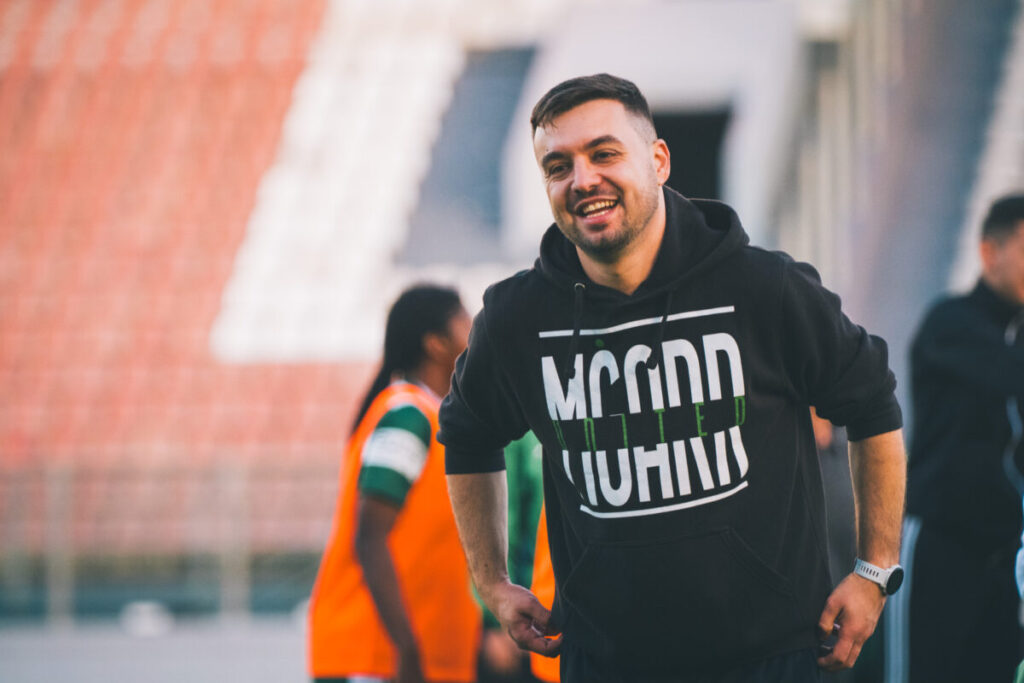
Even then, setbacks came. Fresh injuries to key figures tested the squad — yet the response never wavered.
“Then it was up to the players to perform each week,” Vella says. “And they did that.”
Up front, goals flowed. Across the pitch, balance held. At the back, a structure anchored everything.
Even as the title edged closer, challenges persisted.
Birkirkara, a team undergoing its own transition, proved capable of disrupting that momentum — most notably with a 1–1 draw in the penultimate match that threatened the unbeaten run.
And perhaps that is what made the unbeaten record stand out even more.
“We never really thought we would do it unbeaten,” Cefai admits. “We knew consistency was important, but to do it like this was the most unexpected.”
Assikura Women's League - Standings


The Weight of the Past
For Mgarr United, this title was shaped as much by what came before as by what unfolded this season.
Near-misses, second-place finishes, and periods of transition had built a narrative that proved difficult to shake. Even promising phases — including the emergence of young talents in earlier years — did not translate into silverware.
That context makes the individual journeys within the squad all the more significant.
Leanne Cefai’s path is one such example.
Her time at the club has been marked by resilience as much as performance. Multiple ACL injuries disrupted not only her development, but her connection to the daily rhythm of football.
“Yesterday was in fact the third-year anniversary since my last operation,” she reflects. “Looking back, after all those tough, lonely and disruptive moments that destroy even your social routine — given that you go from training every day with your team to doing rehabilitation often alone — today I think to myself, it was all worth it.”
Her return at a time when hopes of a league title were slim to contribute to a defensively solid unit — one that became central to Mgarr’s consistency — reflects a broader theme within the squad: persistence through disruption.
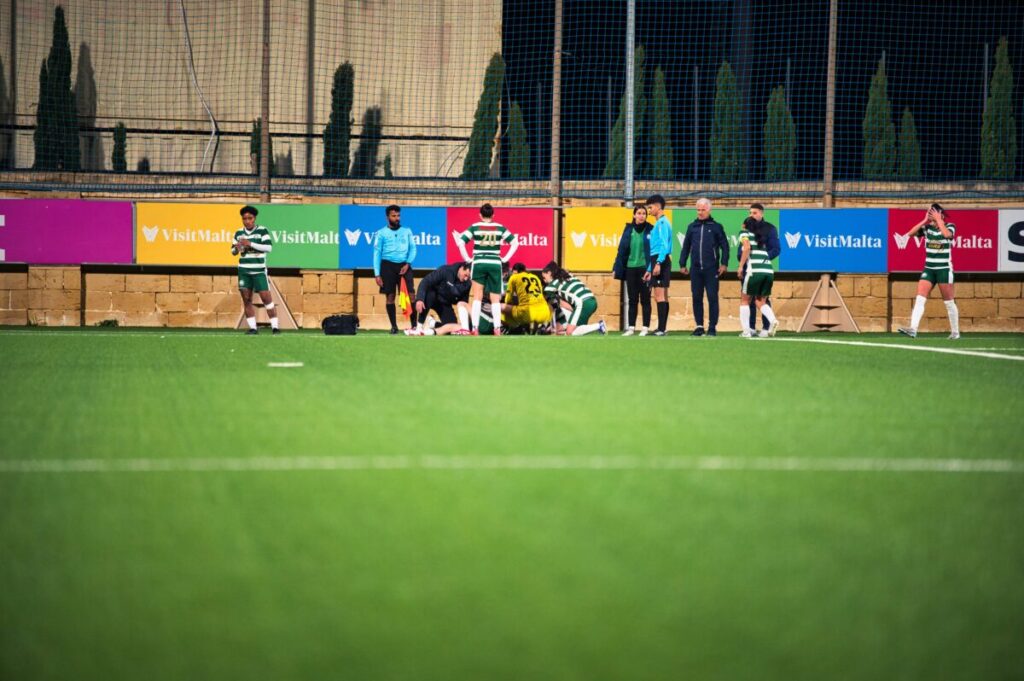
Her story is also reflected across the squad. Amber Grech, a key presence in midfield, fought through her own injury setbacks ultimately unable to finish the league run. Rebecca Bajada, instrumental early in the campaign, suffered a late ACL injury. This just as Brenda Borg and Veronique Mifsud entered the fold this season.
It was not a team built overnight, but one that absorbed setbacks and gradually converted them into stability, while managing the gaps needing addressing.
Hometown Glory
If this triumph was built on belief, it was grounded in something deeper: identity.
And at the heart of it stand two figures — both born and bred in Mgarr — who carried that identity onto the pitch.
For Ryan Vella, the journey was not always straightforward.
Three years ago, when I decided to leave the boys and coach the women’s team, many tried to talk me out of it. But I was stubborn. I knew the potential.
Ryan Vella
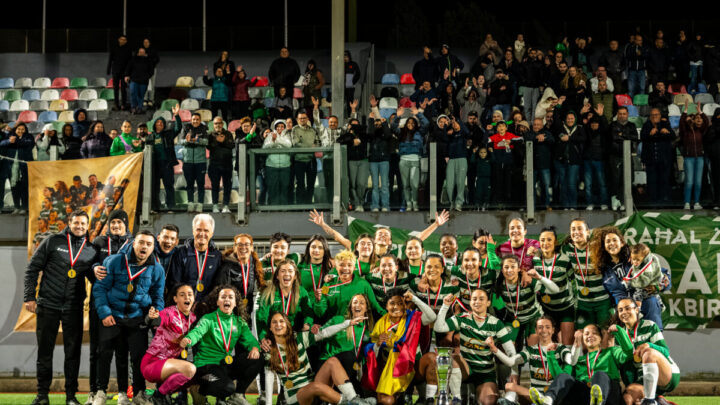
What followed is now history — three trophies, culminating in the one that mattered most.
“Being from Mgarr and winning something for Mgarr is special… to lead an Mgarr side to a league title is huge. I will not forget this day.”
For Abigail Camilleri, the connection runs even deeper.
She was there at the beginning — in 2005 — long before titles felt possible.
“I cannot tell you that when we started, I thought of winning the league,” she says, her voice heavy with emotion. “There were tough moments, we conceded a lot of goals until we grew and then the challenge to win titles was even greater.”
But the motivation never faded.
“I play a lot for the badge of my village. I winced every time I was told that we wouldn’t win anything because we are coming from a small village.”
That doubt became fuel.
My dream wasn’t to win the league — it was to win the league for Mgarr.
Abigail Camilleri
More Than a Title
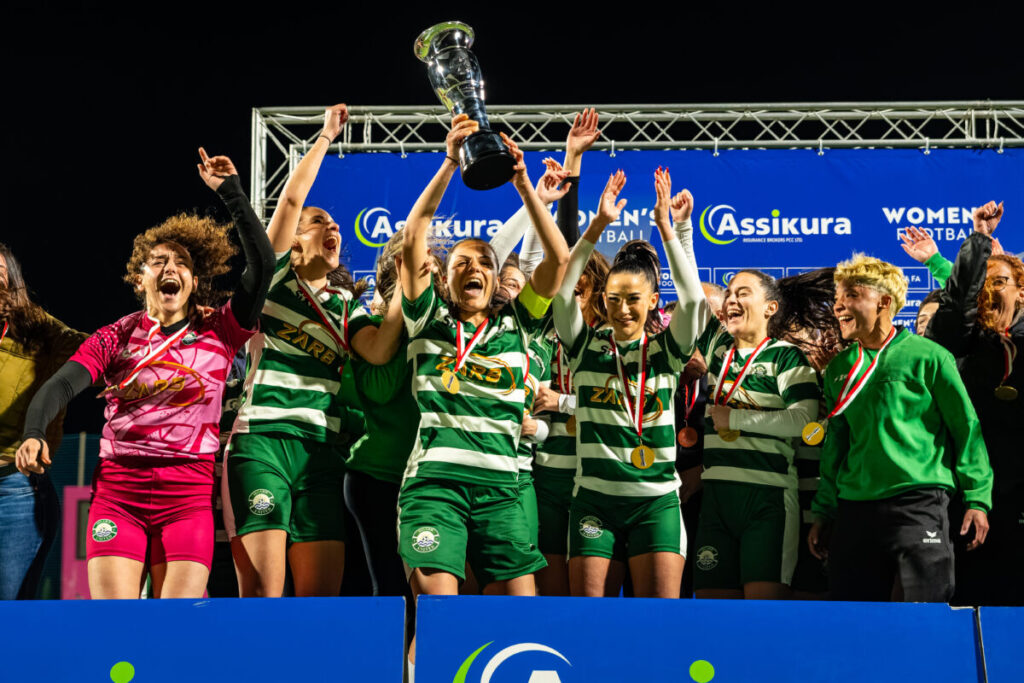
Beyond the statistics and trophies, this title carried weight for those who stayed. For the supporters who followed the players and the club through second divisions, near-misses, and years of frustration.
“I thank them for being with us even in the hard times,” Cefai says. “Even when perhaps we didn’t believe in ourselves.”
Now, new faces will arrive. Success always brings attention.
But the message remains clear from Cefai:
“I hope that everyone who is starting to follow us stays with us through the good and the bad… as players, we give everything on the pitch.”
From Joke to Champions
In many ways, Mgarr United’s title can be understood as the culmination of incremental progress rather than a sudden breakthrough.
A retained core, targeted additions, structural adjustments behind the scenes, and a clear shift in mentality all contributed to a campaign defined by consistency.
The unbeaten record and statistical dominance underline that progression — but they do not fully capture the margins, the pressure, or the weight of past seasons that accompanied it.
What this team ultimately achieved was not just to win, but to sustain performance across an entire campaign while navigating those factors.
In doing so, they did more than secure a first league title. They redefined what Mgarr United represents within the Maltese women’s game — not as the team that came close, but as one capable of claiming the ultimate crown.
And for a village that was told it could not — this was never just a title.
It was proof that it could.
Lead Image: Nicholas Falzon
Stay up to date by following The Sporting Fan on social media: Instagram ~ Facebook ~ X