 by
by Malta’s WU19s open their June window against Saudi Arabia in a double-header that offers a different kind of test, with Melania Bajada pointing to tactical adaptation, possession principles and the development of a largely new group. The WU17s will also face Saudi Arabia in the same window as Malta’s youth selections continue building toward their next competitive steps.
New Non-European Test For Youth Side
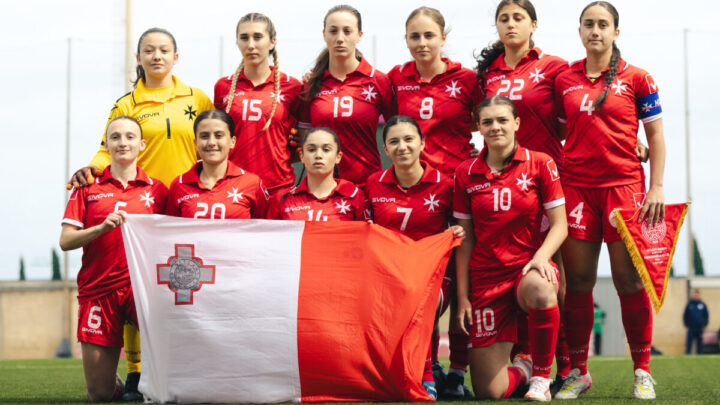
Malta’s Women’s Under-19 selection will open its June international window with a double-header against Saudi Arabia, in a pair of friendlies that offer a different reference point from the European opposition usually encountered at youth international level.
The two matches will both be played at the Centenary Stadium, with the first scheduled for Wednesday 3rd June at 20:00 and the second following on Saturday 6th June at 15:00.
Head coach Melania Bajada has named a 20-player squad for the window, with the selection including a blend of domestic-based players and players gaining experience abroad. Among the notable inclusions is Alys Wilson, who receives her first call-up and is listed among the forwards after her involvement with Cardiff City in the UK.
For Malta, the fixtures arrive as part of the continued development of the youth national team pathway. However, the identity of the opponent also gives the window a wider point of interest. Saudi Arabia’s women’s football structure has developed at speed in recent years, supported by a growing investment into the game. Malta, by contrast, comes from a country where football has long held cultural depth, but where women’s football continues to operate within more limited resources.
That makes the double-header a useful meeting point between two different development stories. Saudi Arabia arrive from a football environment that has been accelerating quickly. Malta enter with greater familiarity with women’s international structures, particularly through UEFA competition, but with a group still being shaped and tested.
For Bajada, that combination gives the friendlies clear value.
“Saudi Arabia is a team that has made significant progress in recent years and is investing heavily in its football development,” she said. “For us, matches like these are very important because we have a largely new group of players. It’s a great opportunity to test ourselves against a different style of opponent, try new things, and challenge the players in a different environment.”
That last point is central to the window. At youth level, the result is not irrelevant, but the value of these matches sits as much in what they reveal about the players’ adaptability. Malta’s young players are more used to preparing for European opponents, where certain rhythms, physical demands and tactical references may feel more familiar. Saudi Arabia present a different kind of exercise.
Tactical Adaptability Under The Spotlight
Bajada’s analysis of the opposition suggests that the test may not be defined simply by individual technical quality, but by the players’ ability to interpret the match correctly.
“From the games we have analysed, Saudi Arabia appear to be a team that plays good football,” Bajada said. “Technically, they are still developing, but they have shown clear progress and a good understanding of the game. I believe the main challenge will be more tactical than technical.”
That makes decision-making one of the key themes of the two matches. Malta will need to read situations, adjust to different characteristics and avoid becoming passive in the face of an opponent whose profile may not mirror the teams they usually meet.
“They have their own style of play and different characteristics compared to the European teams we usually face, so it will be important for us to adapt and make good decisions throughout the match,” Bajada continued. “It will be a valuable test for our players and an opportunity to see how they respond in different tactical situations.”
Still, the focus is not being placed entirely on Saudi Arabia. One of the more important parts of the window will be whether Malta can use the matches to reinforce their own principles rather than become too reactive to the opponent.
“The main focus is on ourselves, particularly on what we want to achieve when we have possession of the ball and on reinforcing our key principles of play,” Bajada said.
That gives the friendlies a more specific purpose. Malta will not only be measured by how they contain Saudi Arabia, but by how clearly they can impose the ideas being developed within the group. In possession, that means whether the players can show structure, patience and progression. Out of possession, it means whether the team can remain connected enough to manage transitions and respond to unfamiliar patterns.
“Of course, we analyse the opposition and prepare for their strengths, but these matches are also an important opportunity for us to continue developing our identity as a team,” Bajada added. “We want to see the players applying our ideas consistently and making progress in the way we want to play.”
The double-header format should help with that assessment. A single friendly can sometimes offer only a snapshot. Two matches against the same opponent give the technical staff a clearer view of how players respond not only to the initial challenge, but also to feedback between games.
It also allows Bajada and her staff to assess the squad across a wider spread of minutes and match situations. With a largely new group, that matters. The first match can show the immediate level of the team. The second can show how quickly the players absorb information, adjust and apply the same principles with greater clarity.
“Both games will be focused on the same tactical principles,” Bajada said. “Obviously, a double friendly is a great opportunity to see the players perform on the field and assess how they apply those principles in a match environment.”
For Malta’s U19s, then, this window is not only about facing Saudi Arabia. It is about using a different opponent to sharpen the next stage of the group’s development. The contrast between the two footballing contexts adds intrigue, but the main test remains internal: how well Malta’s young players can translate principles into performance, and how much clearer the picture of this group becomes by the end of the second match.
U17 Friendlies Also In Action
Malta’s Women’s Under-17 selection will also face Saudi Arabia during the same June window, giving the youth national team programme a wider set of international minutes across two age groups.
Head coach Clint Tabone has named a 22-player squad for the U17 friendlies, with the selection including players born in 2010, 2011 and 2012. The matches will also be played at the Centenary Stadium, with the first taking place on Wednesday 3rd June at 17:00 before the second match follows on Saturday 6th June at 18:00.
For the U17 group, the fixtures form part of the team’s continued preparation and development ahead of the UEFA European Qualifiers Round 1, with the draw scheduled for 11th June.
Fixtures & Squad Lists
Wednesday 3rd June
U17 Malta vs U17 Saudi Arabia
Centenary Stadium
17:00
U19 Malta vs U19 Saudi Arabia
Centenary Stadium
20:00
Saturday 6th June
U19 Malta vs U19 Saudi Arabia
Centenary Stadium
15:00
U17 Malta vs U17 Saudi Arabia
Centenary Stadium
18:00
Malta U19 Squad
Goalkeepers
Raisa Magro (San Gwann FC), Maya Muscat (Hibernians FC)
Defenders
Lara May Azzopardi (Birkirkara FC), Amy Catania (Hibernians FC), Ylenia Debono (Mgarr FC), Amber Galea (Hibernians FC), Edeson Grixti (Hibernians FC), Olivia Nazarko (Hibernians FC), Martina Vassallo (San Gwann FC), Kristina Zammit (Valletta FC)
Midfielders
Kay Axiak (Birkirkara FC), Gloria Cassar (Birkirkara FC), Alanah Ghio (Hibernians FC), Carla Giles (Valletta FC), Thais Muscat (San Gwann FC)
Forwards
Lisa Calleja (Hibernians FC), Yasmine Ghenam (Hibernians FC), Somaya Muscat (Valletta FC), Alys Faye Lucy Wilson (Cardiff City, UK)
Malta U17 Squad
Goalkeepers
Katelyn Camilleri (Swieqi ZSP), Mariah Chircop (San Gwann)
Defenders
Amy Borg (Swieqi ZSP), Rihanna Fava Borg (Hibernians), Cassidy Massa (Hibernians), Erika Cini (Valletta), Kesia Farrugia (Valletta), Martina Mendez Vasquez (Hibernians), Maria Ilenia Micallef (Swieqi ZSP), Amie Marta Portelli (Birkirkara), Ana Vassallo (Lija Mgarr)
Midfielders
Katrina Catania (Birkirkara), Katrine Jorgenson (Swieqi ZSP), Elanya Mallia (Lija Mgarr), Jade Micallef Cassar (Birkirkara), Keziah Richard (Hibernians), Sara Anneloes Shaladi (Swieqi ZSP)
Forwards
Amberley Borg (Swieqi ZSP), Shanaia Mifsud (Valletta), Martina Montebello Caruana (Swieqi ZSP), Amy Muscat (Birkirkara), Francesca Spiteri Busuttil (Lija Mgarr)
Lead Image: Brandon Bonett