 by
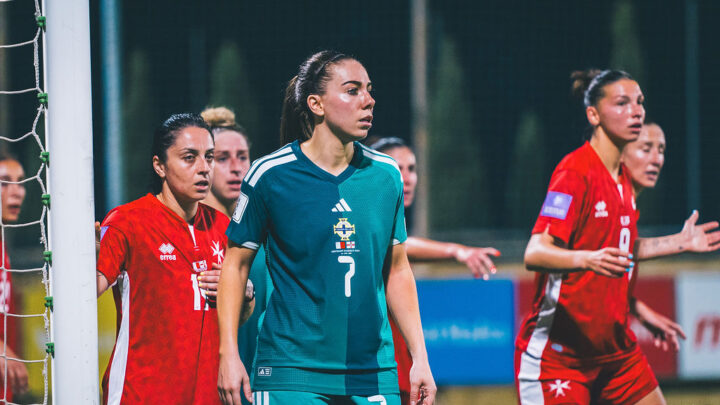
by A competitive contest ultimately turned on execution on Saturday, as Northern Ireland found reward in the details with Michael McArdle “especially happy with goals from set-pieces” — to secure a 4 – 2 win. Malta were left to reflect on moments they had anticipated but could not deliver, with Manuela Tesse admitting “we planned for this but couldn’t replicate on the pitch” and Alexandra Gatt summing it up most bluntly: “two corners sealed our fate.”
Set-Pieces Told The Story — And Exposed The Gap
Northern Ireland’s 4–2 win over Malta on Saturday evening strengthened their push toward World Cup qualification, while leaving Malta on the brink of relegation to League C. Yet the scoreline alone only partially explains how the match was decided — and where the real gap between the sides emerged.
For all the discussion around effort, balance and attacking promise, the match was ultimately decided by the most brutal currency of League B football: dead-ball efficiency. Northern Ireland left the window with satisfaction not only because they took six points, but because they turned coached moments into goals.
McArdle highlighted the biggest positive, “I’m especially happy with goals from set-pieces – credit to Laura & Stuart who are working a lot in the backroom on these. It’s great to get to get that reward.” It was not framed as a bonus, but as a tangible return on preparation.
Malta, by contrast, came away confronting a more uncomfortable truth — the very situations they had prepared for were the ones that punished them most severely. Manuela Tesse did not hide from it,”We have some individual issues we still need to improve on especially in attacking high balls. I am especially disappointed with the set-piece goals, because we planned for this with the team and pushed them to be more aggressive in the box but couldn’t replicate on the pitch.”
Alexandra Gatt reduced the story to its bluntest form, “It’s a disappointing feeling because despite pushing for a good performance and scoring goals, we conceded and the set-pieces are especially hard to take. Two corners sealed our fate ultimately, perhaps could have made more with a few of the chances that we had.”
In League B, details do not sit at the edge of the contest — they decide it.
Execution Against Intention: Why Malta Fell Short
Perhaps the most revealing part of Tesse’s reflection was that very little of what hurt Malta came as a surprise. The shooting threat from distance had been flagged. The demand for aggression in the box had been stressed.
Her frustration was not rooted in tactical ignorance but in a recurring inability to transfer preparation onto the pitch, “The details matter in League B. We are doing the analysis and speaking with players. However, it is the final bit of translating it onto the pitch where we are struggling.”
She pointed to moments such as Ellie Mason’s strike as further evidence of the same issue: situations recognised, but not managed correctly, “It was good, but we did not approach the situation in the right way as we trained. We need to improve because our opponents are smart to our weaknesses, and they are targeting them.”
At this level, awareness without execution is not a warning sign — it is a weakness waiting to be exploited.
A Game of Fine Margins — But Not Equal Outcomes
Malta were not absent from the contest, but they were undone by when it mattered most. Both Manuela Tesse and Alexandra Gatt leaned on the idea that the game felt more balanced than the final outcome suggests, and there is enough in the chances Malta created — and in the improved connection between key attacking players — to support that claim. The issue is that competitive phases only matter if they survive the decisive moments around them.
Manuela Tesse weighed in on potential key moments, “We know that Northern Ireland are strong physically but we had a very good first half, we could have gone in 2 – 1 in the lead, but we didn’t take our opportunity.”
She gave credit to Northern Ireland, while acknowledging that the effort from her side was not to be underestimated, “So, I think for that effort we gave we don’t deserve to lose, but we have to accept defeat because of coming up short in the details. In the end, Northern Ireland was good, better than us and we need to accept that and push ourselves to be better.”
Tesse finished, “I cannot criticise our players, this window was very dramatic for us and I think the players did their best for the team and for Malta.”
Alexandra Gatt echoed her coach, “I think overall it was a balanced match, so I think from many perspectives we deserved more from this. In terms of positives I think we showed more fight from the previous match. We gave everything for Malta tonight, but ultimately it’s a disappointing result.”
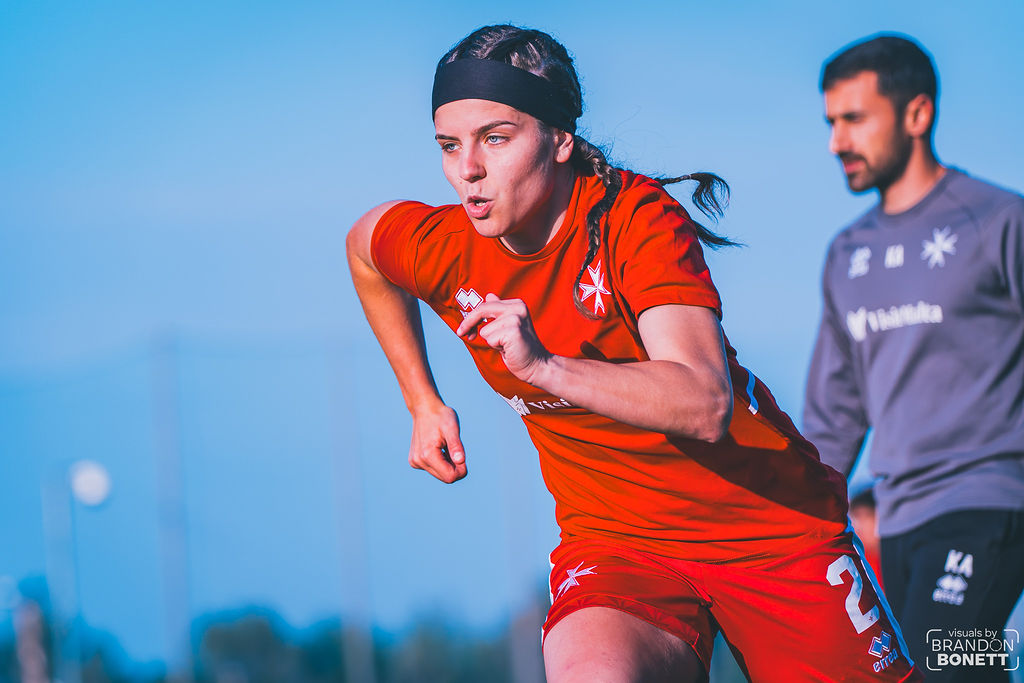
Malta were handed a late numerical advantage. An attacking-minded substitution worked, but the response lacked the clarity needed to turn pressure into definitive control — whether through combined fatigue or hesitation remains an open question.
Freedom Against Control in Northern Ireland’s Attack
If Michael McArdle’s objective was clear — six points — the more revealing detail lies in how Northern Ireland pursued them.
His language after the game was not about rigid choreography, but about bravery, freedom and individual creativity in the final third, “We encouraged players to be brave, gave them that bit more freedom to be creative and certainly in the final thirds they did this. That positivity is something we saw today in Ellie’s goal, but also saw that with Keri (Halliday) on Tuesday. It’s great that on an individual level we are seeing that confidence on their ability to impact the game.”
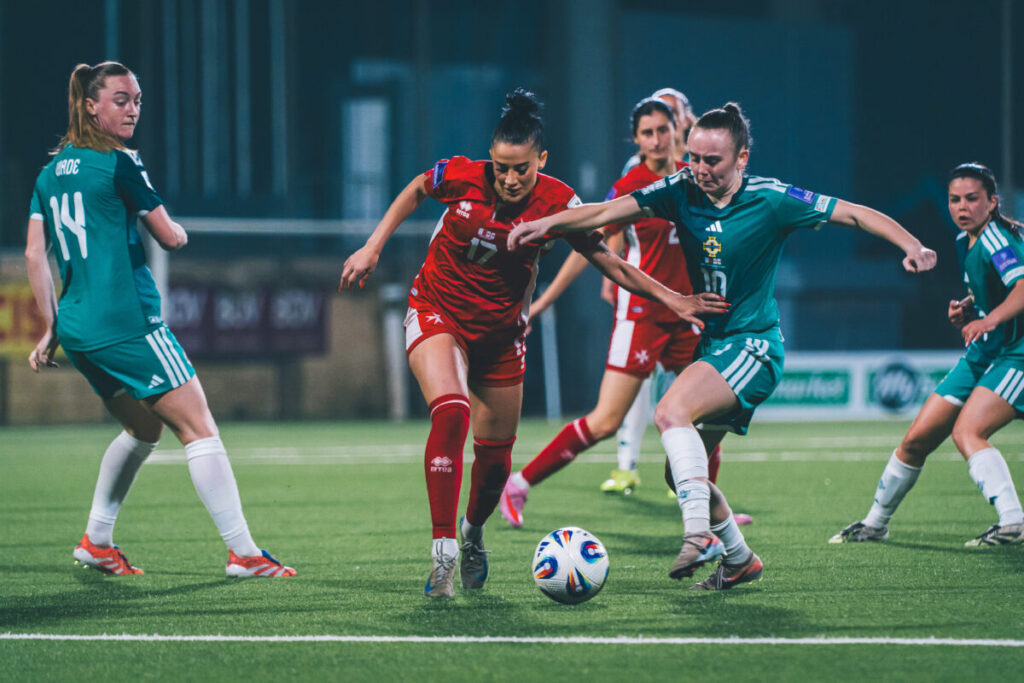
Yet his assessment was not without reservation. He remarked, “I think continuity evolved but it was quite untidy at times today. That’s fine, something that can happen, and it led to some turnovers particularly in the middle of the pitch which we want to improve on especially heading in the next two games. Defensively in transition we need to improve as well.”
For McArdle, the challenge now lies in refining that balance — maintaining attacking freedom without losing structural control, “It’s a case of balancing the risk and reward when being on the front foot.”
Growth Within Defeat: Malta’s Emerging Core
Even in defeat, Malta left with evidence of progression beneath the result. Tesse repeatedly returned to growth.
Questioned about the developing relationship between Haley Bugeja and Maria Farrugia in a tidy balance between healthy competition and an ability to work together, “They are so young and yet they have more than fifty caps. Of course, they are forwards, so I think you can understand that they both want to score and sometimes it was hard to manage. However, they are growing so much and today Haley & Maria were strong together.”
The Sardinian was in particular happy with their ability to handle the complete ask, “We know that they are strong going forward and they showed this, but I was very happy also with their ability to help in defending today. They are both playing in strong leagues and this aspect of their football profile is also important if they want to keep growing, so as a coach I was happy to see that.”
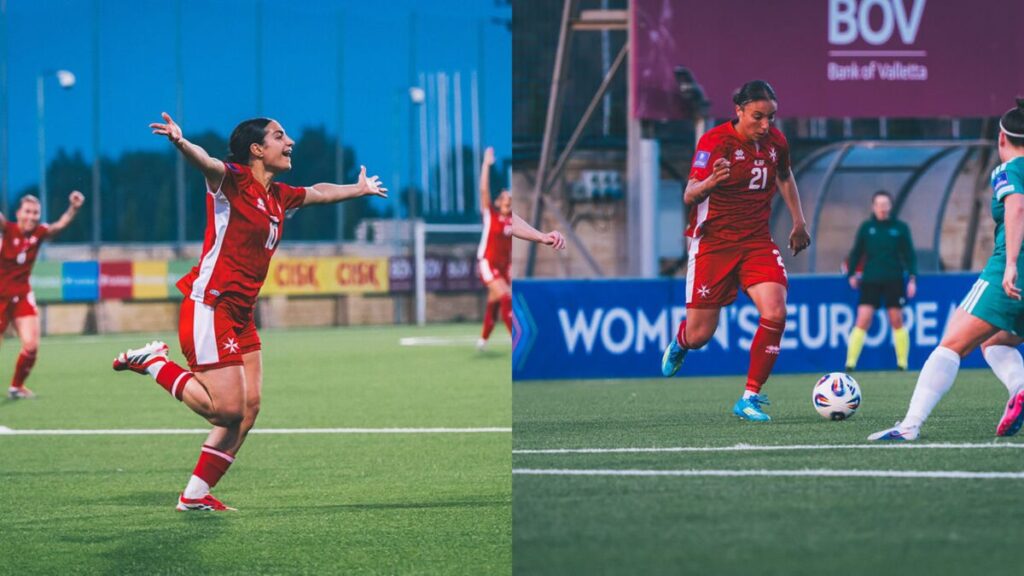
The impact of Leah Ayres from the bench was also highlighted with the forward netting her first goal in Maltese colours, “I’m very happy for Leah (Ayres). What she doesn’t have in technique, she brings in energy and for this kind of match she is perfect. She knows the English game well and she helped us push in those final stages. She’s been strong for us for a few windows now, so I think we’ve given that little push and now it’s about getting even better.”
The Sardinian also highlighted further minutes gained for more younger players including a debut for Crista Chetcuti Ganado, as well as a second appearance for Tammy Falzon in defence. Raisa Costantino made her first senior start in goal, while Alexandra Gatt was a strong outlet on the right side, as well as in her responsibility over set-pieces.
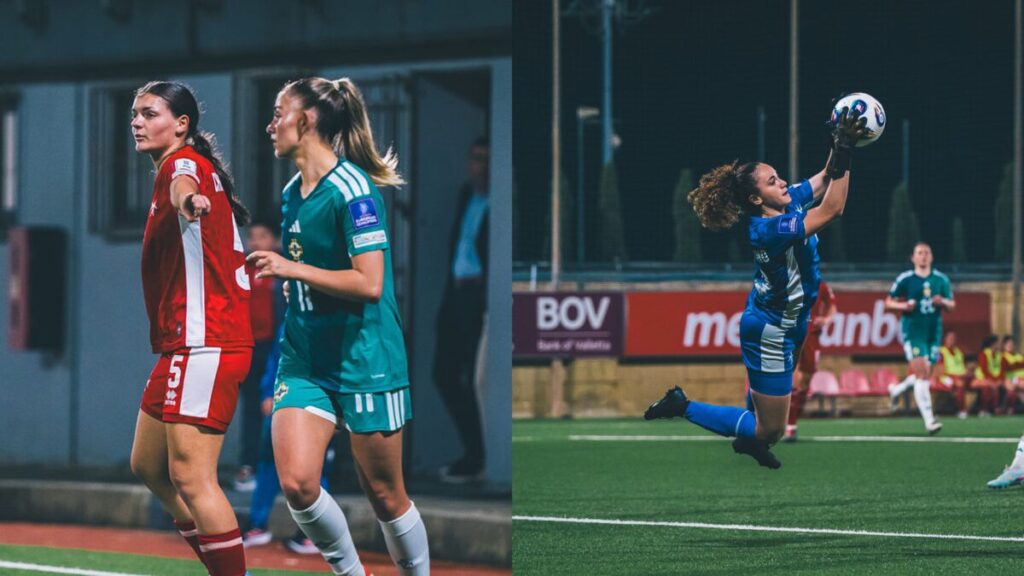
Alexandra Gatt’s own contribution fitted that same line of thought — a young full-back taking responsibility, especially in providing deliveries in the match, “I think I have a fairly good kick, so I won’t shy from that responsibility. I will do whatever it takes to help the team and to represent my country.”
The exposure given to younger players, and the collective spirit she believes must now be carried from the dressing room onto the pitch according to Manuela Tesse, “A match like this is important for them to gain experience. I’m disappointed for the result, I don’t like to lose. However, I take heart in seeing them perform at this level in a match like this. When building something, you have to find the positive things and correct what isn’t working. I think despite the disappointment of the result, the future is bright if these players keep pushing and keep believing that they can become strong footballers.”
In fact, asked about sharing the wing with long-time friend and former teammate Haley Bugeja at international level, Alexandra Gatt’s view shifted on the team dynamic, “I’ve known Haley since we were still at Mgarr, so it’s nice to share the wing with her for sure. However, all the team is a big group, all twenty-four players support each other, as well as the coaching staff. All of this helps to have the confidence on the pitch tonight and show the fight that we did. We have each other’s back on and off the pitch and we give each other strength.”
Two Projects, Different Timelines
Whatever happened in this window, there was one fact: both sides where clear on the importance of six points, but the underlying motivations differed greatly.
For Manuela Tesse and her team, it was about the ability to overcome the next big task for Malta – achieve victories in League B and avoid relegation.
With six points dropped and relegation looming, the focus has already begun to shift toward rebuilding from Manuela Tesse, “In the next match we will give minutes to players who need to play to face the League C in the future.”
Alexandra Gatt’s view on unity was echoed by Manuela Tesse as the key driver for success going forward, “These players are like a family outside the pitch. Today we also showed this on the pitch, which is maybe something we lacked in the other matches. So, what I asked my players today is to put this energy that they have outside the pitch, into it. This is what we must continue to lean into.”
In contrast, Michael McArdle took over Northern Ireland as a team that has proven itself at League B level. However it was one that recently struggled to find the net, was uncharacteristically defensive and lacked confidence amid a turbulent period in management.
He was understandably elated by a perfect start to his tenure as coach of Northern Ireland, “I’m delighted with the six points. I held myself accountable to this at the start of the window and at times it was a good challenge which we expected, but good to get the points which was the main objective. Eight goals scored, with some players getting their first goals as well, so that will be great for confidence. I thought the press improved again today and we’re scoring goals, these are big positives.”
His view of the upcoming camp now shifts toward maintaining consistency against Turkey and Switzerland in search of a best finish in the group with hopes of World Cup qualification.
One thing’s for sure, the window has set a buzz within the Irish camp, “We set out on the window to get to know each other, and we did that well. We’re looking forward to the next matches.”
The final fixtures in June will test both trajectories — one chasing qualification, the other preparing for reset.
Lead Image: Brandon Bonett
Stay up to date by following The Sporting Fan on social media: Instagram ~ Facebook ~ X

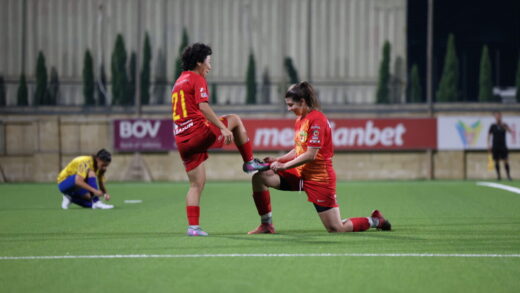

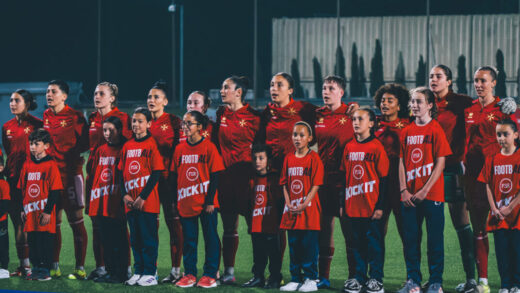
This was arguably the most captivating match of the campaign so far, played in front of an appreciative home crowd that seemed well entertained despite the result, and there’s value in that too. Putting eight players on the halfway line for kick-off was pretty cool, especially considering the circumstances.
TVM need to up their game, though. On Tuesday they missed the first 35 minutes, and on Saturday they started with a 15-minute delay. The BBC apologised to their viewers for problems with the Maltese broadcaster’s feed.